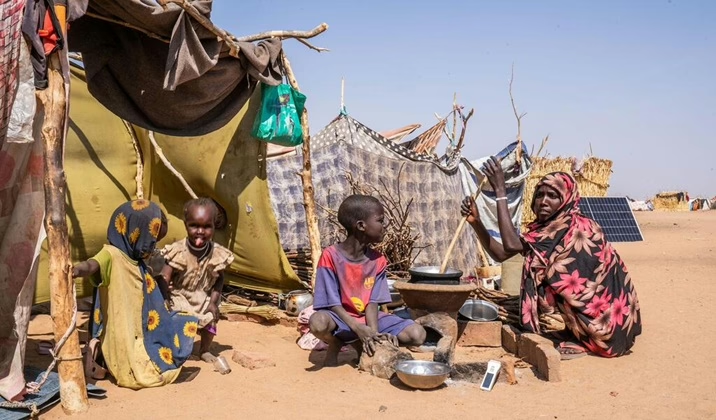
As Sudan’s war moves into a fourth year, civilians are still being killed, displaced and subjected to widespread sexual violence, the UN’s top humanitarian official in the country warned on Monday, calling for urgent action to stop the fighting and protect civilians.
Denise Brown, the UN Humanitarian Coordinator in Sudan, said the crisis is following a grim pattern of repeated abuses and repeated suffering.
“We are on repeat in Sudan,” she told journalists in New York by video link from the capital Khartoum. “Please don’t call this a forgotten crisis. I’m referring to this as an abandoned crisis.”
Brown pointed to reports from the UN human rights office and humanitarian partners showing widespread rape and gang rape, especially in Darfur.
Humanitarians in Darfur have treated close to 2,500 survivors of sexual violence over the past year. Ms. Brown said the impact goes far beyond the immediate survivors, affecting families, communities and children born as a result of sexual violence.
She also highlighted mass killings around El Fasher, where she said 6,000 people were killed in three days according to verified information, while the real number could be higher.
Calls for prevention
Ms. Brown urged the world to do far more to prevent atrocities before they happen.
“What more has to happen for everyone to sit up and pay attention, to find a solution?” she asked.
She urged Member States to focus on the forces driving the war, including the flow of weapons and the wider war economy. She also referred to questions around the Darfur arms embargo and whether enough is being done to enforce it.
Humanitarians are left “picking up the pieces,” she said, stressing that aid workers are not the solution to the conflict.
Ms. Brown, who serves as overall Resident Coordinator too – said UN agencies, international NGOs and Sudanese organizations remain on the ground across the country, doing what they can to help people survive.
But she warned that humanitarian work cannot replace political action to end the war.
Greatest concern over Dilling and Blue Nile
Among the areas of greatest concern is Dilling in South Kordofan. Brown said aid convoys had finally reached the town after years of difficulty and she was able to visit in March – but the town then came under attack.
Now, she said, convoys can no longer enter, and civilians are once again trying to flee amid daily bombardment.
“There is no safe passage out,” she said.
Ms. Brown also warned about growing displacement in Blue Nile state, where close to 30,000 people have reportedly been uprooted by recent fighting.
Still, she pointed to one source of hope: local communities working to resist hate speech and support peace efforts at the grassroots level.
Aid appeal badly underfunded
Brown said humanitarian funding remains far below what is needed. In 2025, the response plan was only 35 per cent funded. So far in 2026, the $2.8 billion appeal is just 16 per cent funded.
She said the shortfall has very real consequences for people in need.
“We really need there to be a huge focus on finding a solution, and while they’re looking for that solution, to fund so that the fair necessities of what the people of Sudan are met.”
(UN News)