Isiyaku Ahmed
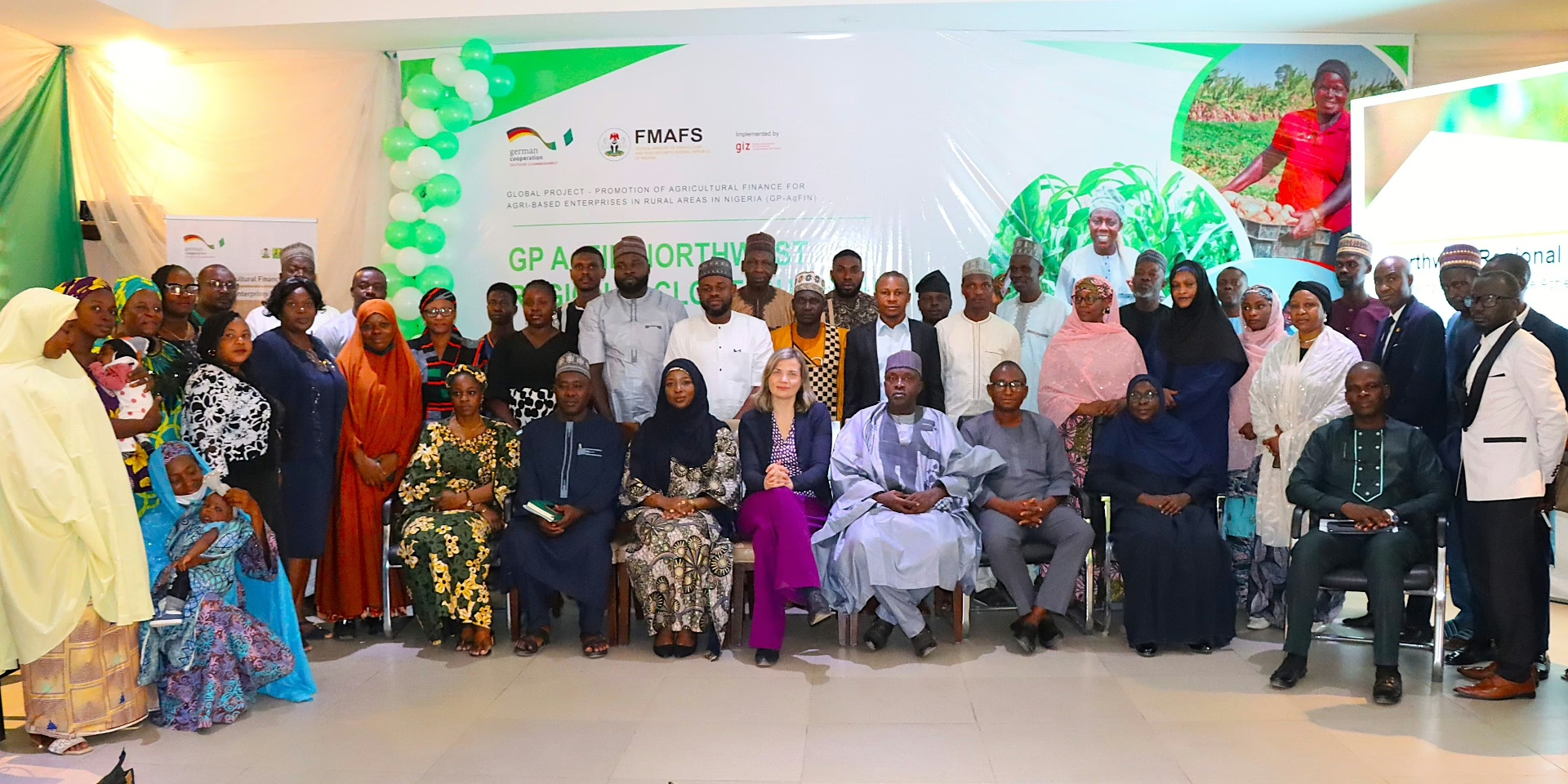
The Deutsche Gesellschaft für Internationale Zusammenarbeit (GIZ) has formally concluded its Agricultural Finance (AgFIN) project in Northwest Nigeria, with support from the German government, after after eight years of implementation, recording significant gains in expanding access to finance for farmers and agribusinesses.
Speaking during an interview with newsmen on Tuesday at Bon Hotel Kano, at the regional close-out event themed “Scaling Agricultural Finance in Nigeria: From Proven Models to Market Expansion, the Cluster Coordinator for Agriculture and Rural Development at GIZ, Dr. Andrea Ruediger, described the project as a transformative intervention in the agricultural sector.
According to her, the AgFIN program, implemented across Kano, Kaduna, and Kebbi States, was designed to tackle one of the biggest challenges facing agriculture: limited access to finance.
She explained that the project worked closely with 11 financial institutions to help them recognize the untapped potential within agriculture and to develop tailored financial products for key value chains such as maize and potato production, including input credit schemes.
“With a budget of €8 million, the project successfully facilitated €42 million, about N9 billion, in financing.
“Importantly, these were entirely commercial loans, with no grants or concessional funding.
“The success came from strong business models, targeted training, and innovative financial product development, making it both market-driven and sustainable,” she said.
Watch Video
Dr. Ruediger highlighted inspiring success stories among beneficiaries, noting that some agribusiness owners who started with small-scale operations, such as single-unit rice processing, have grown into large enterprises.
Many have accessed multiple loans, repaid consistently, expanded operations, and now employ dozens of workers while managing integrated processing systems.
She urged beneficiaries to sustain the momentum by continuing to grow their businesses and improve their livelihoods.
Also speaking, Professor Jamil E. Abdullahi of the National Agricultural Extension and Research Services, Ahmadu Bello University, Zaria, described the initiative as a breakthrough in agricultural development.
Representing the Executive Director, Professor Yusuf Ahmad Sani, he noted that access to finance has long constrained farmers’ ability to engage in production, processing, and value addition.
“With AgFIN, farmers are now better linked to sources of credit and trained on how to access and manage financing effectively.
“This project goes beyond intervention, it is a transmission of knowledge that has built lasting capacity among farmers and stakeholders,” he said.
Professor Sani, however, cautioned that the project’s gains could diminish without deliberate efforts to sustain them.
He called on participating state governments to adopt and scale the initiative rather than treat it as a completed program.
Drawing from his experience in Taraba State, he noted that many young people are eager to engage in agriculture but are hindered primarily by a lack of access to finance despite abundant natural resources.
At the event, Dr. Abiodun Ezekiel Owoyemi, Director of Academic Planning and Linkages at the Federal College of Agricultural Produce Technology, said the institution’s partnership with GIZ since 2023 has yielded lasting benefits.
Representing the Provost, he revealed that over 300 students have been trained under the program, while 20 lecturers participated in “training of trainers” initiatives.
He added that the collaboration led to the development of a specialized curriculum now embedded in key departments, including Agricultural Technology, Agricultural Extension, and Agribusiness.
“This has become a sustainable academic program.
Students now receive practical knowledge in agricultural finance annually, ensuring continuity even after the project’s close-out,” he said.
In their separate goodwill messages, Honourable Bilkisu Suleiman Ibrahim, Special Adviser on Banking and Finance to the Governor of Katsina State, Dikko Umaru Radda, and the representative of Kano State Commissioner of Livestock, Dr. Abubakar Sani Inuwa, stressed the need for farmers to take advantage of available financial opportunities.
They noted that agriculture remains the mainstay for over 80 per cent of the state’s population and encouraged farmers to actively seek information on accessing finance, both digitally and physically, to scale their operations.
The government representatives also highlighted the role of the GIZ AgFIN project in strengthening financial institutions, particularly microfinance banks, through targeted training and knowledge-sharing initiatives.
“These engagements not only enhance local capacity but also allow institutions to learn best practices from other states,” she added.
One of the beneficiaries of the GIZ AgFIN Project, Hafsatu Muhammed, a smallholder farmer from Chiromawa in Garun Mallam Local Government Area, shared a compelling account of how access to agricultural finance transformed her livelihood.
She explained that she was introduced to the project about five years ago by an agricultural extension worker, at a time when she cultivated just one acre of rice with limited resources.
Through the initiative, Muhammed was linked to a financial institution and accessed her first credit facility, which enabled her to purchase improved seedlings and other essential farm inputs.
Since then, her productivity and income have significantly increased.
Today, she owns her own house and has successfully sponsored her children through both secondary and tertiary education.
She commended the AgFIN project for its life-changing impact and pledged to sustain the knowledge and practices she acquired, expressing confidence that her farming enterprise will continue to grow.
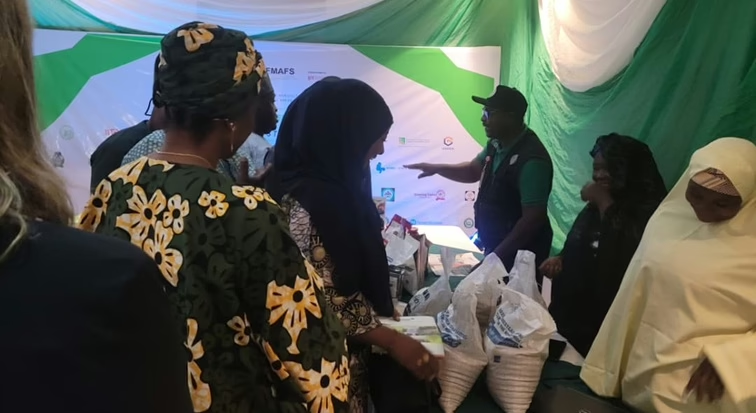
The event also showcased an exhibition of agricultural produce, including rice and wheat, cultivated and processed by beneficiaries of the GIZ AgFIN project.
The display highlighted the tangible impact of improved access to finance, as smallholder farmers and agribusiness operators demonstrated increased productivity, better value addition, and enhanced market readiness.
Attendees were allowed to interact with the exhibitors, providing firsthand insight into how the initiative has strengthened agricultural value chains and transformed livelihoods across the region.
Stakeholders at the event during a panel session agreed that while the AgFIN project has formally ended, its legacy lies in the systems, knowledge, and financial linkages it has established.
There were strong calls from farmers, agricultural experts, and academics for the model’s expansion to other parts of Nigeria, and sustained collaboration among governments, financial institutions, and development partners to deepen agricultural financing and drive inclusive economic growth.