Musa Ubandawaki, Sokoto
The Deputy Inspector General of Police in charge of Finance and Administration, DIG Suleiman Mohammad Abdul, has called for stronger collaboration between security agencies and communities, warning that Nigeria’s battle against banditry, kidnapping and other violent crimes can only be won through collective action and sustained public participation.
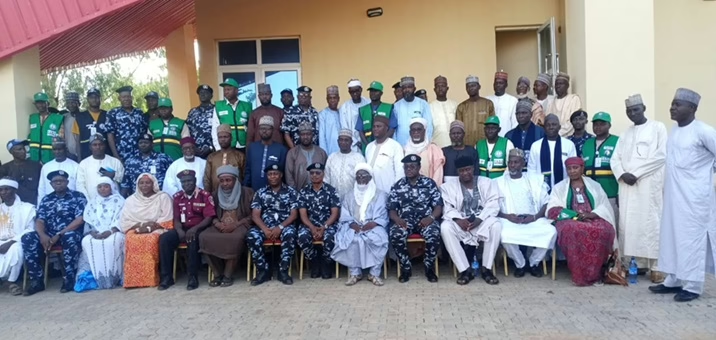
The DIG made the declaration on Monday during an engagement with traditional rulers, religious leaders, youth groups, civil society organisations, community leaders and members of various associations at the Sokoto State Police Command Headquarters.
Describing Sokoto as a historic centre of peace, justice and communal harmony, Abdul said the state remains strategically important to national security efforts because of its international border and its role as a gateway in the NorthWest region.
He conveyed the goodwill of the Inspector General of Police, Kayode Egbetokun, stressing that the police leadership recognizes the indispensable role communities play in maintaining peace and supporting law enforcement operations.
“Security cannot be left to the police alone. Every citizen has a role to play. Sustainable peace is only possible when communities and security agencies work together in trust and partnership,” he said.
The DIG noted that the activities of bandits, arms traffickers, kidnappers and criminal informants continue to threaten peace in several communities, particularly along border areas and remote rural settlements.
According to him, the Nigeria Police Force is strengthening its community policing strategy with emphasis on public trust, intelligence gathering and dismantling criminal networks through active citizen involvement.
He urged traditional rulers to remain vigilant and continue monitoring activities within their domains, while encouraging them to promptly report suspicious movements and emerging threats to security agencies.
DIG Abdul also appealed to religious leaders to use their platforms to promote peace, discourage violence and prevent youths from being recruited into criminal groups.
Addressing young people, the DIG challenged them to reject criminality and become ambassadors of peace, warning against serving as informants or collaborators for bandits and other criminal elements.
He further charged members of the Police Community Relations Committee and civil society groups to strengthen communication between citizens and law enforcement agencies through regular engagements and conflict-resolution initiatives.
“Together, we can build a Sokoto where farmers work safely, businesses thrive without fear, and criminals find no refuge,” he declared.
Earlier, the Commissioner of Police, Sokoto State Command, CP Hayatu Hassan Shaffa, described the DIG’s visit as a major boost to the command’s efforts to improve operational effectiveness and professional policing.
CP Shaffa highlighted Sokoto’s strategic location, noting that its border with the Niger Republic and links with neighbouring states create both economic opportunities and security challenges that require continuous attention.
He reaffirmed the command’s commitment to protecting lives and property across the state’s 23 local government areas through intelligence-led policing and community partnerships.
The CP disclosed that since assuming office in March, the command has achieved notable successes, including the recovery of seven AK-47 rifles, four fabricated rifles, three locally made pistols, 12 Dane guns, 153 rounds of live ammunition, and 15 magazines.
The command also recovered 310 rustled animals, rescued 32 kidnap victims, neutralized four bandits and arrested three suspected informants, alongside dozens of other suspects linked to criminal activities.
Despite the achievements, CP Shaffa identified inadequate logistics, manpower shortages and evolving criminal tactics as major challenges confronting the command, while expressing appreciation to the Sokoto State Government, traditional institutions, religious leaders and community stakeholders for their continued support.
The meeting ended with an interactive session where community leaders, civil associations and other stakeholders exchanged ideas with police authorities on strengthening intelligence gathering, improving public confidence and enhancing security across Sokoto State and the country at large.