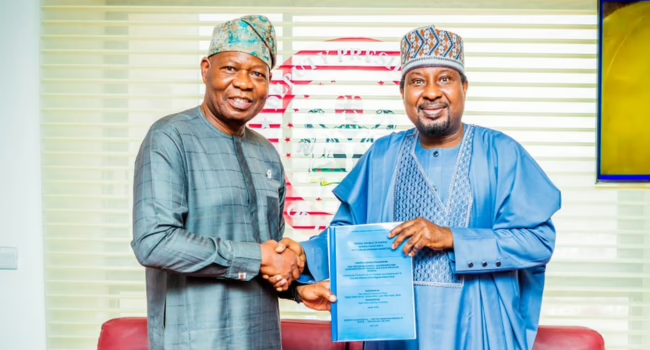
The Inspector-General of Police, IGP Tunji Disu, has presented a comprehensive framework for the establishment of state police to the Deputy President of the Senate, Barau Jibrin, as part of ongoing efforts to decentralise policing in Nigeria.
The 75-page document was submitted on Thursday at the National Assembly in Abuja through Professor Olu Ogunsakin, who heads the Nigeria Police Force committee tasked with developing modalities for state policing.
Titled “A Comprehensive Framework for the Establishment, Governance and Coordination of Federal and State Police,” the report outlines proposed operational structures and governance models for state police across the country.
According to a statement by Ismail Mudashir, media aide to the Deputy Senate President, the document reflects the police leadership’s strategic recommendations following extensive consultations and assessments of the legal, administrative, and operational implications of decentralised policing.
The IGP noted that the submission represents the Force’s formal contribution to the ongoing constitutional review process, expressing optimism that it would guide informed and balanced decisions on national security reforms.
Responding, Senator Jibrin commended the initiative, describing it as aligned with the security agenda of President Bola Ahmed Tinubu.
He assured that the Senate Committee on the Review of the 1999 Constitution would carefully examine the framework alongside other submissions.
The committee is currently considering a bill to enable states to establish their own police forces, following a 2024 agreement between the President and the 36 state governors on the need for decentralized policing to tackle insecurity.
However, concerns persist among critics who warn that state police could be misused by governors, face funding challenges, and pose risks of human rights violations without adequate oversight.
While the IGP described the move as “irreversible,” its implementation depends on constitutional amendments requiring approval by the National Assembly and at least two-thirds of State Houses of Assembly.