Stephen Enoch
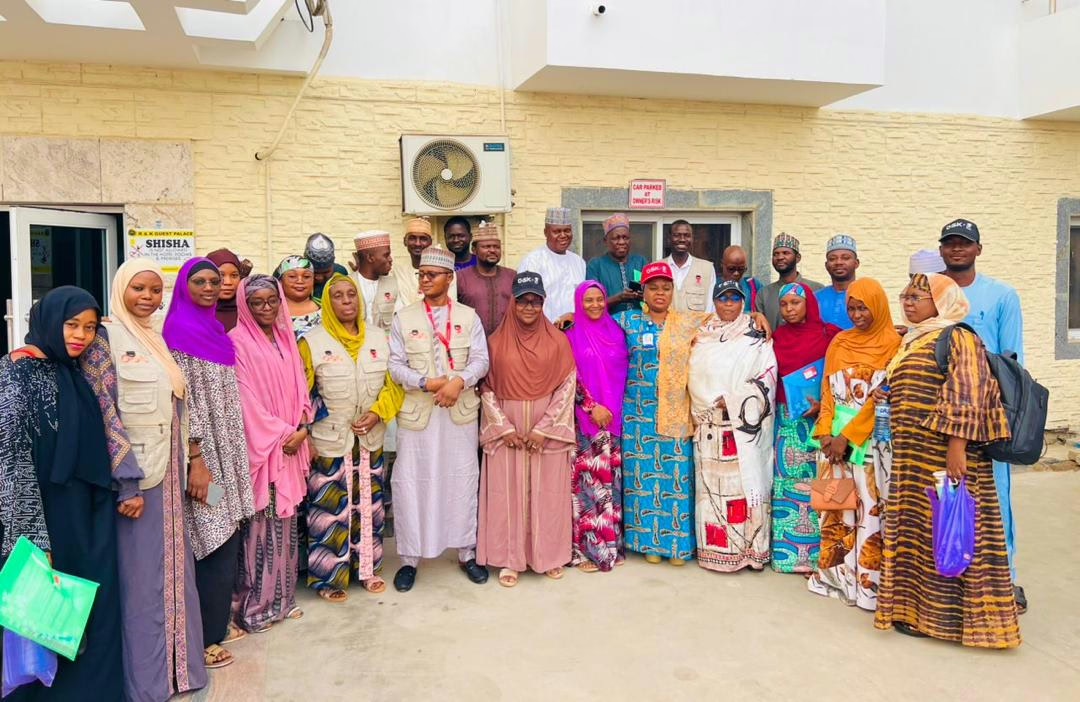
Save the Children International, through its BOOST Project supported by GSK, on Tuesday, organised an orientation for the Kano State Advocacy Group on the effective use of advocacy briefs to improve immunisation coverage.
The session, held in Kano in collaboration with the Kano State Community of Practice on Immunization, Budget Tracking, Advocacy, and Accountability (KN CoP), brought together members from civil society organisations and media practitioners.
Speaking during the event which took place at R&K Guest Palace, the State Team Lead of the BOOST Project in Kano, Abdullahi Magama, stressed the need for participants to adopt practical and result-driven advocacy strategies.
According to him, “the initiative is designed to identify critical gaps in the immunisation system while strengthening advocacy efforts to boost vaccine uptake across the state.
“The project commenced in January 2024 and is expected to run until December 2027.
“This project is currently being implemented in Gezawa and Ungogo Local Government Areas of Kano,” he said.
He, however, raised concerns over declining donor funding, urging the government to increase its support, especially in efforts to reach underserved and hard-to-reach communities.
Also speaking, the BOOST Project Advocacy Officer, Umar Ibrahim, underscored the importance of effectively utilising advocacy briefs as tools for influencing policy and driving change.
He noted that the orientation was also aimed at reviewing and updating the project’s stakeholder mapping tool, as well as equipping advocacy group members with the skills needed to use the briefs effectively.
“The BOOST Project is aimed at strengthening routine immunisation systems and eliminating zero-dose children across local government areas in Kano,” he said.
On his part, the Co-Chair of the Community of Practice on Accountability, Salisu Yusuf, said the meeting provided a platform to fine-tune advocacy approaches ahead of planned engagements.
“The advocacy efforts would target high-burden areas within the project’s LGAs and involve key stakeholders, including the Ministry of Health, the Primary Healthcare Management Board, and local government health officials.
“The goal is to ensure improved funding, better service delivery, and ultimately reduce the number of zero-dose children in the state,” he said.
Participants at the session also agreed on strategies for upcoming advocacy visits using the developed advocacy briefs.