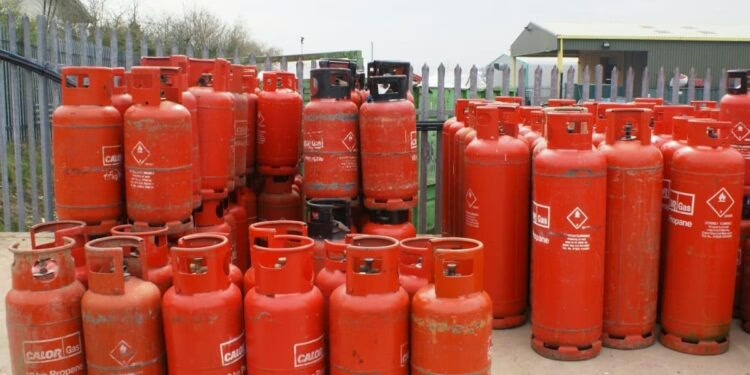
The Nigerian Association of Liquefied Petroleum Gas Marketers (NALPGAM) has raised concern over the worsening scarcity of cooking gas and the sharp increase in prices across the country, warning that the situation could undermine Nigeria’s clean energy drive and worsen economic hardship for millions of households.
In a statement issued on Sunday, the association called the attention of the Federal Government, regulatory agencies, industry operators, and other stakeholders to what it described as the “erratic supply and hike in price” of Liquefied Petroleum Gas (LPG), commonly known as cooking gas.
According to the marketers, the retail price of cooking gas has risen from about N1,300 per kilogram to as high as N1,500 per kilogram in several parts of the country.
NALPGAM disclosed that marketers now pay between N25.2 million and N26.2 million for 20 metric tonnes of LPG, depending on location, a development they said is placing unbearable pressure on operators and consumers alike.
“It is sad and rather very pathetic to inform the general public that citizens now buy cooking gas at prohibitive prices exceeding N1,500 per kilogramme, while marketers are forced to pay as much as N26.2 million for 20MT of gas,” the association stated.
The group warned that if urgent steps are not taken to address the crisis, public frustration could be directed at gas filling station operators.
The marketers said the current situation has inflicted severe hardship on households, food vendors, small businesses, and low-income earners who depend on LPG for daily cooking and commercial activities.
They also lamented that the crisis is threatening years of progress made through government policies and public-private partnerships aimed at promoting clean energy adoption and reducing reliance on kerosene, charcoal, and firewood.
According to NALPGAM, many Nigerians who embraced cooking gas under the clean energy transition agenda are now struggling to refill cylinders, while some families are reverting to the use of firewood and charcoal, with attendant risks to public health and the environment.
The association attributed the crisis to persistent supply shortages, high depot prices, logistics challenges, and rising operational costs faced by marketers nationwide.
It further warned that if the situation persists, it could trigger wider socio-economic consequences, including increased food inflation, collapse of small-scale LPG businesses, job losses, reduced investor confidence, and setbacks to Nigeria’s climate and clean energy commitments.
NALPGAM therefore urged the Federal Government, the Ministry of Petroleum Resources, the Nigerian Midstream and Downstream Petroleum Regulatory Authority (NMDPRA), the Nigerian National Petroleum Company (NNPC) Ltd, domestic producers, terminal operators, and international suppliers to urgently intervene and stabilise the market.
The association called for improved LPG availability nationwide, increased domestic supply allocation, transparent distribution of products across regions, reduction of bottlenecks in importation and storage, as well as strategic interventions to stabilise prices and protect consumers.
It also advocated increased investment in storage and distribution infrastructure and policies that would guarantee affordability and long-term sustainability of the LPG sector.
NALPGAM reaffirmed its commitment to collaborating with government agencies and stakeholders to develop lasting solutions that would ensure stable and affordable access to cooking gas nationwide.
“We cannot stand by and watch millions of Nigerian families suffer in silence while access to clean cooking energy becomes increasingly difficult and unaffordable,” the statement added.