Stephen Enoch
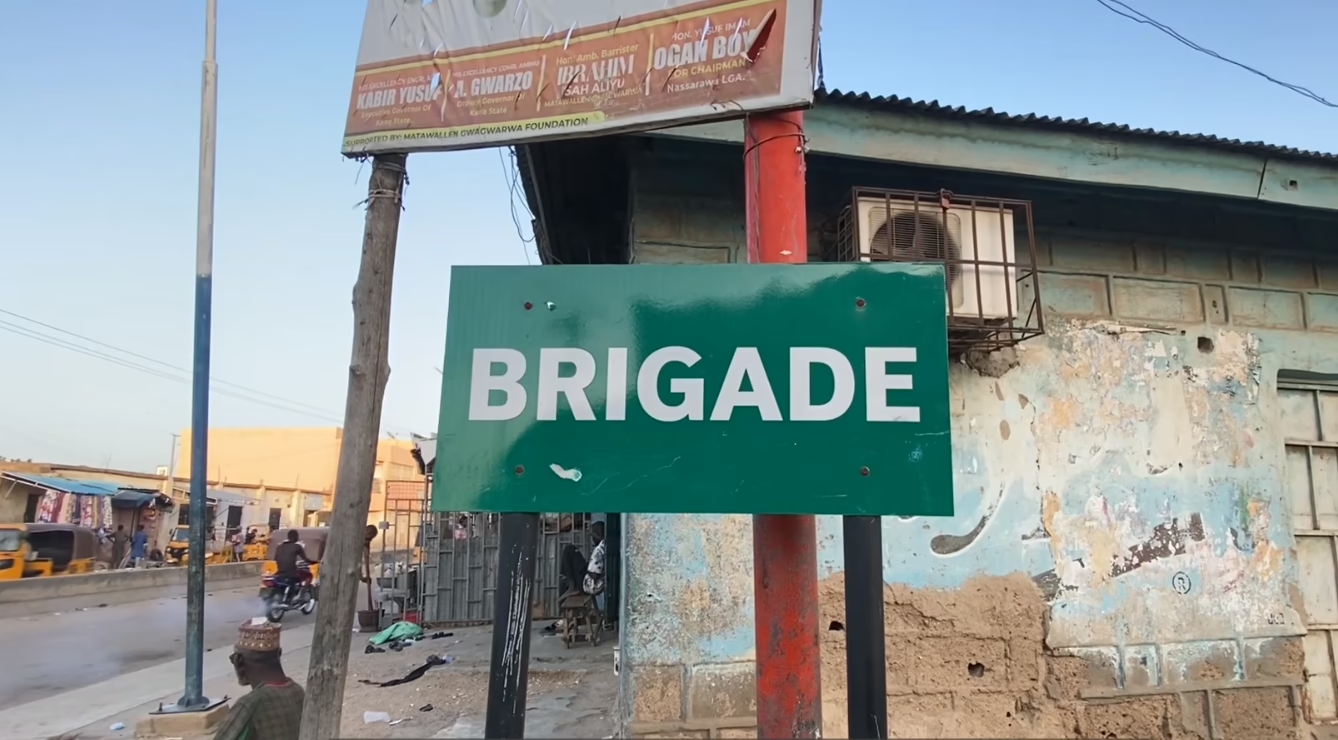
At just 14, Ahmed Umar* knew the streets of Brigade better than he knew a classroom.
From Yan Doya to Yan Gwan Gwan, he knew many other locations known for social vices like phone snatching, theft, drug abuse, and many others.
Long before he picked up a clipper, his hands ran errands for older boys involved in petty theft, and sometimes acted as a lookout when fights broke out at odd hours.
“Some of my friends and I of the same age range used to stay out late with the older boys and observe how they carry out their operations,” he told Stallion Times.
For Umar, it all started with the quest to make money for himself.
He started skipping classes at school, and with no one to hold him accountable, he drifted deeper into the streets.
“I already learnt how to spot vulnerable targets and how to escape when things went wrong.
“I also learnt how to lose chasers by turning into the different streets and corners of brigade.
“Almost everyone around me was doing something like this so it felt normal,” Umar revealed.
He recalled a night when he experienced the dark side of crime which got him really scared.
“It happened in 2024 when I followed the boys for an outing. We made a lot of money from stolen phones; most of them were forcibly taken from people in dark, isolated corners of the area.
“The next day, the items were sold and we gathered to share the money in a dark isolated section of Brigade.
“Since I was just new, I observed from the back.
“Suddenly, a fight broke out among them.
“They were fighting because some felt cheated.
“The fight was fierce to the extent that they started injuring themselves with knives, broken bottles and other sharp metallic objects.
“At the end of it, the strongest among them devised a sharing formula and everyone got a share of the loot,” Umar narrated.
Umar said he knew that this path would one day put him in Jail, which he feared extremely.
Everything changed the day he wandered into a small barbershop owned by a man the boys called Oga Abdul.
At first, Umar said he came around just to watch as young boys his age cut hair.
“These are my age mates making money here and they don’t have to fight or steal,” Umar recalled.
He was curious and unsure whether to follow this path or continue with the rugged path, which was dangerous but brought in quick cash.
Oga Abdul noticed Umar and that was how his new path started.
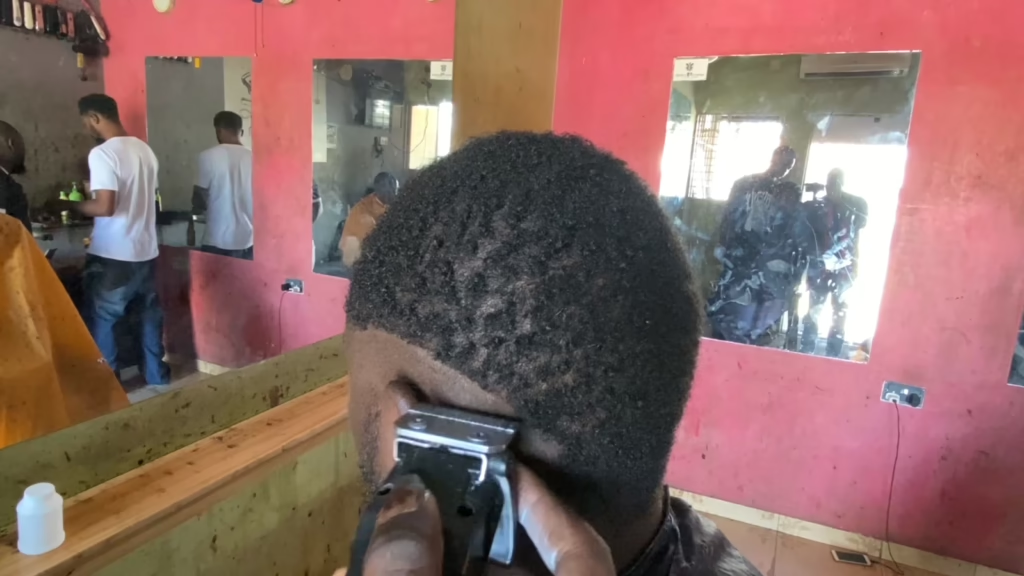
“Instead of chasing me away, Oga Abdul handed me a broom.
“From sweeping floors to observing haircuts, I slowly became part of a better life.
‘The barbershop is structured, disciplined, and a safe space for me.
‘Oga Abdul told me if I wanted to stay, I had to stop following bad boys, be committed to school and the barbershop. It wasn’t easy, but I am happy that I followed that path.
“Today, I earn about N2,000 every day which is enough for me to buy what I want.
“I do not have time for those bad friends anymore because I attend school in the morning. In the afternoon, I go to my Islamic lessons, and in the evenings, I cut hair at the shop.
“This keeps me very occupied. Many of the boys on the street mock me and call me ‘Barber’ but I am happy that I am very useful to myself, my parent and the community.
Leaving The Gang Behind For a Second Chance
At just 22, Musa Salihu was already known on the streets of Brigade. Not for anything admirable, but as a feared figure in a gang called “The Brotherhood.”
The group, about 21 boys strong, lived by a simple but dangerous code: to protect their members, fight rival gangs, and dominate the streets.
Salihu was not just a member, he was the assistant leader. He planned attacks, rallied the boys, and lived a life shaped by violence and defiance.
“I remember one day when an elderly woman looked at me and said I was useless, that my life had no meaning because I belonged to a bad gang.
“I didn’t care then. The Brotherhood was everything to me because stood for each other,” Salihu told this reporter.
That belief was later shaken.
It began with a complaint.
“One of our members came to us saying a rival gang in another part of Brigade (Yan Doya) had beaten and humiliated him just because he belonged to us.
“That was enough reason for retaliation.
“We planned to strike the next night. Around 10 p.m., we went there, ready for a fight.
“But we didn’t know they were already waiting for us, and they were more prepared,” he told Stallion Times.
Watch Video
What followed was chaos, shouting, running, the clash of crude weapons under the cover of darkness.
As the assistant leader, Salihu said he charged forward, urging his boys to fight.
Then, in the middle of the violence, something happened that changed him forever.
“I saw one of them use a sharp cutlass on my member. He sliced his palm open. Blood was everywhere. A crucial vein was cut and instantly, that hand became useless. He couldn’t move the hand at all.
“Even after medical treatment, his hand was beyond repair,” he recalled.
In that moment, Musa said he saw beyond the fight, beyond the gang loyalty, beyond the illusion of power.
Days later, he made a decision that few expected.
He walked away from the gang.
“Even when I walked away from the gang, people in the community still saw me as a bad influence and didn’t want to relate with me.
“For more than two years, I like I had no purpose. I was just existing,” Salihu stated.
Then came a turning point. The barbershop.
“My good friend spoke to Oga Abdul about me, and that I needed a second chance.
Oga Abdul took me in and ever since, I have found purpose.
“I’ve been working here for three years now.
“I feel fulfilled, even with the little I earn.
“I want to change the lives of younger boys on the street. That life is terrible. If I had the chance to go back, I would choose differently,” he said with a faint smile appearing on his face.
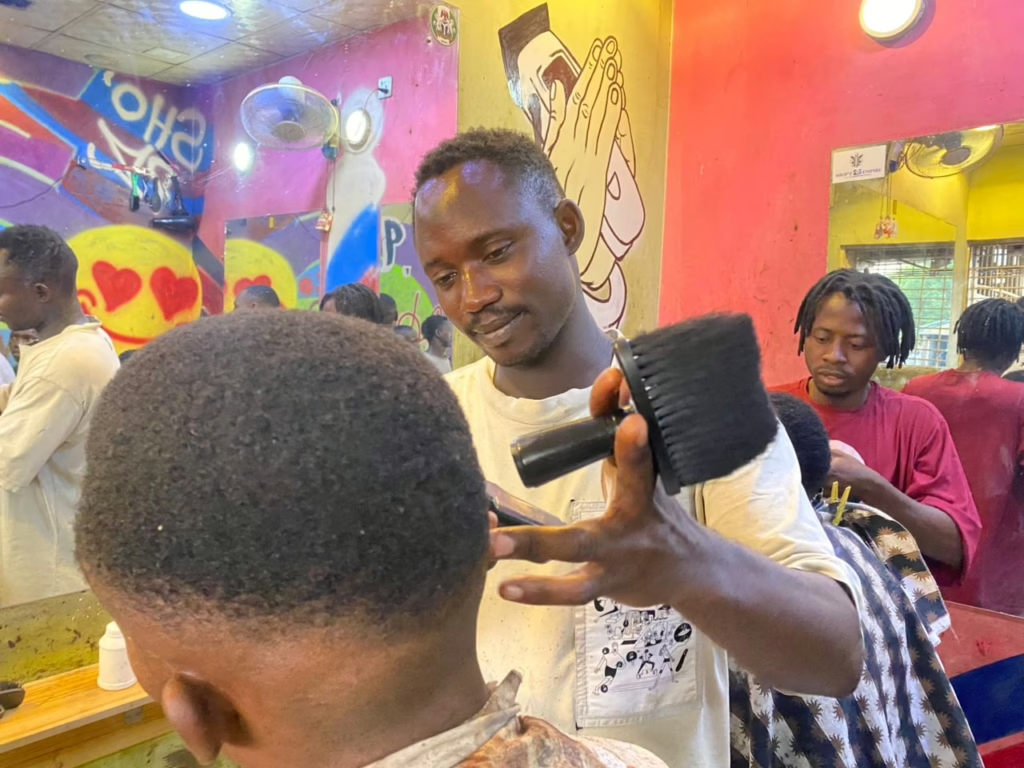
According to Musa, the barbershop is more than survival, it is redemption.
Like many young boys and youths in Kano’s inner-city communities, Umar and Salihu’s journey into gang life reflects a broader pattern driven by unemployment, peer pressure, and lack of opportunities.
According to data from the National Bureau of Statistics (NBS), youth unemployment and underemployment in Nigeria remain critical, with high levels of informality and significant links to social unrest and crime.
According to the Kano Neighborhood Watch Corps Public Relations Officer (PRO), Brigade area has recurring issues of youth gang clashes with gang members are with an age range of 13–30.
Choosing Discipline Over Distraction
At just fourteen years old, Joseph Emmanuel faced a choice that many young boys in his community struggle with.
Whether to follow friends into risky behavior or take a different path.
Before joining the barbershop, Emmanuel spent time around peers who were deeply involved in gambling, locally known as “chacha.”
According to him, these boys often pressured him to join them, encouraging him to find money by any means possible.
“Last year, around June, I came back home late in the night around 9 pm and my mother asked me why I stayed so late outside.
“I told her that I followed my friends to a shop to gamble. She was very angry with me and the next day, she took me to Oga Abdul’s shop to learn how to cut hair,” Emmanuel explained.
According to the teenager, he felt a sense of relief when his mother put him under the care of Oga Abdul because the peer pressure from his friends to gamble was too much for him.
“If my mother didn’t bring me here, I might have joined them by now, but I thank my other and Oga Abdul that I am useful for myself and my society.
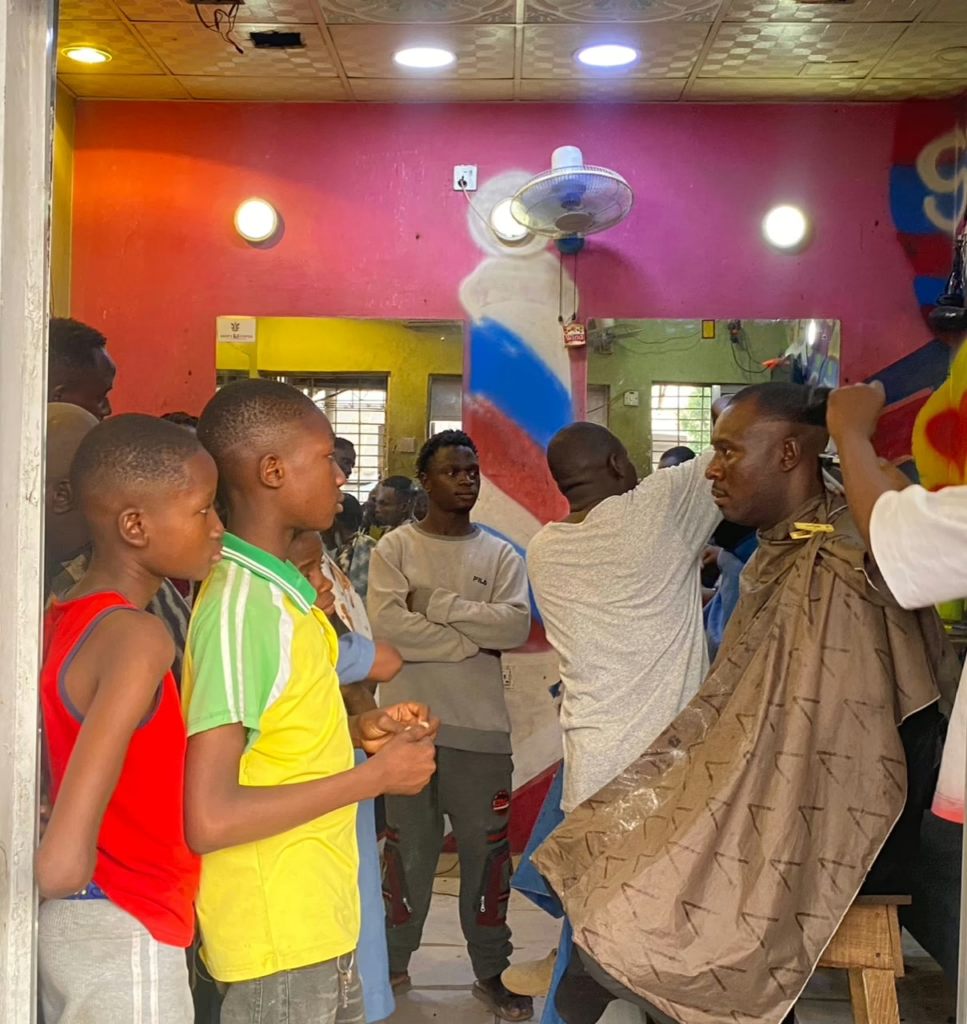
“Everyday after school and lessons, this is where you will always find me, learning and improving myself,” Emmanuel told this reporter.
From The Streets to Stability
Habib Mohammed, popularly known as Destiny, had spent years navigating the harsh realities of street life before finding direction through his skill as a barber.
Nearly three years ago, he personally came to the barbershop determined to change his story.
Before then, life had been uncertain, working as a waiter with little income and surrounded by peers involved in theft, drug use, and constant street fights.
He admitted that at some point, he experimented with cannabis, believing it would help him reason faster, a common misconception among the boys he moved with.
“What changed for me from mingling with those guys on the street was realized that it was not sustainable and I can’t earn a good living with those set of friends.
“I came here myself and got my skills sharpened by Oga Abdul
“Since then, I got better with my barbing skills and I’m now an expert.
“I a day, I earn up to N5,000 and I use my money for better things rather than smoking or hanging around bad guys.
“Alhamdulillah, this barbershop has not just given him income but it has restored my dignity and focus,” he told Stallion Times.
Abdulhakim Abdullahi is 13 years old and has been learning and practicing barbing for the past two years in a local barbershop.
Although he was not previously involved in social vices, his journey into the profession began when Oga Abdul noticed his interest and personally took him under his wing to teach him how to cut hair, especially for younger boys in the community.
Today, Abdullahi is building his skills and gradually gaining confidence in his craft.
He dreams of becoming a widely recognized barber, expanding beyond what his mentor currently offers in the community.
However, he admits there are challenges, especially due to his age.
“Sometimes people see me and refuse to let me barb their hair because I’m just 13.
“I feel so sad sometimes when someone looks down on me because they think I am too young to cut their hair.
“I feel that people should be interested in results than age.
“I don’t let this challenge discourage me. I know it’s just a matter of time before I grow and do greater things in this profession,” Abdullahi told this reporter.
How The Barbershop Reforms Teenagers, Youths in Brigade
Abdumajid Bala, popularly known as Oga Abdul, is the owner of the barbershop called Shop’z 26 Empire.
According to him, the barbershop is far more than a place to cut hair, it is a place where broken paths are redirected and young lives are rebuilt.
“Inside Shop’z 26 Empire, aside the barbing vocation that I teach the boys here, lies something deeper, and that is mentorship, discipline, and hope.
“This is a space where futures are being shaped and young minds are renewed,” he stated.
Having grown up in Brigade himself, Abdul said he understands the lure of the streets, the gangs, the pressure, and the absence of guidance.
He said he is determined to change that narrative.
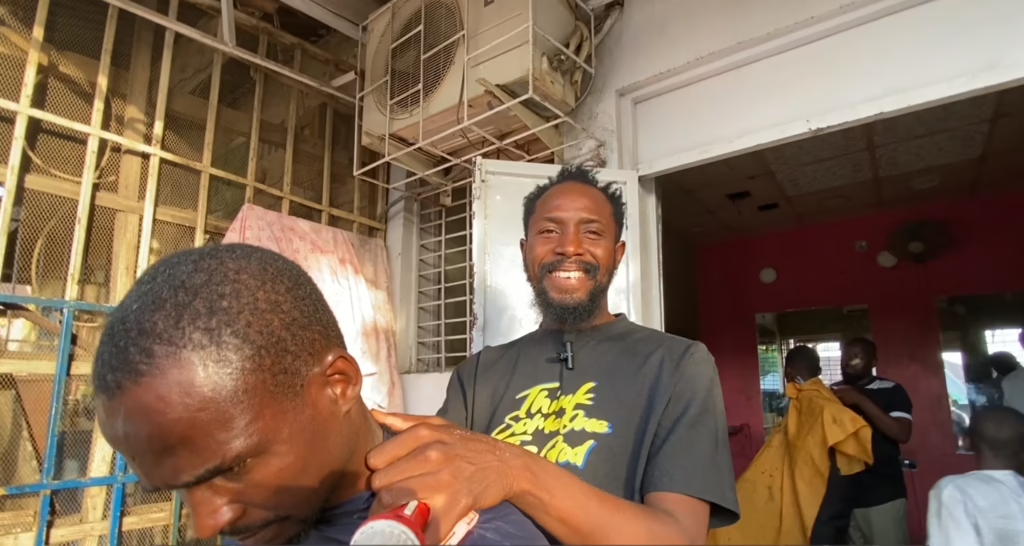
“I have turned my barbing skill into a tool for transformation.
“We engage them in barbing so they won’t go and form gangs or join bad groups,” Abdul revealed.
The Mentorship Sessions
“I don’t just teach them how to cut hair only.
“Some days when they come to the shop, we don’t barb, we just talk, get to ask them about their friends, the big dreams they want to achieve and how they intend to pursue this dream.
“There are some that may not want to pursue barbing as a career or open a barbershop so I take out time to see how I can get opportunities in the field they want to delve into.
“Some of my boys have left Kano and are doing well, I have one who is now an engineer. It gives me joy,” he said.
A lover of books, Abdul said he draws lessons from what he reads and passes on ideas that challenge the boys to think beyond their present circumstances.
Over the years, that commitment has yielded results. Abdul revealed that he has trained about 75 boys, many of whom were once idle, roaming the streets with little direction.
Abdul said his approach to curbing social vices has been replicated in Brigade, as other boys he trained now have their own shops and are mentoring young boys through the vocation.
The Setbacks
“Some boys come here, learn and after a few months, we see them back to the streets, some are not patient and want to make quick money.
“The fact that I have so many boys here and my shop is not so big is a challenge to me.
“Sometimes, the shop gets choked up and sometimes rowdy. If I had more space to expand this initiative, it would be great.
“I think that is why some boys who are not patient return back, because there are limited resources to cater for all the boys,” Abdul told this reporter.
The Barbershop as a Tool For Youth Transformation
Zainab Nasir the Executive Director of the Youth Society for the Prevention of Infectious Diseases and Social Vices (YOSPIS), describes the barbershop initiative as a practical response to youth vulnerability in communities like Brigade.
According to her, using barbershops to engage idle young people is an effective way of pulling them off the streets and steering them away from crime and drug abuse.
“Using the barbering space to catch them and engage them is a way of coping with the social crisis we see among youths,” she said.
Nasir noted that areas like Brigade have long struggled with drug abuse and thuggery among young people, making such interventions timely and necessary.
She believes the initiative can significantly reshape the future of many youths if properly supported.
“This kind of effort helps redirect their energy into something productive, and in the long run, we will have a more responsible and productive younger generation,” she added.
However, she stressed that sustainability depends on collaboration.
She called on the government, NGOs, and philanthropists to support such initiatives through funding, partnerships, and seed grants to help more trainees establish their own businesses after learning the skill.
“With the right support, this can grow into a lasting solution,” she told Stallion Times.
Community Stakeholder Backs Barbershop Initiative
Mamman Fati, as she is fondly called in the Brigade testifies of the barbershop.
According to her, Abdul’s idea of using his barbershop to develop young minds like Umar and Salihu has contributed to a small but significant change in the area.
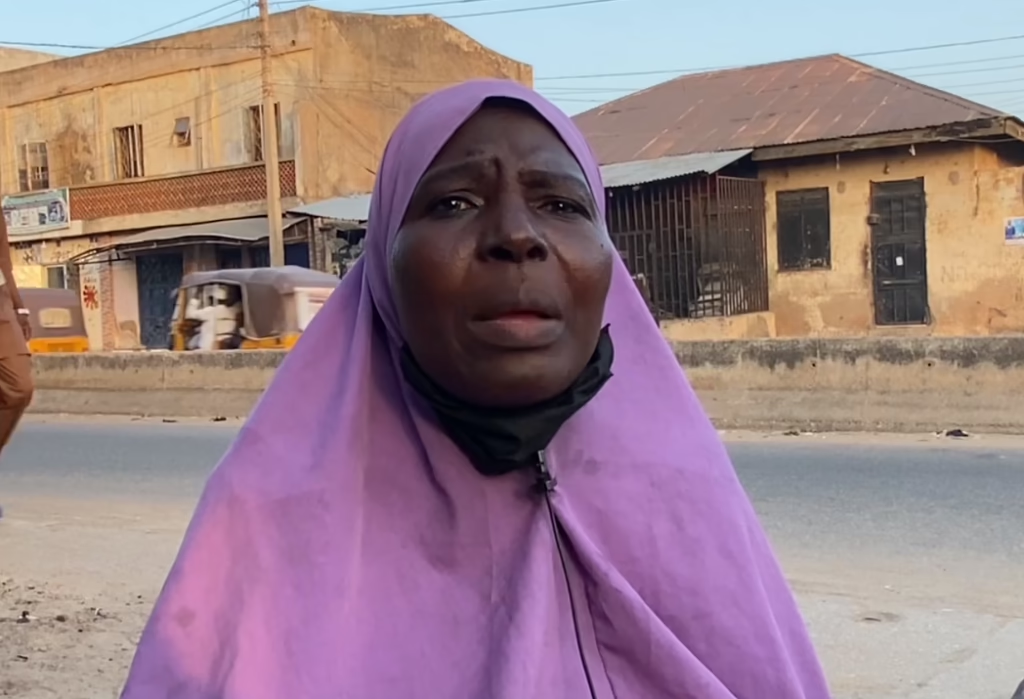
“I have never seen Oga Abdul use cane to flog the boys or speak harshly to them.
“He trains them like his children and most of them take after his character.
“You can never see the boys indulging in bad activities or in a gang, truly, his initiative is working, and most parents, like me, are happy,” she said.
This report was produced with support from Civic Media Lab