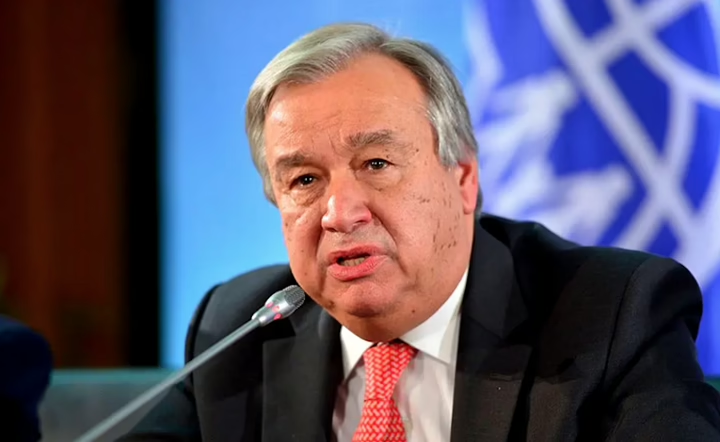
UN Secretary-General António Guterres has warned that the expiration of the New START treaty represents a “grave moment” for international peace and security, as binding limits on US and Russian strategic nuclear weapons fall away amid heightened global tensions.
In a statement issued as the treaty expired at midnight GMT Thursday, he said the world was entering uncharted territory, with no remaining legally binding constraints on the nuclear arsenals of the United States and Russia. These two countries together hold the vast majority of the world’s nuclear weapons.
“For the first time in more than half a century, we face a world without any binding limits on the strategic nuclear arsenals” of the two countries, he said.
The New START treaty, formally known as the Treaty on Measures for the Further Reduction and Limitation of Strategic Offensive Arms – was signed in 2010 and entered into force the following year.
It capped each side’s deployed strategic nuclear warheads at 1,550 and imposed limits on delivery systems such as intercontinental ballistic missiles and heavy bombers.
The agreement also included verification measures, such as data exchanges, notifications, and on-site inspections, designed to reduce mistrust and prevent miscalculations.
Mr. Guterres said decades of nuclear arms control agreements – from the Cold War-era Strategic Arms Limitation Talks to New START- played a crucial role in preventing catastrophe and reducing global nuclear stockpiles.
“Throughout the Cold War and in its aftermath, nuclear arms control between these governments helped prevent catastrophe,” he said, adding that such frameworks “built stability” and “prevented devastating miscalculation.”
The Secretary-General warned that the collapse of this system of restraint comes at a particularly dangerous time, as geopolitical tensions rise and the risk of nuclear weapon use is “the highest in decades.”
But he added that the watershed also provides an opportunity to reimagine arms control for a changing security environment, welcoming statements from both US and Russian presidents acknowledging the dangers of a renewed nuclear arms race.
“The world now looks to the Russian Federation and the United States to translate words into action,” Mr. Guterres said, urging both sides to return to negotiations “without delay” and to agree on a successor framework that restores verifiable limits, reduces risks and strengthens global security.