Musa Na Allah, Sokoto
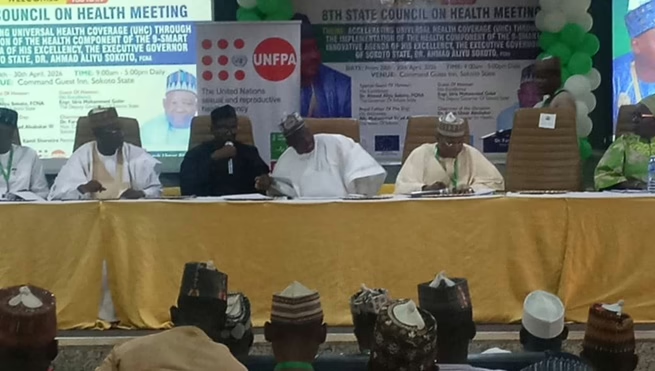
In a move that signals growing momentum for healthcare reform in Nigeria, the Sokoto State Government, on Wednesday, convened its 8th State Council on Health Meeting, positioning itself at the forefront of efforts to accelerate Universal Health Coverage (UHC) across the country.
The high-level meeting, organized by the State Ministry of Health in collaboration with the United Nations Population Fund (UNFPA), brought together key stakeholders to review progress and strengthen policy direction under the health component of the state’s 9-SMART Innovation Agenda.
Presiding over the session, the Commissioner for Health, Dr. Faruk Umar Abubakar, underscored the administration’s resolve to expand access to quality and affordable healthcare services.
He noted that the reforms align with the vision of Governor Dr. Ahmad Aliyu Sokoto to transform the state’s health system into a more inclusive and responsive structure.
The meeting focused on practical pathways to achieving UHC, with emphasis on strengthening primary healthcare systems, improving service delivery, and ensuring equitable access for vulnerable populations.
Delivering remarks on behalf of the National Council on Health, Mrs. Serah Pemida commended Sokoto State for what she described as “remarkable strides” in health sector reforms. She noted that the resolutions and memoranda adopted at the state’s 8th council meeting are in strong alignment with federal government policy frameworks.
According to her, Sokoto’s proactive approach demonstrates a clear commitment to implementing nationally coordinated health reforms while adapting them to local realities.
Also speaking, Dr. Nonso Agbosi, Deputy Director and Head of Strategic Planning at the Federal Ministry of Health, described Sokoto as a trailblazer among Nigerian states. He revealed that Sokoto is the first state in the federation to convene its State Council on Health, setting a precedent for others to emulate.
“Sokoto has shown leadership and initiative in driving reforms from the sub national level.
This is the kind of coordination needed to achieve nationwide health goals,” he said.
Stakeholders at the meeting emphasized the importance of sustained collaboration between state governments, federal authorities, and international development partners in achieving UHC targets.
The partnership with UNFPA is expected to bolster maternal and reproductive health services, while also supporting policy implementation and capacity building within the state’s healthcare system.
Health experts note that Sokoto’s model, if replicated across other states, could significantly improve Nigeria’s progress toward universal health coverage and better health outcomes nationwide.
The meeting concluded with renewed commitments to policy execution, resource mobilization, and monitoring mechanisms aimed at ensuring that the gains recorded translate into measurable improvements in citizens’ wellbeing.
With this initiative, Sokoto State has not only reinforced its leadership in health sector reform but also contributed to shaping a broader national conversation on accessible and sustainable healthcare delivery.