Constance Meju
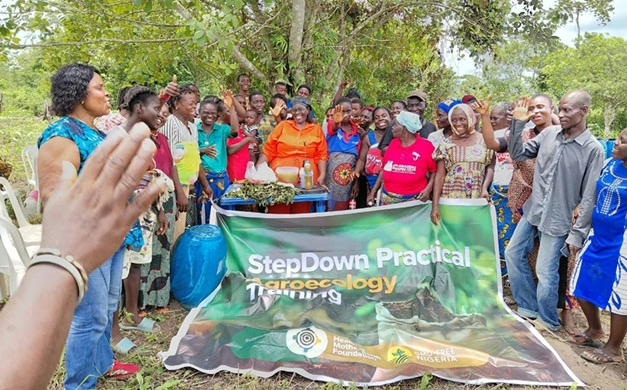
As campaigns for smarter agricultural practices with more nature friendly options grow, over 60 smallholder farmers in Gelegele community, Ovia North East Local Government Area of Edo State, were on Tuesday, April 28, trained on how to produce biofertilizers and biopesticides for use in their farms.
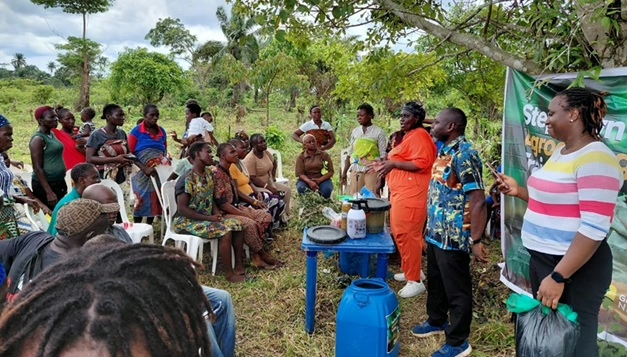
The practical step-down agroecology training, which took place in a farm site, was facilitated by Gbolekekro Women Empowerment and Development Organization (GWEDO) in collaboration with the Health of Mother Earth Foundation (HOMEF).
Executive Director of GWEDO, Comrade Cynthia Bright, said the decision to train the farmers using organic “materials that are available in our society,” rather than inorganic, was to create awareness that nature is best and has less unhealthy consequences.
Environmental Scientist, Comrade Cynthia Buluebiere Bright, who facilitated the technical session, stressed that bio-agriculture remains one of the most effective pathways toward sustainable food production and healthier communities.
She explained that increasing health concerns linked to
chemical residues in food, as well as the environmental damage caused by prolonged chemical use, make agroecological alternatives both necessary and urgent.
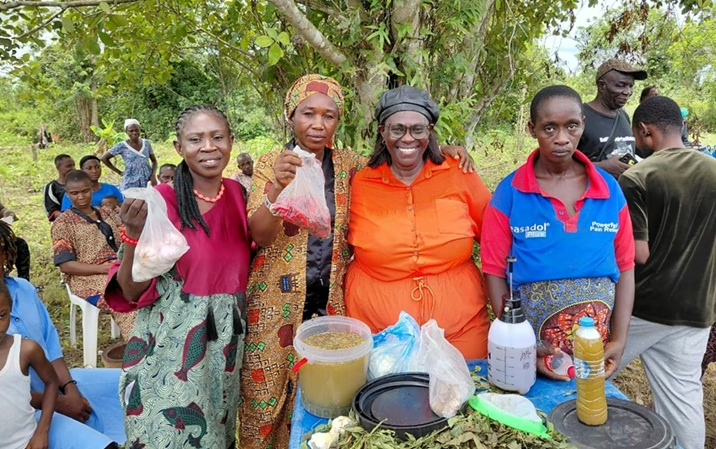
On the table are the natural ingredients for the biofertilizer/biopesticide production
Bright added that the use of local materials such as cow dung, cow urine, pigeon droppings, and ripe bananas for producing the biofertilizers and biopesticides, was aimed at encouraging farmers to return to traditional farming methods, which, according to her, “have helped our soil.”
She stressed that with the introduction of organically modified organisms, GMOs being introduced to traditional farms with attendant unhealthy impacts, a return to natural ways which offer better options and health to both man and environment, has become necessary.
“In times like this, where GMOs are being used in our traditional farms and have destroyed our environment, not just the environment, but also the soil and our plants, and are also detrimental to our health, using traditional methods will bring healthy food to our communities, preserve our food, and ensure food security in our society,” Comrade Bright added.
Bright, who said the farmers would not be left alone but would be followed up to assess their progress, expressed optimism that the enthusiasm shown by the farmers towards the training, indicated their readiness to practice what they had been taught.
She said: “The farmers are committed to carrying out this
Step down training in their personal farms and also as groups. We will continue to receive feedback from them on this training as time goes on.”
She expressed appreciation to HOMEF for its support towards the successful execution of the training. “HOMEF provided incentives such as drums used to produce the biofertilizers and nets for sieving. With all these, we will continue to follow them up.”
Speaking on the training, Gift Esele Ojeanelo a staff of HOMEF who was at the training, explained that HOMEF collaborated with GWEDO to encourage both the Gelegele farmers and the organization to ensure they embrace the new knowledge.
“We came to support and encourage the farmers to go ahead and practice the agroecology methods we have taught them,” she said.
To help the farmers kick-start the new process, implements like drums were distributed to many of the trained farmers.
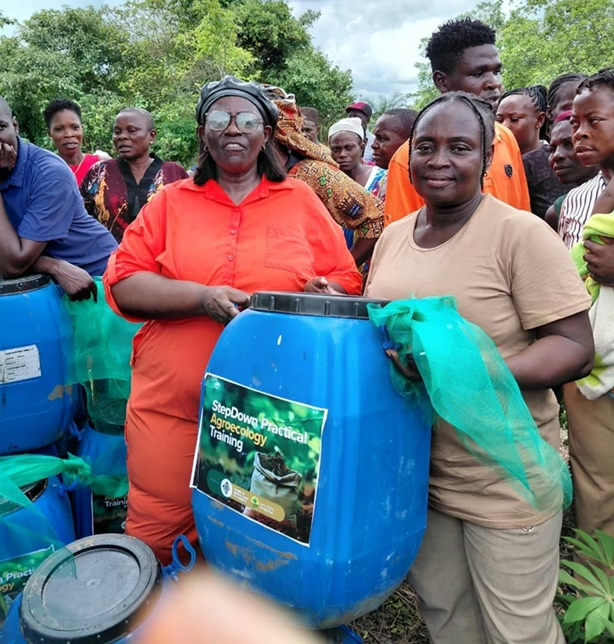
The knowledge shared and implements distributed were well received by the farmers who expressed desire to practice what they have learnt for better result.
Justina Kororo, one of the trained farmers thanked GWEDO tor for the training, noting that it was not the first time Gelegele farmers had benefited from the organization.
She said the training conducted in the community two years ago had helped them and farmers are still benefiting from it as she pledged she would apply what she just learnt to her Okra farm.
“Wehave learnt a lot today. This is not the first time she is trainingus as farmers. We are applying the knowledge we gained from the previous training and benefiting from it.
The knowledge we have gained from this training, we will also apply on our farms. I, in particular, will prepare the biofertilizer and apply it on my Okra farm,”she said.
Another beneficiary, Patience Gijere, expressed gratitude to the facilitators and declared readiness to apply knowledge gained in her farming.