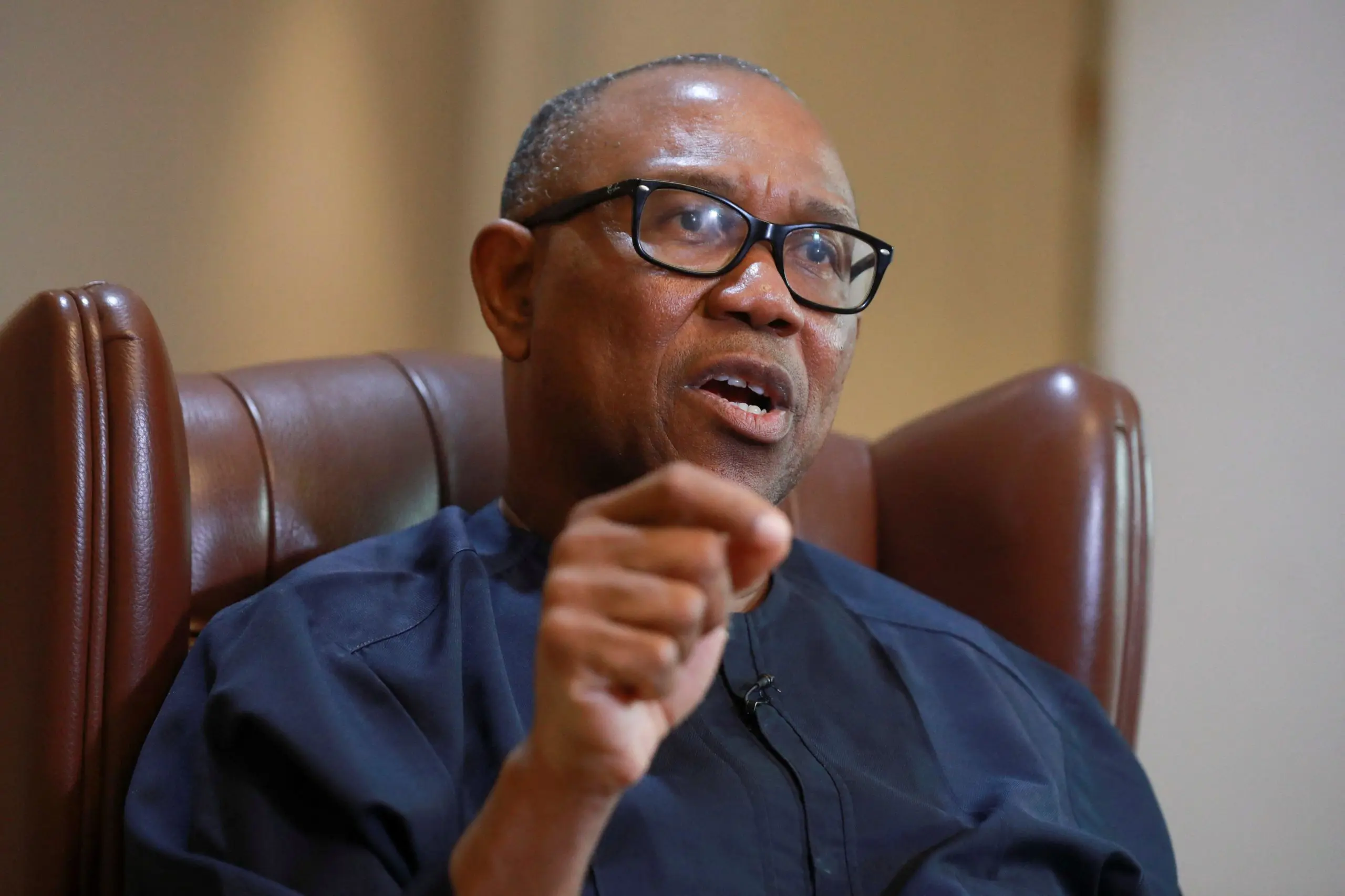
Former Labour Party presidential candidate, Peter Obi, has confirmed his exit from the African Democratic Congress (ADC), a party he had recently joined after leaving the Labour Party.
Obi reflected on personal and political pressures, saying he remains committed to national service despite what he described as growing hostility, misrepresentation, and internal political challenges.
In a lengthy post on X on Sunday, Obi said he felt compelled to share his thoughts, describing “silent pains” and private struggles faced by public figures working in difficult circumstances.
“Fellow Nigerians, good morning. I woke up this morning after my church service with a deeply reflective heart, and despite every constraint, I felt compelled to share these thoughts with you,” he wrote.
He said many people do not understand “the silent pains some of us carry daily—the private struggles, emotional burdens, and quiet battles we face while trying to survive and serve sincerely in difficult circumstances.”
Obi also criticised what he described as an increasingly toxic environment, where systems meant to support citizens instead create hardship.
“We now live in an environment that has become increasingly toxic, where the very system that should protect and create opportunities for decent living often works against the people,” he said, adding that intimidation, insecurity, scrutiny, and discouragement had become widespread.
He further lamented what he called betrayal and criticism from within political and social circles.
“More painful is when some of those you associate with, believing you would find understanding and solidarity among them, become part of the pressure you face,” he said, adding that some who publicly associate with him “privately distance themselves or join in unfair criticism.”
Obi said humility is often misinterpreted in Nigerian society.
“We live in a society where humility is mistaken for weakness, respect is seen as a lack of courage, and compassion is treated as foolishness,” he stated.
He insisted he has always tried to treat people equally, saying: “Personally, I have never looked down on anyone except to uplift them. I have never used privilege, position, or resources to oppress others, intimidate the weak, or make people feel small. To me, leadership has always been about service, sacrifice, and helping others rise.”
Addressing speculation around his political movements, Obi clarified his position on the ADC, stating that his departure was not due to personal disagreements with party leaders.
“Let me state clearly: my decision to leave the ADC is not because our highly respected Chairman, Senator David Mark, treated me badly, nor because my leader and elder brother, Alhaji Atiku Abubakar, or any other respected leaders did anything personally wrong to me. I will continue to respect them,” he said.
He, however, alleged that political interference and internal instability had affected the party’s cohesion.
“However, the same Nigerian state and its agents that created unnecessary crises and hostility within the Labour Party that forced me to leave now appear to be finding their way into the ADC, with endless court cases, internal battles, suspicion, and division, instead of focusing on deeper national problems and playing politics built more on control and exclusion than on service and nation-building,” he stated.
Obi also said he has often felt unfairly targeted even when trying to disengage peacefully from political spaces.
“And when you choose to leave so that those you are leaving can have peace, and you step out into the cold, you are still maligned, and your character is questioned,” he said.
“Despite all your efforts to continue working for a better Nigeria and engaging people with sincerity and goodwill, those who do not wish you well continue to attack your character and question your intentions.”
He added that he often questions societal values, asking why integrity is frequently misunderstood and why prudent resource management is criticised.
Obi stressed that he is not driven by ambition for political office.
“Let me assure all that I am not desperate to be President, Vice President, or Senate President,” he said. “I am desperate to see a society that can console a mother whose child has been kidnapped or killed while going to school or work.
“I am desperate to see a Nigeria where people will not live in IDP camps but in their homes. I am desperate for a country where Nigerian citizens do not go to bed hungry, not knowing where their next meal will come from.”
Despite his concerns, he reaffirmed his belief in Nigeria’s potential for transformation.
“Yet, despite everything, I remain resolute. I firmly believe that Nigeria can still become a country with competent leadership based on justice, compassion, and equal opportunity for all,” he said.
Earlier, SaharaReporters reported that former Kano State Governor, Senator Rabiu Musa Kwankwaso, addressed the growing crisis within the ADC, confirming that he had begun “wide-ranging consultations” with the National Democratic Congress (NDC) and other political platforms amid speculation of possible defection.
In a statement released late Saturday, Kwankwaso sought to clarify his political standing following a wave of media reports suggesting an imminent defection to the NDC alongside other leaders like Obi.
While he stopped short of announcing an official exit, the former governor painted a grim picture of the ADC’s legal survival, noting that the party is currently facing a coordinated onslaught from the courts and the Attorney General of the Federation.
Kwankwaso revealed that the ADC had been forced into a “precarious position” following a string of unfavourable legal developments.
(Sahara Repoerters)