Muhammad Abubakar Suleiman
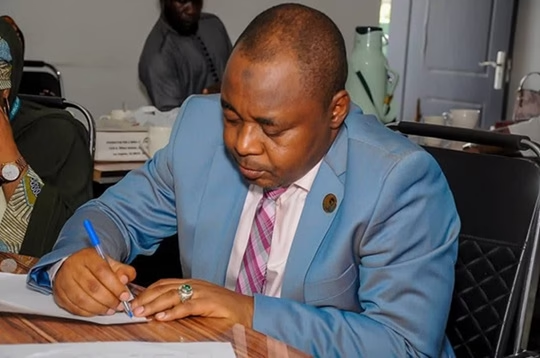
When Governor Abba Kabir Yusuf declared a public health emergency on drug abuse on July 22, 2026, and inaugurated the Multi-Agency Task Force on Drug Abuse and Illicit Trafficking, many in Kano saw it as another committee. Three months later, the committee led by Barrister Muhyi Magaji Rimin Gado is dominating security headlines in the state.
The Taskforce was constituted as a multi-agency platform bringing together NDLEA, Police, DSS, Consumer Protection Council, Pharmaceutical Society, Ministry of Health, Anti-Daba Unit and other stakeholders. Dr. Ibrahim Garba Muhammad serves as Secretary.
From Raids to Results: Over 400 arrests
According to briefings by the Chairman, within the first two months the Taskforce arrested more than 380 suspects and secured over 230 convictions.
By September 29, when Barr. Muhyi spoke at the Kano Network of NGOs (KANET) Monthly Lecture at Nasarawa GRA, the figure had risen to over 400 arrests.
Presenting its scorecard to the State Executive Council in late September, the Taskforce reported a 35% reduction in drug-related crimes in the last three months, attributing it to intensified enforcement, seizures and over 500 convictions as of October 22.
Operations have focused on identified hotspots: Race Course, Filin Idi, Filin Mahaha, Tashar Rami, Kawo, Tashar Rimi, Jakara, Madigawa, Yalwa, Sanka, Kul Kul, Dogon Nama and Kukar Bulukiya.
Recoveries include Cannabis Sativa, Tramadol, Diazepam, Pentazocine, Pregabalin, Exol-5 and a Methamphetamine-based designer drug. In one case, 870,000 capsules of Pregabalin were seized from a pharmaceutical company over suspected diversion. Local weapons – knives, daggers, cutlasses and clubs – used by gangs were also recovered.
The Taskforce also recorded high-profile arrests. On August 18, it announced the arrest of a former Chairman of Rogo Local Government for allegedly selling and administering fentanyl injections to youths, after a victim who spent over N2 million on injections identified him.
Latest: Gang sponsor tracked to Port Harcourt
In its most recent operation, the Taskforce announced on October 30 the arrest of a 27-year-old suspected gang violence sponsor, Ishaq Lawan Ibrahim, popularly known as Malam Keya, from Yalwa in Dala LGA.
According to the committee, Malam Keya was allegedly financing violent clashes by rival Daba gangs in Dala that claimed lives.
He fled to Port Harcourt, Rivers State, after crackdown intensified, but was tracked and arrested in an operation led by Head of Operations, CSP Bashir Gwadabe, and brought back to Kano. He is now in police custody pending prosecution.
Chairman Muhyi said the arrest outside Kano shows the Taskforce will pursue suspects beyond state boundaries.
Beyond Enforcement: Children, rehabilitation and technology
The committee says its mandate is not just enforcement. It reported rescuing 43 underage children allegedly exposed to intoxicants and convicting two dealers – Kabiru Isa and Usman Hamisu – for the offence.
About 125 persons were referred to the Kano Reformatory Institute in Kiru for rehabilitation. With Kiru overstretched, government has provided an additional facility in Tofa.
The Taskforce has set an ambitious target of taking 10,000 youths off the streets for rehabilitation, skills acquisition and reintegration.
On August 21, Barr. Muhyi inaugurated nine sub-committees to professionalize the fight: Finance; Media and Publicity; Advocacy and Sensitisation; Licences, Inventory and Verification; Compliance, Inspection and Electronic Tracking; Monitoring and Implementation; Intelligence; Reformative and Traditional Council; and Anti-Drug Coordination.
Tech Turn: AI, 24-hour line and NDLEA support
In the last two weeks, the Taskforce unveiled a new approach.
On 22 October Barr. Muhyi, on behalf of Governor Yusuf, donated operational equipment to the NDLEA Kano Strategic Command led by Commander Dahiru Yahaya Lawan, to boost operations.
He also disclosed that Kano is deploying Artificial Intelligence for surveillance and tracking of suspected dealers, and equipping a rapid-response centre with ICT and a 24-hour toll-free line where residents can report and get response within 30 minutes.
At KANET lecture themed “Kano Drugs Crisis: Challenges, the Way Forward and the Role of the Community,” Muhyi stressed community intelligence and called for more rehabilitation to decongest remand homes.
No sacred Cows
From day one, Barr. Muhyi has maintained a hard line on political interference.
“No politician can pressure me to free drug suspects. The only person who can stop me is the Governor, and I know he will never interfere,” he told journalists on July 28.
That stance, coupled with intelligence-led raids, has earned the Taskforce both praise and scrutiny.
The bigger picture
Kano Police data cited by the Taskforce indicates about 70% of major crimes in 2025 were linked to drug abuse. The Executive Order outlawing Daba gangs provides a minimum of five years imprisonment under Section 97A of the Kano Penal Code.
Whether the Taskforce can sustain momentum will depend on three tests: securing the drug supply chain from pharmaceutical diversion, expanding rehabilitation beyond Kiru, and maintaining inter-agency cooperation without becoming a parallel enforcement body.
For now, in the markets of Filin Idi and the streets of Dala, residents say the presence of the committee is being felt.