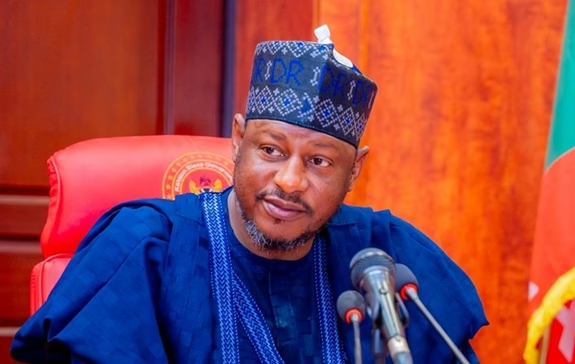
A civil society organisation, Muryar Matasa Initiative (MMI) for Employment Development and Inclusion, has called on the Katsina State Government to fully implement the Discrimination Against Persons with Disabilities (Prohibition) Law.
The group made the call in a statement issued in Katsina on Wednesday, signed by Saratu Hamidu and Nasir Dauda, Executive Director and Secretary-General respectively.
The group urged Governor Dikko Radda to prioritise the full enforcement of the law, noting that delays have continued to deny Persons with Disabilities (PWDs) access to critical protections and opportunities in the state.
The CSO expressed concern that, despite the signing of the landmark legislation in 2023, its implementation framework remains largely inactive, leaving a significant segment of the population vulnerable to discrimination and exclusion.
It noted that Katsina is home to an estimated 600,000 persons with disabilities, including individuals with spinal cord injuries, visual and hearing impairments, leprosy-related conditions, and other physical or developmental challenges.
The group added that Nigeria has about 35 million PWDs, underscoring the scale of the issue and the need for urgent action at the state level.
It further stressed that full implementation of the law would guarantee the protection of fundamental rights, ensure equal access to justice, and eliminate discrimination in both public and private sectors.
“The law would provide a structured framework for inclusive healthcare, education, and employment opportunities, thereby improving the quality of life for affected individuals,” the group emphasised.
According to the group, effective enforcement would also position Katsina as a model for inclusive governance and social justice in Nigeria, in line with global development goals.
It commended Radda for his efforts toward inclusive governance and for creating opportunities for persons with disabilities to participate in state affairs, adding that, “more concrete steps are required to translate policy into action.”
The group called on the state government to immediately operationalise the law, establish enforcement mechanisms, allocate adequate funding, and ensure the active involvement of PWD in its implementation.
“Implementation is not merely a legal obligation, it is a moral imperative and the pathway to dignity, equality, and opportunity for all citizens,” the statement added.