Murtala Uba Mohammed, PhD
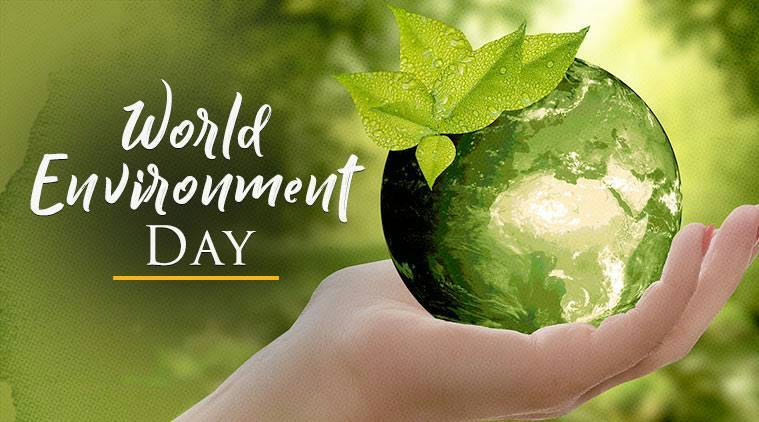
Today, 5th June, is set aside by the United Nations as World Environment Day. The day is celebrated globally and is meant to be a moment of reflection and action on what all of us can do to save our planet, which many empirical records have shown is degrading and gradually losing its environmental quality. The theme for this year is Climate Action.
As UNEP aptly puts it, #NowForClimate. Even though the official symbolic world gathering will be held in Baku, Azerbaijan, people across the globe will converge for the same reason: to reflect on environmental challenges and chart pathways for a more sustainable future.
Typical of many developing countries, Nigeria faces a high risk from the impacts of climate change.
With its rapidly growing population and urbanization, a weakening economy and governance structures, and increasing poverty driven by resource mismanagement, deforestation, as well as communal and resource-based conflicts, the country’s resilience to climate change impacts remains limited. Nigeria therefore stands at a crossroads because of its vulnerability to flooding, drought, desertification, and extreme weather events.
We do not need statistics to convince Nigerians that climate change is real. Regardless of location or livelihood, people are already experiencing its effects.
From the farmer struggling with unpredictable rainfall patterns to the industrialist coping with rising energy costs; from the trader selling goods in urban markets to the rural woman engaged in petty trade, climate change is affecting lives and livelihoods in different but significant ways.
Climate Action Starts at Home
The challenge before us is therefore not only for governments and international organizations. It is also about the little rewarding things that individuals, households, and communities can do.
While global agreements and national policies are important, meaningful climate action begins with the choices we make every day. From the way we consume resources to how we dispose of waste and use energy, each action matters.
Why Tree Planting Still Matters
Foremost among these actions is planting and nurturing trees. In spite of widespread awareness of their importance, few of us take the initiative to plant them. Many of us simply rely on the trees we met in our environment, which were probably planted by our ancestors or earlier settlers.
We use, benefit from, and cherish these trees, but how often do we ask ourselves: How many trees have I planted? Will the trees in my neighbourhood remain forever? Are they declining or increasing in number? For most of us, the answers may not be encouraging.
Planting and nurturing trees is one of the simplest and most effective contributions we can make to climate action. Trees provide shade, fruits, and protection for the ecosystem.
They act as carbon sinks, improve soil fertility, enhance agricultural productivity, and help reduce global warming. Beyond environmental benefits, many religious traditions regard tree planting as a rewarding act of charity whose benefits extend to people, animals, and future generations.
Turning Waste into Opportunity
Waste management is another important activity that is both necessary and rewarding. The more we reduce waste through prudent consumption, the more we conserve resources and contribute to climate action.
The waste we produce should, as much as possible, be recycled or reused, while proper sorting and segregation should become a household habit.
Poor waste management, especially of solid waste, contributes significantly to greenhouse gas emissions.
On the other hand, sustainable waste management helps reduce environmental pollution, creates jobs and businesses, and supports the development of a circular economy. What many regard as waste can often become a valuable resource when managed properly.
Using Land Wisely, Protecting Nature
Human beings need food to survive, but quality food production depends on a healthy environment.
The best environment is one in its natural state. Where human use is necessary, it should be guided by planning, conservation, and sustainability.
Land-use zoning remains an important responsibility of government, while communities have a role in conservation and environmental stewardship. Individuals, too, must recognize their responsibility towards nature.
Cultivating every available piece of land may not always be beneficial, especially when it blocks waterways and contributes to flooding and soil erosion.
Similarly, indiscriminate construction and development often create environmental problems that could have been avoided through proper planning.
Cleaner Energy for a Cooler Planet
The energy we use for cooking, lighting, transportation, and other daily activities is among the major contributors to global warming. As much as possible, cleaner and more sustainable energy sources should be adopted.
Where affordable alternatives exist, dependence on fuelwood should be reduced because of its adverse effects on both human health and the environment.
Greater investment in renewable energy sources such as solar, wind, and hydropower will help reduce environmental degradation and improve climate resilience.
Energy conservation is equally important. Electrical appliances and lighting should only be used when necessary. These simple habits may appear insignificant, but when practiced by millions of households, they can produce substantial environmental benefits.
Spreading Environmental Awareness
Environmental awareness remains one of the most powerful tools for change. The little we know about the environment should be shared with others in our families, schools, workplaces, and communities.
Knowledge becomes more valuable when it inspires positive action.
The most useful person is not necessarily the one who knows the most, but the one who shares knowledge and helps others become better informed and more responsible citizens. Through continuous awareness and education, societies can build a culture of environmental responsibility that supports sustainable development.
Small Actions, Big Impact
Thinking globally and acting locally remains one of the most effective pathways towards building resilient communities and securing a sustainable future for generations to come. Climate action is not only the responsibility of governments, scientists, and international organizations; it is the responsibility of all of us.
Every tree planted, every waste item properly managed, every unit of energy conserved, and every piece of environmental knowledge shared is a step in the right direction.
The task may appear small when viewed individually, but collectively these little rewarding actions can make a remarkable difference in protecting our environment and safeguarding the future of our planet.
As we mark this year’s World Environment Day, let us move beyond awareness to action.
The future we desire will not be built by grand declarations alone, but by the everyday choices we make in our homes, schools, workplaces, farms, markets, and communities. Climate action starts at home, and the time to act is now.
Mohammed, PhD, writes from the Department of Geography, Bayero University, Kano