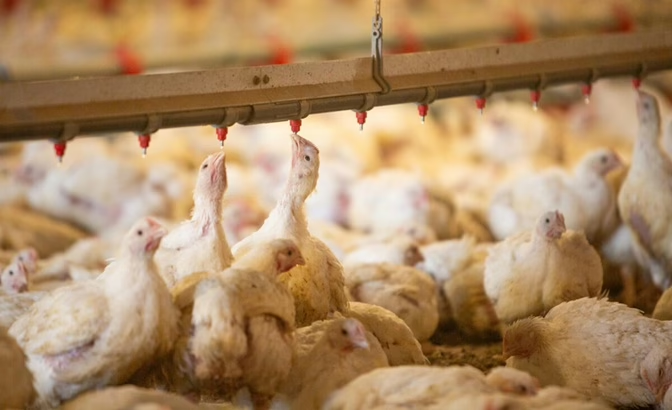
After several years without reported cases, Ivory Coast has confirmed a new outbreak of highly pathogenic avian influenza (HPAI), marking a significant re-emergence of the disease in the country.
The last major outbreaks were recorded around 2015-2016.
In April, authorities reported an outbreak of HPAI H5N1 in the Koun-Fao area near the Ghanaian border. The event, notified to the World Organisation for Animal Health, occurred on a commercial poultry farm and resulted in the loss of around 95,000 birds.
Given the proximity to an international border, the incident raises concerns about potential cross-border spread and reinforces the need for coordinated surveillance and response measures.
The outbreak underscores broader regional risks linked to poultry movement, informal trade networks, and the interaction between domestic flocks and wild birds along migratory flyways.
Strengthening farm-level biosecurity and early detection systems remains critical to limiting further spread.
Nigeria continues to face persistent avian influenza challenges, having experienced recurring outbreaks since the first introduction of H5N1 in 2006.
The country’s poultry sector is characterised by a mix of commercial operations and extensive live bird market systems, which contribute to ongoing virus circulation.
Multiple avian influenza subtypes have been detected over time. Highly pathogenic strains such as H5N1 and H5N8 have been the primary drivers of outbreaks in recent years, while H5N6 has also been reported.
In addition, low pathogenic avian influenza (LPAI) H9N2 is present in poultry and live bird markets, adding complexity to surveillance and control efforts.
This co-circulation of multiple strains increases the risk of virus evolution and complicates disease management.
It also highlights the importance of sustained surveillance, improved market hygiene, and coordinated regional strategies to reduce transmission.
Some reports have also highlighted the need for a more tailored approach.
(Poultry World)