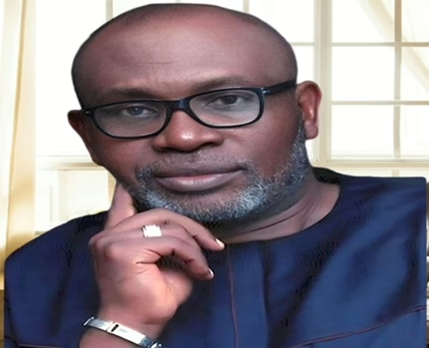
Rekpene Bassey
Nigeria’s journey towards the 2027 general elections is beginning to expose a dangerous fault line in the country’s political architecture: the growing confrontation between institutional authority, religious influence and public confidence in democratic governance.
The reported ultimatum by the Supreme Council for Shari’ah in Nigeria (SCSN), demanding the removal of the Chairman of the Independent National Electoral Commission (INEC), Professor Joash Ojo Amupitan, has elevated what might ordinarily have been an institutional disagreement into a potentially consequential national security question. The Council’s position that it would not recognise elections conducted under his leadership is particularly troubling.
It raises a fundamental question: can a constitutional democracy sustain the authority of its electoral institutions when influential sections of its population announce their rejection of an election before a single ballot has been cast?
The controversy is not entirely new. In January 2026, the Council’s President, Sheikh Professor Bashir Aliyu Umar, publicly called for Amupitan’s removal, citing concerns about his antecedents and perceived neutrality, including his alleged involvement in a legal brief concerning claims of Christian genocide in Nigeria.
The Council’s position was subsequently reported as a rejection of elections conducted under his leadership. The controversy has since intersected with broader allegations about the INEC Chairman’s impartiality and the credibility of the electoral process.
However, an important distinction must be maintained: allegations are not findings of fact, and political or religious disagreement with an individual does not automatically establish professional misconduct.
The burden of evidence remains indispensable in any serious democratic discourse.
More significantly, the Council’s own institutional record deserves attention.
On 13 April 2026, it published an official disclaimer rejecting certain misleading social media reports which alleged that it had directed Muslims to pray specifically for Amupitan’s removal and had threatened that elections would not hold if its demands were unmet. The Council described those particular claims as unsubstantiated.
Its broader opposition to the INEC Chairman, however, had already been publicly reported.
This distinction matters because a nation already struggling with misinformation cannot afford to allow fabricated statements, exaggerated headlines or unverified threats to become instruments of political mobilisation.
Veritas vos liberabit – the truth shall set you free. In matters affecting national security, truth is not merely a philosophical virtue; it is an operational necessity.
The immediate question confronting President Bola Ahmed Tinubu is therefore not simply whether to retain or remove an electoral chairman. It is how to protect the independence of an institution whose credibility is indispensable to the survival of democratic government.
Under Section 157 of the 1999 Constitution, as amended, the INEC Chairman can only be removed by the President acting upon an address supported by a two-thirds majority of the Senate, on grounds of inability to discharge the functions of office or misconduct.
This constitutional safeguard is deliberate. It protects the electoral umpire from arbitrary political interference.
Consequently, an ultimatum from any pressure group, however influential, cannot substitute for constitutional procedure. The President must neither surrender constitutional responsibility to religious pressure nor dismiss legitimate concerns simply because they originate from an influential religious institution.
Be that as it may, it would be intellectually dishonest to dismiss every concern surrounding INEC as political intimidation.
The electoral commission has recently faced serious questions about its preliminary voters’ register, including reports of duplicate entries, photographs suspected to be AI-generated and the inclusion of deceased persons.
On November 1, INEC Chairman Amupitan acknowledged that the commission was investigating irregularities identified in the register and promised corrective action based on verified findings. The commission had also faced scrutiny over the accessibility and publication of the preliminary register.
These developments make transparency imperative.
A voters’ register is not an administrative afterthought; it is the foundation upon which the legitimacy of electoral representation rests. An inaccurate register can distort political participation, undermine confidence and provide fertile ground for post-election disputes.
The security implications of this controversy are considerable.
Nigeria is already confronting a complicated threat environment characterised by terrorism, banditry, kidnapping, communal violence, separatist agitation, organised criminal networks and deepening socioeconomic pressures.
In such circumstances, the country cannot afford another destabilising front arising from a crisis of electoral legitimacy.
The security of a nation is not measured exclusively by the strength of its armed forces, intelligence agencies or policing institutions. It is also measured by the confidence citizens repose in the institutions that govern them.
When the authority of an electoral commission becomes contested along religious, ethnic or regional lines, the resulting distrust can become a multiplier of existing security vulnerabilities. But why play the religious card at this point?
Of particular concern is the possibility that an institutional dispute could gradually acquire a religious identity.
Nigeria’s history demonstrates the combustible consequences of allowing political disagreements to become entangled with religious sentiments.
The country is a plural society whose stability depends on the constitutional protection of citizens irrespective of their faith, ethnicity or geographical origin. Neither Christianity nor Islam confers superior citizenship.
Neither religious affiliation nor regional identity should determine the legitimacy of a national institution.
The moment an electoral dispute is framed as a confrontation between religious communities, the country risks replacing constitutional reasoning with collective suspicion.
Such a development would be a strategic gift to extremist organisations and other non-state actors seeking to exploit national divisions.
There is also a dangerous constitutional misconception in the suggestion that an entire religious or regional population can collectively invalidate an election conducted under the authority of a legally constituted electoral commission.
The right to challenge an election belongs to candidates, political parties and other parties recognised by law through the established judicial processes.
A religious organisation may express its position, mobilise public opinion and demand accountability, but it cannot assume the constitutional authority of an electoral tribunal. Nor can it pronounce a national election invalid merely by declaring that its followers will not recognise the outcome.
Dura lex sed lex – the law is harsh, but it is the law. The rule of law must remain the common denominator of Nigeria’s political and religious diversity.
Nevertheless, the responsibility for preventing this crisis from escalating cannot rest exclusively with the SCSN.
President Tinubu must appreciate that electoral credibility is a national asset, not an extension of presidential political authority.
His administration has a particular responsibility to demonstrate that INEC is institutionally independent and that the President has no intention of influencing its decisions.
Any appearance of political interference would reinforce suspicions that the electoral umpire is operating under executive influence. The President should therefore facilitate credible, independent examination of substantiated allegations against the Chairman and the commission.
Where evidence establishes wrongdoing, the constitutional process should take its course.
Where allegations are unsupported, the findings should be made public. Silence, political expediency and selective accountability are inadequate responses to any crisis; any whatsoever.
Equally important is the responsibility of Professor Amupitan himself. The chairmanship of INEC demands more than legal qualifications, academic distinction or administrative experience. It requires exceptional political sensitivity, institutional restraint and an almost uncompromising commitment to neutrality.
An electoral umpire must not only be impartial; he must conduct himself in a manner that leaves no reasonable doubt about his impartiality.
The principle of nemo judex in causa sua – no one should be a judge in his own cause – offers an important philosophical guide. The Chairman must recognise that the credibility of his office is larger than his personal reputation.
He should proactively address legitimate questions, strengthen internal controls, publish verifiable information and subject the commission’s operations to transparent scrutiny.
The controversy also exposes the limitations of religious leadership when advocacy approaches the boundaries of political coercion.
Religious institutions have an important role in defending justice, accountability, human dignity and ethical governance. Their moral authority can contribute meaningfully to democratic consolidation.
But that authority must be exercised with responsibility and an appreciation of the consequences of public declarations. An advance rejection of election results risks encouraging political alienation before the electoral process has even begun.
It may also create a psychological environment in which supporters interpret any unfavourable outcome as evidence of conspiracy.
The distinction between peaceful dissent and the pre-emptive delegitimisation of constitutional institutions must therefore be clearly understood. Moral influence should strengthen the republic, not place it under competing centres of political sovereignty.
For the northern states in particular, the implications deserve sober consideration.
The North is not a homogeneous political or religious constituency. It contains diverse ethnic nationalities, religious communities, political traditions and competing democratic interests.
Millions of northern Nigerians are equally entitled to participate in an electoral process whose outcome must be determined by the votes of citizens, not by the pronouncements of influential organisations.
To suggest that the entire North will reject an election is to risk reducing a complex and diverse population to a single political position.
Such a generalisation can deepen alienation among communities that may not share the Council’s position.
It is also important that political actors outside the North resist the temptation to interpret the controversy as a confrontation between the northern and southern parts of the country. Nigeria’s unity must not become collateral damage in an argument about electoral administration.
The way forward requires institutional action rather than rhetorical escalation. INEC should commission a credible technical audit of its voters’ register, publish the findings and provide an accessible mechanism for claims and objections.
Political parties, civil society organisations, religious institutions and independent observers should be granted meaningful opportunities to scrutinise the electoral process.
The National Assembly must exercise its oversight responsibilities without converting them into partisan theatre.
The National Security Council should also assess the potential consequences of escalating religious and regional rhetoric, while ensuring that legitimate freedom of expression and peaceful assembly are protected.
Interfaith dialogue, responsible public communication and early conflict-prevention mechanisms should be strengthened.
These measures are not concessions to any religious or political constituency; they are essential investments in national stability.
Ultimately, the 2027 elections will test more than INEC’s administrative competence.
They will test the maturity of Nigeria’s political class, the restraint of its religious leadership, the independence of its constitutional institutions and the capacity of its security architecture to anticipate rather than merely react to threats.
The danger is not that citizens will question INEC; questioning public institutions is an essential feature of democracy. The danger is that institutional distrust may be transformed into collective religious or regional hostility, with the potential to undermine national cohesion.
History teaches that nations rarely collapse from a single disagreement. They weaken when disagreements become irreconcilable, institutions lose legitimacy and citizens begin to regard one another as adversaries rather than fellow members of a common political community.
President Tinubu must therefore resist the temptation to treat the controversy as an inconvenience to his administration or as a challenge to be neutralised through political manoeuvring.
The SCSN must equally recognise that no organisation, regardless of its religious standing or numerical influence, possesses the authority to place itself above the Constitution.
Professor Amupitan must demonstrate that the office he occupies is worthy of public confidence. And Nigerians must insist that the 2027 elections are determined by the freely expressed will of the electorate, not by threats, intimidation, religious sentiments or executive preferences.
The ultimate danger facing Nigeria is not simply the possibility of a disputed election; it is the possibility of a country entering an election already divided over whether its institutions deserve to be obeyed.
A democracy cannot survive indefinitely when its citizens lose faith in the rules by which they are governed.
The integrity of the ballot is the foundation of political legitimacy, and political legitimacy is indispensable to national security.
Nigeria must protect both, or risk discovering that the price of a compromised electoral process is far greater than the cost of correcting its deficiencies before it is too late.
Rekpene, BASSEY is Security Specialist and President of the African Council on Narcotics.