Isiyaku Ahmed
The National Agency for the Prohibition of Trafficking in Persons (NAPTIP), in collaboration with the International Federation of Women Lawyers (FIDA) and with technical support from the Rule of Law and Anti-Corruption Program (RoLAC II), has trained frontline officers on the identification, screening and referral of survivors of Sexual and Gender-Based Violence (SGBV).
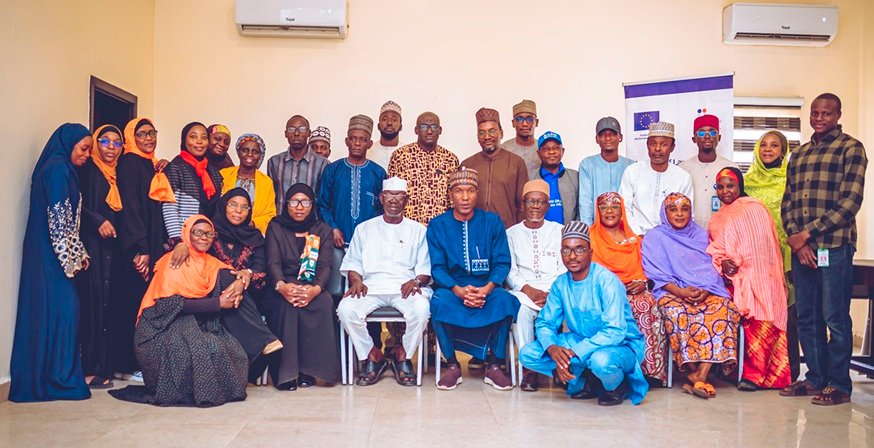
The capacity-building workshop, held on Wednesday at Tahir Guest Palace, Kano, brought together participants from law enforcement agencies, civil society organisations and organisations representing persons with disabilities.
In his welcome remarks, the Kano State Project Coordinator of RoLAC II, Ibrahim Bello, called for improved identification, screening and referral mechanisms to ensure survivors of SGBV receive timely access to justice and essential support services.
Bello, who represented the Head of Programme, Dr Danladi Plang, noted that frontline officers in health facilities, law enforcement agencies, social welfare institutions, justice institutions and community structures were often the first points of contact for survivors.
He expressed concern that many survivors remained unidentified or failed to receive timely assistance, while others faced stigma, victim-blaming and inappropriate institutional responses that further exposed them to trauma and discrimination.
The Kano State RoLAC II Coordinator explained that the workshop was designed to equip participants with the skills to identify suspected cases of SGBV, conduct sensitive screening, adopt survivor-centred approaches and facilitate effective referrals to relevant support services.
He emphasised that identifying and screening survivors should not involve interrogating them or compelling them to disclose their experiences. Rather, frontline officers should create safe and supportive environments where survivors can seek assistance without fear, intimidation or discrimination.
He stressed that confidentiality, informed consent, respect for human dignity, safety and the best interests of survivors must guide every intervention.
The RoLAC II Coordinator also disclosed that the programme had supported the development of Kano State SGBV Referral Pathways and Standard Operating Procedures under the Ministry of Women Affairs, Children and People with Special Needs.
According to him, the two documents would soon be printed and distributed to relevant stakeholders to strengthen coordination and improve responses to gender-based violence across the state.
He urged participants to actively engage in the training, share experiences, identify institutional challenges and explore practical ways of strengthening collaboration among service providers.
Bello challenged them to translate the knowledge acquired into improved professional practices at their respective duty posts to ensure survivors receive appropriate assistance and are not neglected by existing response systems.
He maintained that ending gender-based violence required more than public awareness campaigns and declarations of commitment, stressing the need for competent institutions, responsive frontline officers and effective referral mechanisms.
He commended NAPTIP, FIDA, the facilitators, participating institutions and development partners for supporting the initiative.
In his opening remarks, the NAPTIP Kano Zonal Commander, Abdullahi Shuaibu Babale, who represented the agency’s Director-General, Lami Binta Adamu, called for stronger institutional collaboration, improved reporting mechanisms and enhanced protection for survivors of gender-based violence.
Babale described gender-based violence as a serious human rights and social protection concern, noting that sexual violence, domestic abuse, child abuse, exploitation and harmful traditional practices continued to undermine the dignity, safety and fundamental rights of women, girls and other vulnerable persons.
He observed that human trafficking, sexual exploitation and other forms of gender-based violence were closely interconnected, requiring comprehensive interventions that went beyond rescuing victims and prosecuting offenders.
According to him, NAPTIP’s responsibilities also include ensuring the protection, rehabilitation and reintegration of survivors.
He identified survivor-centred documentation, effective referral systems, institutional coordination, confidentiality and safeguarding as critical elements of an effective response to gender-based violence.
The zonal commander warned against institutional insensitivity that could expose survivors to further harm, insisting that they deserved dignity, confidentiality, protection and access to justice, while perpetrators must be held accountable in accordance with the law.
He urged participants to maximise the benefits of the training by applying the knowledge acquired to improve their professional practices and strengthen collaboration among relevant institutions.
Babale also commended RoLAC II, FIDA Kano Branch and other development partners for their commitment to building institutional capacity and improving access to justice for victims and survivors.
He formally declared the workshop open, calling on stakeholders to move beyond awareness campaigns and take practical measures to end violence against women and girls, protect survivors and ensure justice.
Some participants who spoke with Stallion Times pledged to apply the knowledge and skills acquired to improve the identification, screening, documentation and referral of SGBV cases.
They also committed to adopting survivor-centred approaches that uphold the dignity, safety, confidentiality and rights of survivors, while ensuring that informed consent, respect, non-discrimination and the best interests of survivors guide their professional interventions.
The capacity-building workshop forms part of activities marking the 2026 16 Days of Activism Against Gender-Based Violence, an international campaign aimed at raising awareness and mobilising collective action to eliminate violence against women and girls.