Patience Robinson, Kaduna
The 2026 edition of the Arewa Fashion and Food Festival (AFFEST) 2026 concluded in Kaduna with a strong call to transition Northern Nigeria’s cultural assets into a self-sustaining economy, position local food and fashion for global export, and build structured support systems for emerging creators and vendors.
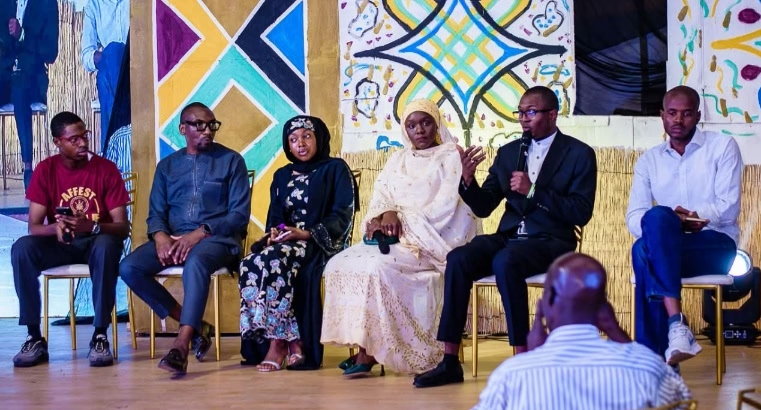
The two-day event, held at the Lumana Center inside Zamani College in Kaduna, brought together fashion designers, culinary vendors, legal practitioners, academic experts, corporate partners, and government delegates to examine how Northern culture can move beyond static preservation to become a self sustaining economy.
Delivering the keynote address titled “Beyond Preservation: Making Northern Nigerian Culture a Living, Breathing Economy,” Dr. Jeremiah Aluwong, a lecturer in the Department of Agricultural Extension and Management at Nuhu Bamalli Polytechnic, Zaria, emphasized that Northern Nigeria possesses the creative talent and resources needed to command international attention.
Drawing comparisons to the global rise of Afrobeats, Dr. Aluwong argued that local fashion and food traditions can achieve similar global reach if backed by deliberate production and export strategies.
“Culture is like the human body, any part of the body you fail to exercise will shrink over time.” He urged the northern region to move beyond just preserving heritage and recommended our main steps: protecting culture, providing platforms, driving production, and projecting Northern identity to the world.
Pointing to challenges in local trade, Dr. Aluwong cited how ginger farmers in Kachia lose revenue on exports.
He explained that because local producers lack overseas storage facilities, foreign buyers take advantage of them and buy high-grade Nigerian ginger at very cheap prices.
Dr. Aluwong warned against replacing local crops with foreign genetically modified seeds (GMOs), noting that when a region loses control of its native seeds, it loses both its food heritage and its economic independence.
Finally, he urged policymakers to build supportive communities for young creators, similar to how Silicon Valley supported tech companies in the United States.
Speaking on the mission of the festival, Barrister Bilkis Abdulrasheed Shebi, the Guarantor-in-Chief of AFFEST, and the legal practitioner at the Inganchi rehabilitation center under the Women Aware of Rights Initiative, explained how the platform bridges social rehabilitation with economic empowerment.
Barr. Shebi explained that women at the center learn hands-on skills through art therapy to recover from sexual and gender-based violence (SGBV), but persistent societal stigma often blocks their access to regular markets.
“AFFEST was created to provide these survivors and emerging youths with a dignified platform to showcase their work alongside established industry leaders.
“Justice is not enough for healing; we have to help them rebuild their lives,”Shebi explained that AFES was founded to bridge the market gap for survivors of sexual and gender-based violence (SGBV), who use art and vocational therapy to heal but face persistent societal stigma when attempting to sell their handiwork independently.
“Our major challenge is funding. For the past years we have been doing it ourselves but for this year, we are grateful to have partners who have keyed into it such as Zamani College, Fallgates Rice, sublime Gas, and others.”
Responding on behalf of the government, Mallam Bashir Hamisu, Director of Extension Services at the National Council for Arts and Culture (NCAC)—representing the NCAC Director-General, acknowledged the role of the private sector in driving cultural growth while reaffirming the state’s duty to guide and regulate the industry.
Mal. Hamisu noted that while Nigerian cultural enterprises have expanded rapidly through independent initiatives, official oversight remains necessary to set quality standards, safeguard cultural integrity, and regulate content on public digital platforms as local creators enter international markets.
“What government does is to give regulations. From our own end, we are trying our best to see that all these activities are regulated and going out there to help us fashion a way through our culture,” he iterated.
One of the vendors, Rukaya Ridwan, the CEO of Rizk Cuisine —a catering and local drink manufacturing business, shared how attending AFFEST since its first edition in 2023 has supported the continuity and growth of her enterprise.
She explained that her business actively preserves and projects Northern culture by manufacturing, packaging, and presenting traditional drinks on a commercial scale comparable to other soft drinks.
Commending the organizing team for executing an event on such a large scale, she added that she relies on AFFEST to meet potential investors, expand her customer base, and gain constructive feedback to enhance her business.
Another vendor, Hamdiyya Abdulrahman, the CEO of The Art Studio by Hamdys —an art brand that makes string art designs and other forms of art disclosed that AFFEST helped her to heal from her past and gave her brand a platform to thrive.
“I look out for people to come and see what I became because AFFEST opened the door for me to meet people and network, it acts as a gateway for my art, my brand, and my personal life. A big shout-out to them because they mean a lot to my brand and to me personally.
“All I can say to them is thank you for choosing me, for changing my life, and for always telling me I can do better.
“My life did not end when things were happening to me, so big credit and a shout-out goes to AFFEST. They are doing an incredible job,” she applauded.