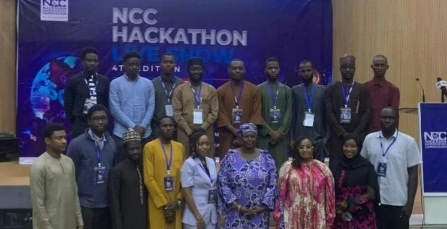
The Nigerian Communications Commission (NCC) has called for increased investment in locally developed accessible technologies to bridge digital exclusion and create new opportunities for millions of Nigerians, particularly Persons with Disabilities (PWDs).
The Executive Vice Chairman of the commission, Dr Aminu Maida, made the call on Thursday in Abuja at the fourth edition of the NCC Hackathon Live Show, themed, “Technology Without Barriers.”
Maida, who was represented by the Executive Commissioner, Stakeholder Management, NCC, Ms Rimini Makama, said the creativity and ingenuity of young Nigerians remained a major economic resource that could drive inclusive digital development.
He said the hackathon celebrated youth innovation while reaffirming the commission’s commitment to ensuring equal access to the digital economy, especially for PWDs.
According to him, World Bank estimates show that about 25 million Nigerians live with at least one form of disability, while approximately 3.6 million experience significant difficulties in functioning.
Maida said PWDs were twice as likely to be excluded from employment and education, warning that digitalisation could worsen existing inequalities if accessibility was not prioritised.
He identified the major barriers facing PWDs as the high cost of digital devices, inaccessible online platforms, inadequate digital skills and limited access to affordable assistive technologies.
“These barriers can deny people with disabilities access to connectivity, education, employment, financial services, healthcare and meaningful participation in society,” he said.
Maida stressed that Nigeria’s ambition to build a resilient and diversified trillion-dollar economy could not be achieved while millions of citizens remained excluded because of physical, sensory or cognitive barriers.
He said the hackathon was designed to provide a platform for young innovators to develop solutions that would ensure technology removed barriers rather than created new ones.
According to him, accessible technologies could unlock untapped markets, expand consumer participation and bring more Nigerians into the formal economy as creators, entrepreneurs and digital citizens.
He added that the initiative was helping Nigeria transition from being largely a consumer and importer of foreign software to becoming a producer of locally engineered assistive technologies.
Maida disclosed that solutions developed by participants included indigenous artificial intelligence-powered speech-to-text technologies, voice-enabled public service platforms, accessible USSD solutions and inclusive mobile applications.
He urged the contestants to continue refining and developing their innovations, stressing that the outcome of the competition should not determine the future of their ideas.
The NCC boss also called on venture capitalists, telecommunications operators and other stakeholders to support the innovators through investment and strategic partnerships to enable their solutions achieve commercial viability and nationwide adoption.
The News Agency of Nigeria (NAN) reports that 20 contestants presented their solutions at the hackathon, with five emerging for the grand finale.
Sora emerged overall winner, followed by Clear Signal, Ikor, Axol and Aditus.
Also speaking, Ms Chinyelu Chikwendu, Senior Manager, Strategy and Innovation, MTN Nigeria, commended the NCC for supporting innovation and focusing on technology solutions for PWDs.
Chikwendu said MTN remained committed to supporting and employing PWDs, adding that the company was transitioning from a traditional telecommunications firm into a digitally driven organisation.
She said the company was also willing to support startups and promising innovations capable of creating meaningful social and economic impact.
Abdulhaqq Somoye, developer of Sora, said the platform was created to address gaps in existing job recruitment platforms.
Somoye said the innovation was also inspired by the Federal Government’s policy requiring most government organisations to allocate at least five per cent of their workforce to PWDs.
He explained that Sora was designed as a dedicated recruitment platform for PWDs, enabling employers to identify suitable candidates based on their skills and qualifications.
(NAN)