Stephen Enoch
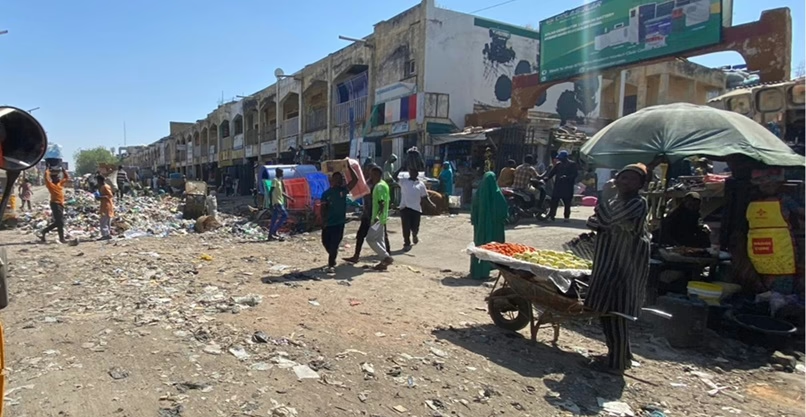
Kano, one of Nigeria’s most populous states and a major commercial hub in the North, records intense daily economic activity across its markets, industries, and neighbourhoods, but alongside this growth is a mounting challenge that increasingly defines urban life in the state: waste management.
From overflowing refuse dumps along major roads and corners to clogged drainage channels in densely populated communities, poor waste management has become a visible and worrying problem.
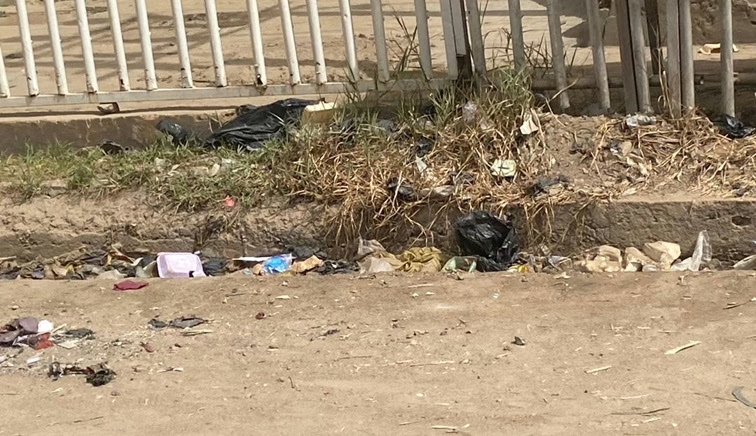
Along many roadsides are small heaps of refuse, plastic bottles stuck inside gutters, and household waste slowly finding its way into nearby waterways has become a visible and worrying problem.
From Kofar Ruwa, Sabon Gari, to parts of Airport Road in Fagge and Hotoro in Nasarawa, Na’ibawa in Kumbosts, and Airport Road, refuse has become a familiar sight.
Residents complain of foul odours, blocked waterways, and the health risks posed by indiscriminate dumping of refuse, especially during the rainy season when floods often worsen the situation.
Kano’s rapid population growth, estimated at over 20 million people, has significantly increased the volume of solid waste generated daily.
Household waste, market refuse, plastic packaging, food remnants, and industrial by-products now overwhelm existing collection and disposal systems.
Informal settlements and high-density areas are particularly affected, where access for waste trucks is limited, and residents often resort to dumping refuse in open spaces or drainage channels.
There, decomposing waste releases greenhouse gases such as methane, while blocked drainages increase the spread of waterborne diseases like cholera and typhoid.
Along Airport Road, a food vendor, Aisha Kabiru, said refuse often remains uncollected for days.
According to her, many people dump waste indiscriminately because it is the easiest option, while waste collection services rarely reach their area.
She explained that during rainfall, blocked gutters cause floodwater to enter shops, damaging goods and driving customers away due to the stench.
She expressed hope that newly constructed drainage channels would reduce flooding this year.
In Sabon Gari, Festus Ugochukwu, a resident of Igbo Road by Sabon Gari Market, recounted how plastic waste blocked a nearby drainage channel during the last rainy season.
The resulting flood forced his family to evacuate their home at night and seek refuge at a hotel temporarily.
In response to the concerns of residents and the growing crisis, the Kano State Government, through the Kano State Refuse Management and Sanitation Board (REMASAB), has intensified efforts to improve waste collection and sanitation across the metropolis and adjoining local governments.
REMASAB has expanded its fleet of waste evacuation trucks, introduced designated waste collection points, and partnered with private waste operators to enhance efficiency.
Monthly sanitation exercises and public enlightenment campaigns are also being carried out to encourage residents to adopt better waste disposal habits.
The Board has equally focused on clearing illegal dumpsites and desilting drainage channels, especially ahead of the rainy season, to reduce the risk of flooding.
Muhammad Sidi Abdullahi, a Director of Special Duties at REMASAB, in an interview with Stallion Times, detailed the ongoing battle against indiscriminate waste dumping in the state.
He stated that REMASAB currently evacuates only about 40% of the daily waste generated in Kano metropolis due to inadequate disposal facilities, limited funding, inefficient operations, and poor public awareness.
According to him, poor infrastructure and narrow streets hinder access for collection vehicles in many areas.
“REMASAB is intensifying its waste collection operations and conducting special evacuation exercises in neighborhoods and major roads, including areas like Kofar Wambai, Unguwa Uku, and parts of Nassarawa local government area.
“The board is establishing designated collection points and has strategically placed “Dino Buckets” to curb illegal dumping.
“For cleared lands, there are plans to use the space for flower and tree planting to improve air quality.
“The board is also focusing on public education through workshops and collaboration with schools to promote recycling via waste banks, while supporting waste scavengers with investment opportunities,” he explained.
Abdullahi warned that penalties for indiscriminate dumping remain in force, with offenders facing fines or prosecution and potential jail terms of up to three months.
One of many boys who collect refuse on a commercial basis at the Singa and Sabon Gari market axis of Fagge is Saminu Rulwan, a 16-year-old migrant from Rimin Gado LGA, who moved to Kano three years ago without support and turned to waste collection as a means of survival.
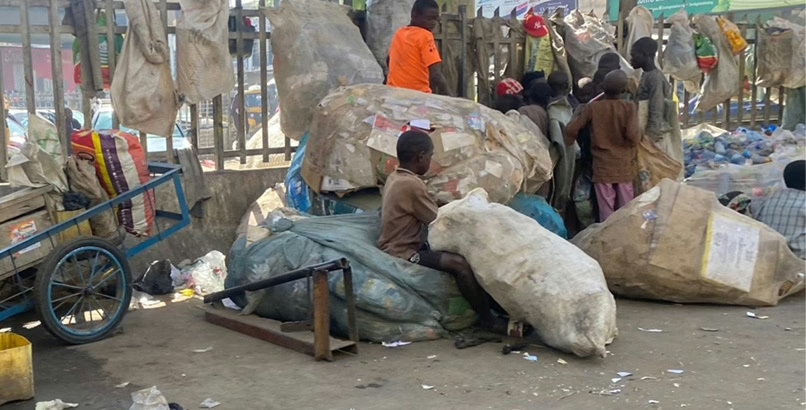
He collects refuse from shop owners daily or weekly, earning small amounts per shop that add up to a steady income, sometimes more than casual labour.
Saminu sees waste as a reliable business because it is produced every day, allowing him to eat, save, and send money home.
However, disposal remains the biggest challenge due to the lack of proper dumping sites, alongside health risks, unpleasant conditions, and social stigma.
Despite these difficulties, he believes waste collection can provide a stable livelihood if approached seriously and with better safety support.
Waste management also occupies a strategic place in Kano State’s Climate Change Policy, which recognizes waste as both an environmental and climate issue.
The policy emphasizes sustainable waste practices like waste reduction, recycling, reuse, and proper disposal as key measures for mitigating the impacts of climate change.
Under the policy framework, the state aims to promote waste-to-wealth initiatives, encourage recycling of plastics and organic waste, and reduce open dumping and burning of refuse, which contribute to air pollution and greenhouse gas emissions.
The policy also calls for stronger collaboration between government agencies, private sector players, and community groups to build a more resilient and climate-smart waste management system.
Abdulrasheed Abubakar, the Managing Director of Rasheed Polymer Plastic in Kano, believes effective implementation of the Kano state climate change policy could transform waste from a burden into an economic opportunity.
He noted that recycling could create jobs, support local industries, and reduce reliance on imported raw materials.
According to him, recycled plastics can replace virgin polymers in products such as poly bags, paving stones, and containers, while policy incentives could lower production and energy costs for recyclers.
Despite ongoing efforts, many residents insist that more must be done. They call for wider waste collection coverage, stricter enforcement of sanitation laws, and sustained public education on proper waste disposal.
As Kano continues to grow, its struggle with waste will remain a defining test of urban governance, environmental responsibility, and climate resilience.