Olu Allen
Let me be blunt: I do not have a favourite politician. Not one. But that does not make me blind.
What we practise in Nigeria today is not democracy. It is a civilian takeover, cleverly dressed in party colours and sold to the people as choice.
Every four years, we line up, thumbprint ballots, and convince ourselves we are participating in governance. But where exactly is the democracy when the foundation itself is compromised?
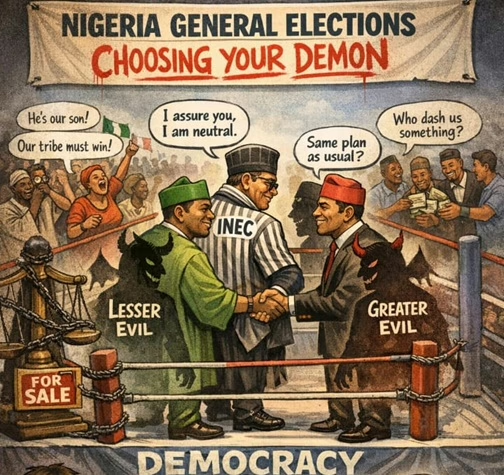
Where the electoral umpire is handpicked by the same political actors it is meant to regulate.
Where elections are determined not by competence, ideas, or track record, but by tribe, religion, and regional allegiance.
Where the average voter cannot name a single policy direction of their preferred candidate, yet can passionately defend their ethnic identity.
Where the judiciary — the supposed last hope of the common man — remains susceptible because appointments are influenced by the same political class it should hold accountable.
Let us stop deceiving ourselves. This is not a government of the people. It is a contest for power among elites in agbada and tailored suits.
Even more troubling is how deeply we have normalised this dysfunction. We now celebrate what should be basic democratic behaviour.
When a politician concedes defeat, as Goodluck Jonathan once did, it is hailed as extraordinary. In a functional democracy, that is the bare minimum. Here, it is treated as an act of rare heroism.
That alone tells you how low the bar has fallen.
If we are serious about fixing Nigeria, then we must confront the root of the problem, not its symptoms.
The first domino that must fall is the electoral umpire.
Not cosmetic amendments to the Electoral Act.
Not the introduction of new technologies.
Not restrictions on social media discourse.
The real issue is the process of selecting those who oversee elections.
As long as the referee is appointed by the same players on the field, the outcome of the game will always be suspect. It is a structural flaw that no amount of surface reform can correct.
An independent electoral body, truly independent, must be non-negotiable. Its leadership should not be a product of executive discretion.
Its funding must not be subject to political approval. Its loyalty must lie solely with the constitution.
Fix that, and the ripple effects will follow. The judiciary will gradually regain credibility. Accountability will begin to take shape.
Political discourse may finally shift from identity to ideology, from sentiment to substance.
Until then, we are merely recycling power among familiar hands.
The call to action is simple, but urgent.
Stop glorifying the “lesser evil.”
Demand structural reform before the next election cycle.
Ask every aspiring leader one question: Will you support an electoral body chosen independently of political influence?
Educate at least one person on why the independence of the umpire matters more than the charisma of any candidate.
We do not need to idolise politicians to love Nigeria. But we must stop mistaking civilian arrangements for true democracy.
At some point, we must ask ourselves an uncomfortable question: are we truly choosing leaders, or are we merely selecting which demon gets the seat?
Reform will not come from comfort. It will come when those who benefit from confusion are forced to confront clarity.
Nigeria deserves better. But first, Nigerians must demand better.
Allen writes on public affairs and promote good governance.