Musa Na Allah, Sokoto
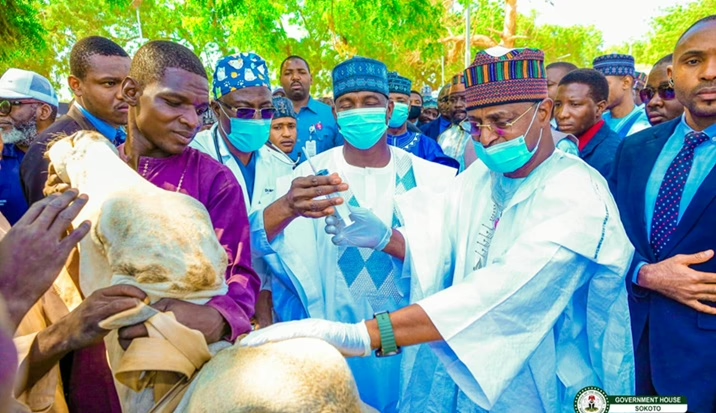
The Federal Government (FG) has intensified efforts to unlock the economic potential of Nigeria’s livestock sector with the establishment of a Livestock Development Service Centre and the commissioning of an Artificial Insemination and Breed Multiplication Centre in Sokoto State.
The projects were inaugurated on Thursday by the Minister of Livestock Development, Idi Mukhtar Maiha, who described them as strategic investments aimed at stimulating both rural livelihoods and urban-based agribusiness value chains.
Maiha said the intervention reflects the Federal Government’s resolve to reposition livestock production as a key contributor to national economic growth, food security, and job creation across Nigeria.
According to him, modernising livestock production will not only improve incomes for pastoralists and farmers in rural communities but also create new opportunities for processors, marketers, transporters, and service providers in urban centres.
He explained that the Livestock Development Service Centre will function as a one-stop hub for veterinary services, livestock training, breed improvement, and youth empowerment initiatives.
The minister added that the Artificial Insemination and Breed Multiplication Centre will enhance livestock genetics, increase meat and dairy yields, and support the emergence of commercially viable livestock enterprises.
Maiha noted that strengthening the livestock value chain would reduce post-harvest losses, stabilise food supply to cities, and lower pressure on imports, thereby supporting Nigeria’s broader economic diversification agenda.
He said the projects are aligned with national development plans and form part of a wider strategy to integrate livestock service centres into a nationwide network supporting disease control, sustainable production, and private sector participation.
The minister expressed appreciation to the World Bank for its support under the Livestock Development Programme, stressing that development partnerships remain critical to bridging infrastructure and capacity gaps in the sector.
“Our goal is to build a livestock economy that links rural production to urban markets, creates decent jobs for young people, and delivers value across the supply chain,” Maiha said.
Earlier, the National Coordinator of the Livestock Development Programme, Dr. Muhammad Sanusi, commended the initiative, noting that improved access to modern services would significantly raise productivity and competitiveness.
Sanusi said the programme is designed to attract private investors, agribusiness firms, and training institutions, further strengthening the rural–urban economic connection.
Sokoto State Governor, Dr. Ahmad Aliyu, welcomed the federal intervention, saying it would complement state agricultural reforms and stimulate economic activities in both rural communities and urban markets.
The governor added that improved security and ongoing efforts to tackle banditry are critical to sustaining livestock production and protecting investments in the sector.
Livestock rearers and community representatives expressed optimism that the new centres would improve animal health, expand market access, and create new income streams for smallholders, while supplying urban centres with quality livestock products and reinforcing national economic growth.