The Federal Government (FG) has dismissed reports suggesting that Nigerian scholarship students in Morocco have been abandoned, calling the narratives misleading and deliberately intended to misinform the public.
Earlier reports claimed that students studying in Morocco under the Federal Government scholarship scheme were facing hardships, including homelessness and lack of medical support, sparking widespread concern on social media.
A video circulated on X (formerly Twitter) showed activist Martins Otse (VeryDarkMan) speaking with students who alleged they had not received financial support for years despite being scholarship recipients.
Reacting, the Director of Press and Public Relations at the Federal Ministry of Education, Boriowo Folasade, in a statement on Wednesday, said the circulating claims were “false, unfounded, and deliberately crafted to misinform the public.”
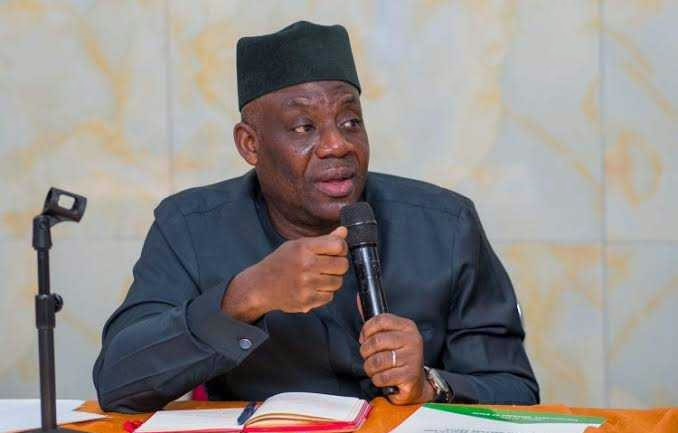
According to the statement, Minister of Education Maruf Alausa affirmed, “No Nigerian student on a valid Federal Government scholarship has been abandoned.”
He explained that all beneficiaries enrolled under the Bilateral Education Scholarship Program before 2024 had received payments up to the 2024 budget year, in line with government obligations.
The ministry said any delays in outstanding payments were due to fiscal challenges and are being addressed through ongoing engagements between the Federal Ministry of Education and the Ministry of Finance.
Alausa also rejected claims that new bilateral scholarship awards were granted in 2025.
“No new bilateral scholarship awards were made in October 2025 or at any time thereafter,” the statement said, adding that documents suggesting otherwise are “fake, unauthenticated, and constitute a calculated attempt to mislead the public and discredit government policy.”
The Federal Government explained that the decision to discontinue fully government-funded bilateral scholarships abroad followed a policy review, which found that Nigeria now has “sufficient capacity within its universities, polytechnics, and colleges of education to deliver the affected programs locally.”
As a result, only scholarships fully funded by foreign governments are now supported, with all financial obligations borne entirely by the host countries.
Nevertheless, the government assured that students already enrolled under previous arrangements will continue to be supported until the completion of their programs.
The ministry further stated that students who wish to discontinue their studies abroad may formally write to the Director, Department of Scholarship Awards.
Such students will be offered the option of returning to Nigeria, where they will be seamlessly reintegrated into appropriate tertiary institutions of their choice, with return travel costs covered by the Federal Government.
Alausa said the administration is determined to reform the scholarship system, noting that previous practices of funding overseas courses already established in Nigeria placed an avoidable strain on public finances.
The statement concluded that the ongoing reforms aim to promote transparency, accountability, and prudent management of public resources, while reaffirming the government’s commitment to the welfare of Nigerian students and rejecting “misinformation, blackmail, or any attempt to undermine policies designed to strengthen national capacity and safeguard the integrity of the education sector.”