Stephen Enoch
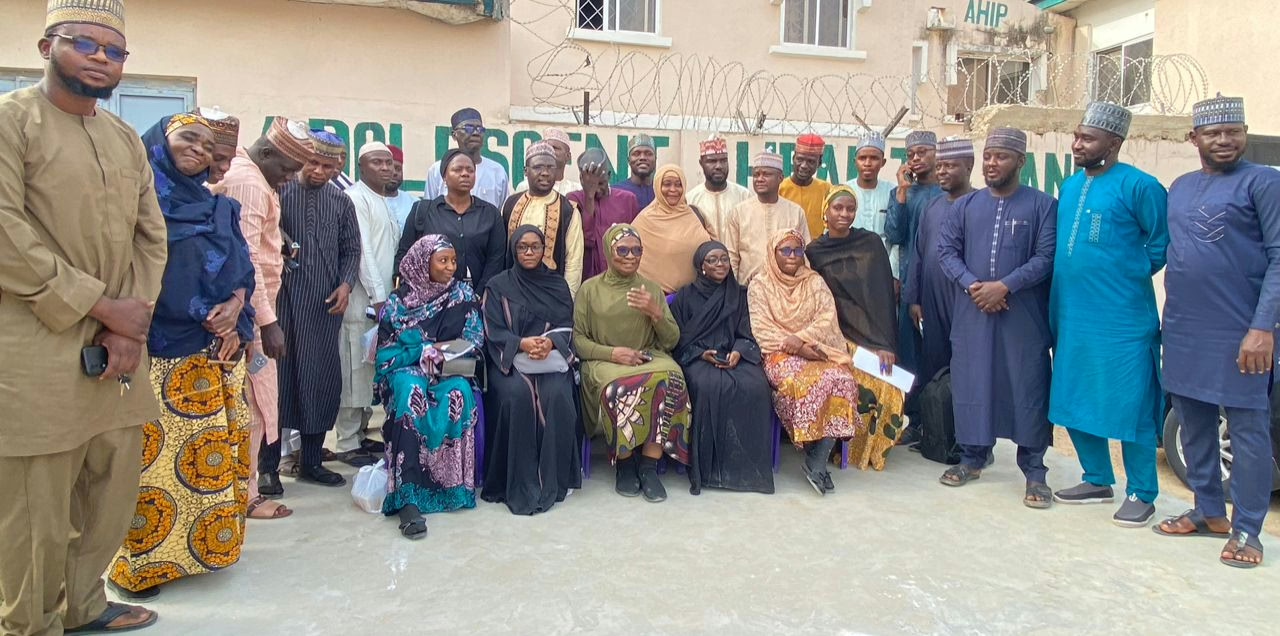
The Adolescent Health and Information Projects (AHIP) has held a media training for journalists aimed at strengthening public awareness and advocacy against irregular migration in Kano State.
The training took place on Tuesday at AHIP’s office along Maiduguri Road, Kano, as part of efforts to address the growing drivers of unsafe migration among young people and women.
The initiative is being implemented under the Resilient Opportunities for Outreach, Trade and Sustainability (ROOTS) Project, supported by the International Organization for Migration (IOM) with funding from the European Union.
Speaking at the event, the founder of AHIP, Mairo Bello, said the organisation’s intervention focuses on promoting legal migration pathways while discouraging irregular migration, particularly among women and youth.
She explained that women were prioritised because of their critical role in sustaining families and communities.
According to her, when women migrate irregularly, households often suffer economic and social breakdowns.
Bello noted that the project is targeting Ungogo, Dala, and Bunkure local government areas due to their strategic relevance to migration flows.
“Bunkure was selected because of its concentration of women smallholder farmers who play a vital role in food production, especially rice farming.
“Dala functions as a major transit hub due to its transport networks, while Ungogo is widely recognised as a migration corridor.
“Engaging the media is central to the project’s strategy, as sustained awareness can help communities rethink irregular migration and build resilience at home,” she said.
The ROOTS Project Manager, Halima Kasim, said the programme was designed in response to Kano’s socio-economic and climate realities.
She noted that over 65 per cent of Kano’s population is under 30, with youth unemployment exceeding 40 per cent, making migration a coping strategy for many.
She also highlighted Kano’s position as a key departure point for irregular migration, stating that more than 20,000 migrants were returned to Nigeria between 2017 and 2022.
Kasim said failed migration journeys often leave families burdened with debt, grief, and stigma, while returnees face serious reintegration challenges.
“Women in informal cross-border trade are particularly vulnerable, facing harassment, extortion, and limited access to credit.
“Climate pressures, have intensified these challenges by increasing domestic burdens and exposing women and girls to higher risks of violence and exploitation,” the project manager said.
During a session on media engagement, the facilitator, Abbas Ibrahim, described the media as a powerful tool in shaping perceptions about migration.
He said radio, television, print, and social media can help communities understand the dangers of irregular migration, including trafficking and death.
“It is important for Journalists to counter misinformation, amplify real-life stories, and highlight local opportunities such as skills training and entrepreneurship.
“Consistent reporting can help reduce the pressure pushing young people toward irregular migration,” he stated.