The fallout from the controversial final of the Africa Cup of Nations (AFCON) 2025 has taken a dramatic turn, with the Fédération Sénégalaise de Football (FSF) formally rejecting the ruling of the Confédération Africaine de Football (CAF) Appeal Board and confirming plans to challenge the decision at the Court of Arbitration for Sport (CAS).
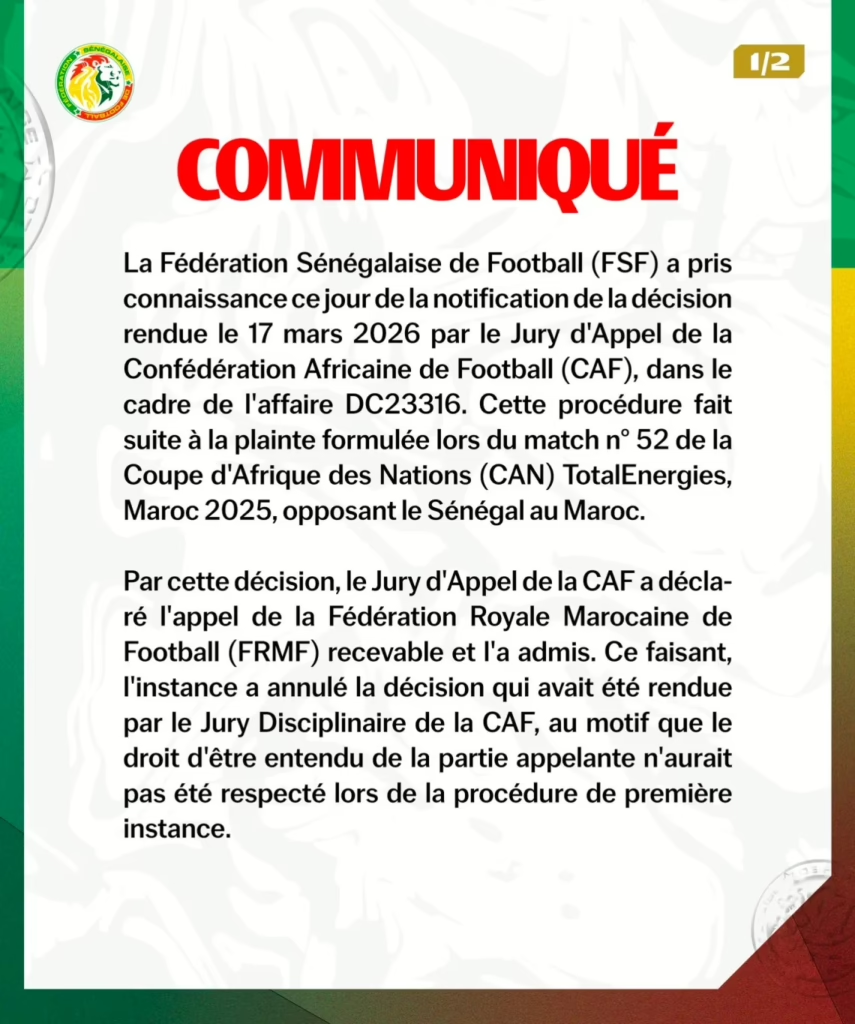
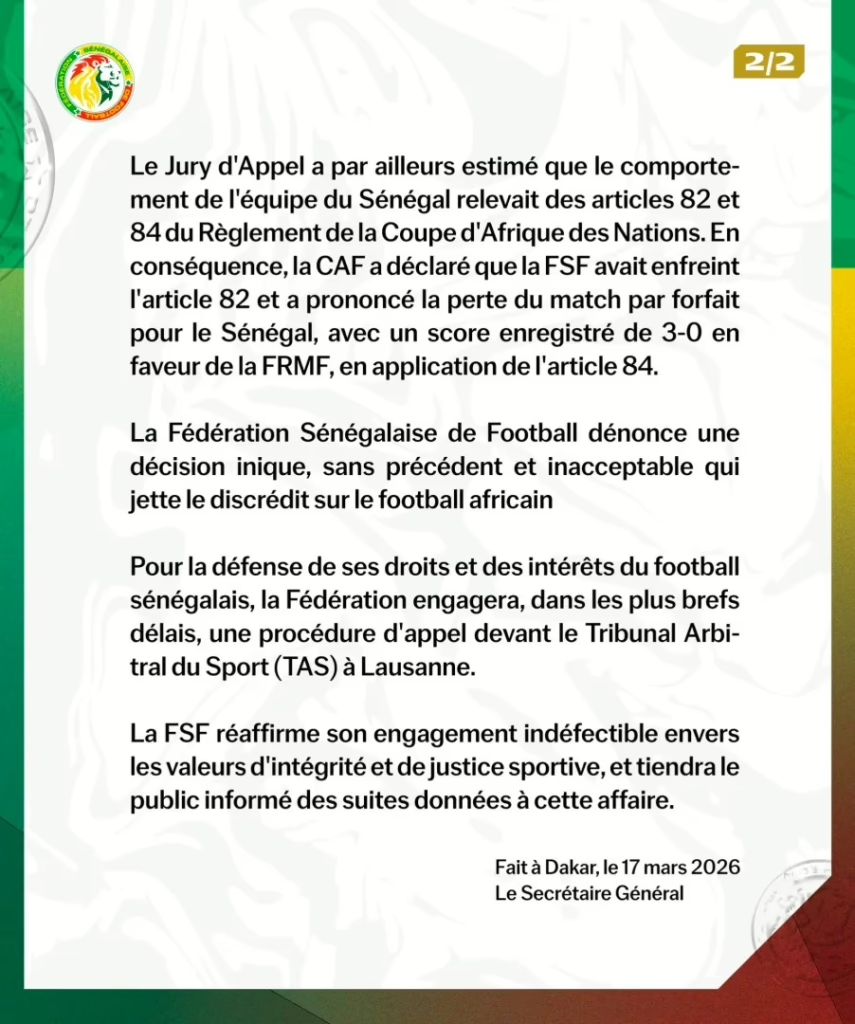
In a press statement issued on 17 March 2026, the Senegalese football authority acknowledged receipt of CAF’s verdict in case DC23316 but described the outcome as “unfair, unprecedented, and unacceptable.”
The dispute stems from the highly contested AFCON 2025 final between Senegal and Morocco, which CAF has officially awarded as a 3–0 victory to the Morocco national football team following a forfeiture ruling against Senegal.
CAF’s Appeal Board upheld a protest lodged by the Fédération Royale Marocaine de Football, invoking Articles 82 and 84 of the competition’s regulations relating to misconduct and match forfeiture.
In its decision, the board also overturned an earlier ruling by CAF’s Disciplinary Committee, citing procedural lapses, particularly the failure to respect Morocco’s right to be heard during initial proceedings.
The procedural flaw prompted a full review of the case, ultimately resulting in a verdict against Senegal.
However, the FSF has strongly opposed both the process and the outcome.
The federation argued that the decision not only cost Senegal the title but also raised broader concerns about governance, fairness, and consistency in disciplinary procedures within African football.
Determined to challenge the ruling, Senegal has confirmed it will take the matter to CAS in Lausanne “as soon as possible,” setting the stage for a potentially landmark legal battle.
If admitted, the case will move beyond CAF’s internal structures to the global sports arbitration arena, where past rulings have significantly influenced competition outcomes and regulatory interpretations.
Beyond the immediate sporting implications, the controversy has sparked wider debate about transparency and administrative credibility in African football.
While AFCON has long been celebrated for its on-field excellence, the 2025 final risks being remembered as much for legal disputes as for the game itself.
For Senegal, the battle now extends beyond a single match, focusing on defending the integrity of its football and challenging what it views as a dangerous precedent. For CAF and Morocco, the decision stands, for now.
With CAS set to weigh in, the final chapter of AFCON 2025 may ultimately be decided not on the pitch, but in the courtroom.