Isiyaku Ahmed
The Civil Society Legislative Advocacy Centre (CISLAC) has called on the federal and state governments to increase taxes on sugar-sweetened beverages (SSBs) to discourage excessive consumption and reduce the growing burden of diet-related diseases in Nigeria.
It also urged the government to adopt a tax system that takes into account the amount of sugar contained in beverages, arguing that products with higher sugar content should attract higher taxes.
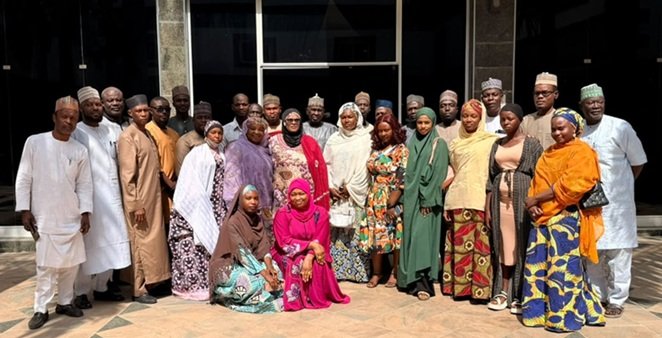
Mohamed Murtala, Senior Financial Administration Manager at CISLAC, made the call during a one-day meeting on Alcohol and Sugar-Sweetened Beverage Taxation in Nigeria, held on Thursday at R&K Hotel in Kano.
Murtala, who spoke on behalf of CISLAC Executive Director, Comrade Auwal Ibrahim Musa Rafsanjani, said excessive consumption of sugar-sweetened beverages was contributing to rising health challenges in the country.
The meeting provided a platform to share evidence on the public health and economic impact of alcohol and sugar-sweetened beverage consumption, review Nigeria’s taxation policies and reforms, and strengthen stakeholders’ understanding of health taxation as an effective public policy tool.
It also explored opportunities for collaboration and advocacy among civil society organisations and other stakeholders, while developing strategies for evidence-based policy engagement and public awareness.
Murtala urged the government at both national and subnational levels to adopt deliberate taxation measures in line with the World Health Organization’s recommendation that taxes should account for at least 70 per cent of the retail price of sugary drinks.
According to him, increasing taxes would make the products less affordable, thereby discouraging excessive consumption and reducing associated health risks.
He argued that carbonated and other sugar-sweetened drinks were not essential commodities that Nigerians could not do without, adding that reducing their consumption would not negatively affect people’s daily lives.
Murtala clarified that CISLAC was not advocating taxes on locally prepared beverages such as zobo and natural fruit juices but was concerned about commercially produced carbonated drinks with high sugar content.
He further proposed a graduated taxation system under which manufacturers would pay higher taxes for beverages containing higher levels of sugar.
“If companies can reduce the amount of sugar they add to their products, we will not have a problem with them. Our concern is the quantity of sugar contained in these beverages,” he said.
On the proposed implementation framework, Murtala disclosed that CISLAC was working with a university in Cape Town, South Africa, to develop a simulation model that would establish how different tax rates could influence consumption patterns and reduce related health challenges.
He said the research would provide evidence to guide Nigeria in determining appropriate tax levels for sugar-sweetened beverages.
He added that CISLAC was also engaging government institutions to ensure the introduction of policies capable of reducing the affordability of high-sugar products.
Murtala cited taxation models adopted in some countries, where the amount of tax imposed on beverages is determined by their sugar content, noting that Nigeria could adopt a similar approach.
He explained that while excise duties on such products fall under the exclusive responsibility of the Federal Government, state governments could explore other measures, including levies, to discourage the supply and consumption of beverages exceeding established sugar-content benchmarks.
According to him, states could introduce financial penalties for manufacturers or distributors supplying drinks with sugar levels above specified limits.
CISLAC is currently implementing a Health Tax Advocacy Project with support from the Tax Justice Network Africa (TJNA), aimed at promoting effective health taxation policies in Nigeria.