Isiyaku Ahmed
The Office of the Auditor-General for Local Governments in Kano State has commenced the second edition of the validation exercise of the 2025 Local Governments Citizens Accountability Report (CAR), aimed at strengthening transparency, accountability and citizens’ participation in grassroots governance.
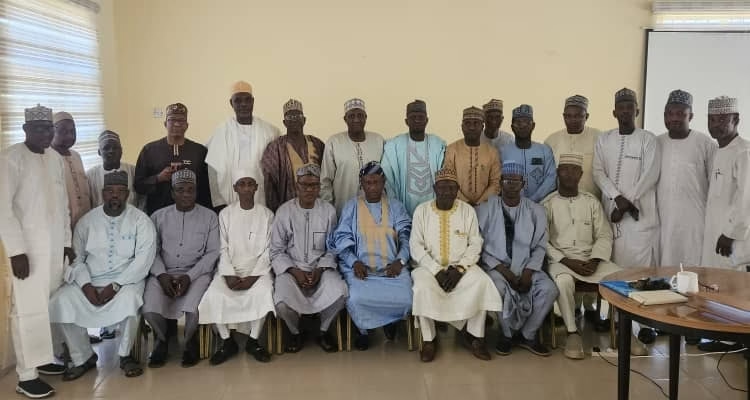
The exercise was held on Thursday at the Career Service Centre, Sa’adatu Rimi College of Education, Kano; it brought together representatives of civil society organizations (CSOs), government institutions and the 44 local government councils, and the media.
In his welcome address, the Acting Auditor-General for Local Governments, Muhammad Ubale Chiroma, described the CAR as an important tool for strengthening public financial management and enabling citizens to understand how public resources are generated, allocated and utilized by local government councils.
He explained that the validation exercise would allow stakeholders to scrutinize the report, verify its accuracy, identify gaps and ensure that its contents reflected the actual financial activities and service delivery performance of the councils during the 2025 financial year.
Chiroma stressed that accountability went beyond the preparation and submission of financial statements, noting that public resources must be properly managed and utilized to improve the living conditions of citizens.
He urged CSOs and other stakeholders to actively participate in the exercise and offer constructive observations to enhance the credibility, completeness and reliability of the report.
He also called on representatives of participating institutions to demonstrate openness and cooperation by providing necessary clarifications and supporting documents during the validation process.
The Acting Auditor-General emphasized that the exercise should not be treated as a mere formality or an opportunity to endorse an already prepared document, but as a platform for constructive dialogue, objective assessment and collective responsibility.
He acknowledged the support of Governor Abba Kabir Yusuf, the Ministry for Local Governments, civil society organizations, the 44 local government councils and other institutions involved in implementing the initiative.
In his goodwill message, the state Auditor-General, Mallam Rabi’u Yusuf, represented by the Director of Finance, Parastatals Audit, Sunisu Ali Sadiq, described the validation exercise as an important step towards strengthening transparency, accountability and citizens’ participation in grassroots governance.
He said the process provided an opportunity for stakeholders to assess public financial management, promote openness and ensure that resources allocated to the 44 local government councils were utilized for the benefit of the people.
Yusuf commended civil society organizations, development partners, government institutions and other stakeholders for their contributions to promoting accountability at the local government level.
The State AuG urged participants to engage actively and objectively to ensure that the final report was accurate, credible and accessible to citizens.
Also speaking, the former Auditor-General, Ahmad Tijjani Abdullahi (Rtd.), called on local government councils to strengthen transparency and accountability in the management of public resources to promote grassroots development and improve service delivery.
He described local governments as the tier of government closest to the people, noting that their activities directly influence access to essential services such as clean water, primary healthcare and quality education.
Abdullahi said the CAR bridges the gap between citizens’ expectations and actual service delivery by providing information on budget implementation and project execution across the 44 councils.
He commended CSOs and community monitors involved in compiling the assessment, as well as local government officials for embracing public scrutiny.
He urged stakeholders to regard the report not as an instrument for fault-finding but as a collective roadmap for improving governance and ensuring that every naira allocated to local government councils delivers tangible benefits to the people.
Similarly, the Director of Finance, Kano State Signage and Advertisement Agency, Imam Gwale, called for the translation of the second edition of the Citizens Accountability Report into Hausa and its distribution across all 44 local government areas.
Gwale recalled that Kano State ranked second among the most transparent states in 2024, describing the achievement as evidence of the state’s commitment to transparency and accountability.
He said translating the report into Hausa would make its contents accessible to more citizens, particularly those who do not understand English, and encourage wider public participation in governance.
He urged the organizers to ensure that copies of the document reached all local government areas to promote awareness and improve citizens’ understanding of public accountability.
In his goodwill message, the Executive Director of the Community Initiative for Climate Engagement and Development (CICEND), Isiyaku Ahmed, who represented CSOs, commended the Acting Auditor-General for Local Governments for sustaining the CAR initiative.
Ahmed said the exercise provided an important platform for promoting transparency, accountability and citizens’ participation in the management of public resources at the grassroots level.
He stressed that citizens had the right to know how public funds were generated, allocated and utilized, particularly by the 44 local government councils.
The CICEND Boss also called on relevant authorities to ensure that the report was widely disseminated in accessible languages, including Hausa, to enable citizens across the state to understand its contents and participate meaningfully in governance.
He further advocated sustained collaboration between government institutions and CSOs to strengthen public financial management, monitor service delivery and promote responsible utilization of public resources.
He assured the organisers of continued civil society support and constructive engagement towards achieving the objectives of the accountability initiative.
Stakeholders who spoke to Stallion Times expressed hope that the validation exercise would produce a credible and comprehensive report reflecting the financial performance and development activities of the 44 local government councils during the 2025 financial year.