The Independent National Electoral Commission (INEC) has inaugurated a multi-agency Election Logistics Committee (ELOC) to coordinate the movement of personnel and election materials ahead of the 2027 general elections and prevent delays that could disenfranchise voters.
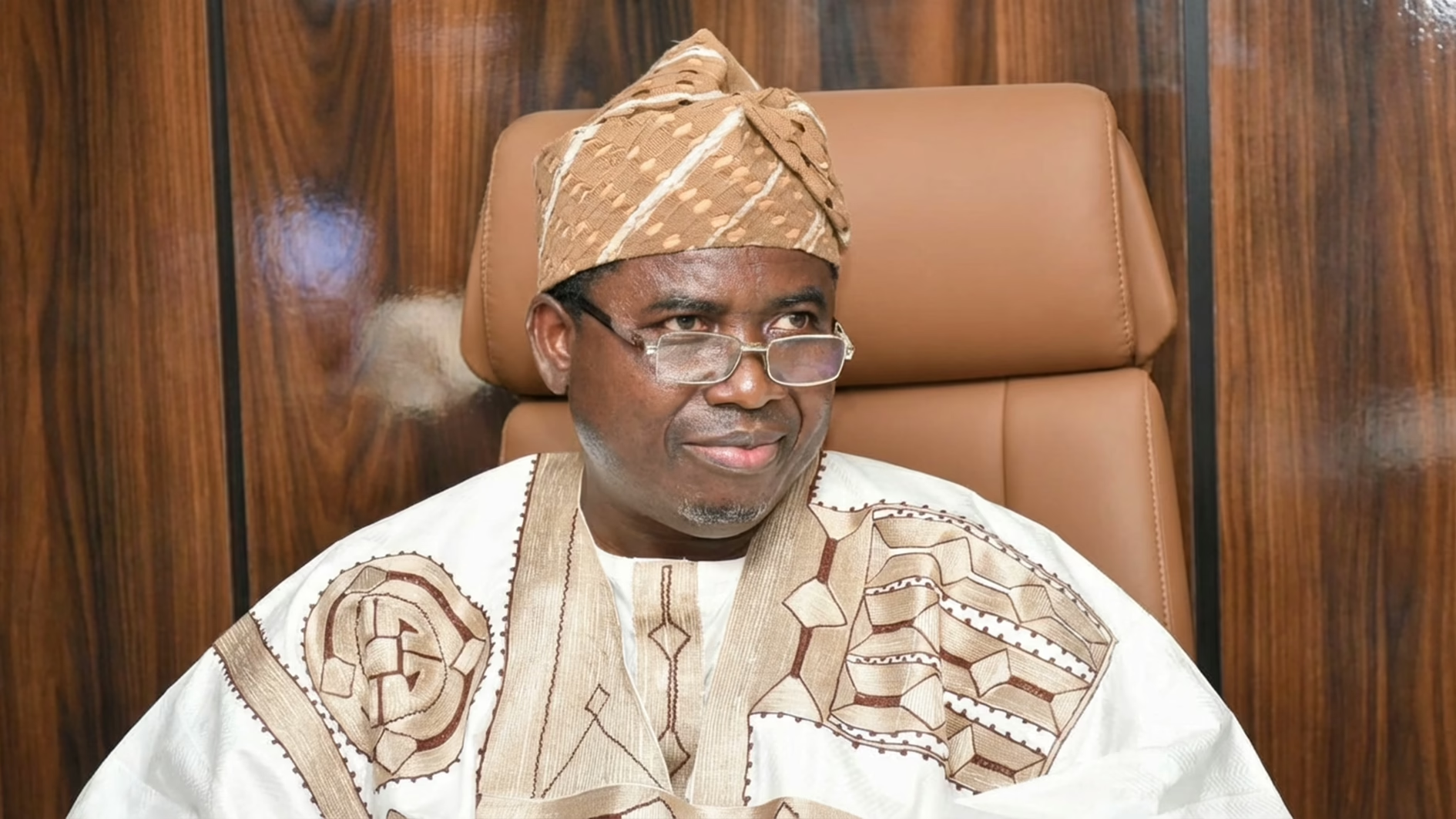
INEC Chairman, Joash Amupitan, announced Rear Admiral Jamilu Saddiq Malafa as chairperson of the committee during its inauguration in Abuja, charging members to develop a comprehensive logistics plan covering the storage, distribution, deployment and retrieval of election materials.
Amupitan said early preparation was critical to addressing transportation, security and geographical challenges associated with conducting elections across Nigeria.
“Today’s inauguration marks a proactive step in ensuring that the 2027 general election is defined by seamless execution and operational excellence,” he said.
The committee comprises representatives of security agencies, aviation authorities, port and customs services, financial institutions, transport unions and maritime organisations.
Participating organisations include the Nigeria Civil Aviation Authority, Nigeria Security and Civil Defence Corps, Federal Airports Authority of Nigeria, Nigerian Ports Authority, Nigeria Customs Service, National Union of Road Transport Workers, Nigerian Association of Road Transport Owners and Maritime Workers Union of Nigeria.
According to Amupitan, the multi-agency arrangement is designed to bring together the expertise and resources required to ensure the timely movement of personnel and materials across the country’s diverse terrain.
“In seeking to address the complexities of moving men and materials across the vast and varied terrain of Nigeria, the commission opted for a multi-agency approach,” he said.
He added that the involvement of security and logistics experts underscored INEC’s determination to treat election logistics as a national priority.
The INEC chairman described logistics as one of the most critical and challenging aspects of election management, noting that technological innovations and procedural safeguards would only be effective if polling units opened on time with the required personnel and materials.
He said the committee would assess the overall logistics requirements for the elections and evaluate the preparedness of warehouses, vehicles and transportation hubs, including airports and seaports.
Its responsibilities would also include identifying operational gaps, recommending corrective measures, monitoring compliance with approved plans and schedules, and addressing transportation bottlenecks, material shortages and security threats.
The committee is expected to coordinate with relevant INEC departments and state offices, establish arrangements for the secure transportation of election materials by road, air and sea, and liaise with government agencies and transport unions to facilitate their movement.
Amupitan directed members to submit periodic reports and recommendations to the commission, stressing that election materials must reach every part of the country within the approved timelines.
He urged the committee to demonstrate commitment and develop flexible logistics plans capable of responding to changing weather conditions, difficult terrain and evolving security threats.
“Nigeria’s geography, from the creeks of the Niger Delta to the arid plains of the north, demands a logistic plan that is both flexible and resilient,” he said.
“We must anticipate the weather, the terrain, and the security environment to ensure that no Nigerian is disenfranchised due to late arrival of materials.”
Amupitan expressed confidence that the committee’s inauguration would strengthen preparations for the 2027 general elections and contribute to the conduct of transparent, efficient and credible polls.
“By inaugurating this committee today, we are laying the foundation for a transparent, efficient, and credible election,” he said.