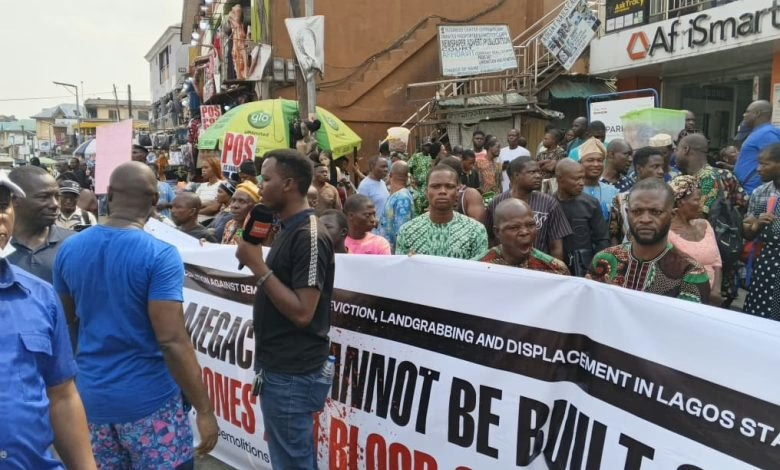
Community leaders and displaced residents gathered on Wednesday at the Ikeja Under-Bridge area in Lagos to protest the ongoing demolitions and alleged forced evictions in waterfront and low-income communities, including Makoko, Owode Onirin, and Oworonshoki.
The demonstrators accused the Lagos State Government of conducting demolitions without proper notice, compensation, or resettlement plans for affected residents.
The protesters occupied key sections of the under-bridge, capturing the attention of commuters and motorists along the busy Ikeja corridor.
They carried banners and placards with messages such as “Stop Forced Evictions Now,” “Makoko Lives Matter,” “Demolition Without Resettlement Is Injustice,” “Urban Renewal, Not Urban Removal,” “Homes Not Rubble,” and “Housing Is a Human Right.”
Other signs read: “Where Do You Want the Poor to Go?” “Lagos Is for All, Not the Rich Alone,” “Respect Court Orders,” and “Development Without Displacement.”
Some protesters also displayed photographs of demolished homes and displaced families, while others held placards showing children and elderly persons allegedly affected by the demolitions.
Chanting slogans and solidarity songs, the crowd repeatedly urged Governor Babajide Sanwo-Olu to halt further demolitions and engage affected communities in dialogue. Popular chants included “No Justice, No Peace,” “Makoko Is Not a Slum,” and “Consult the People.”
Speaking to journalists, some activists described the demolitions as “inhumane” and in violation of court rulings restraining forced evictions in waterfront communities.
They claimed that many residents were rendered homeless overnight, with families forced to sleep in canoes, under bridges, and in open spaces following the destruction of their homes.
The protesters emphasised that communities like Makoko, Owode Onirin, and Oworonshoki have existed for decades and should be upgraded through proper urban planning rather than destroyed.
They vowed to continue demonstrations until the government meets their demands, including halting demolitions, providing relief materials, offering compensation, and implementing humane resettlement policies for affected residents.
(Poitics Nigeria)