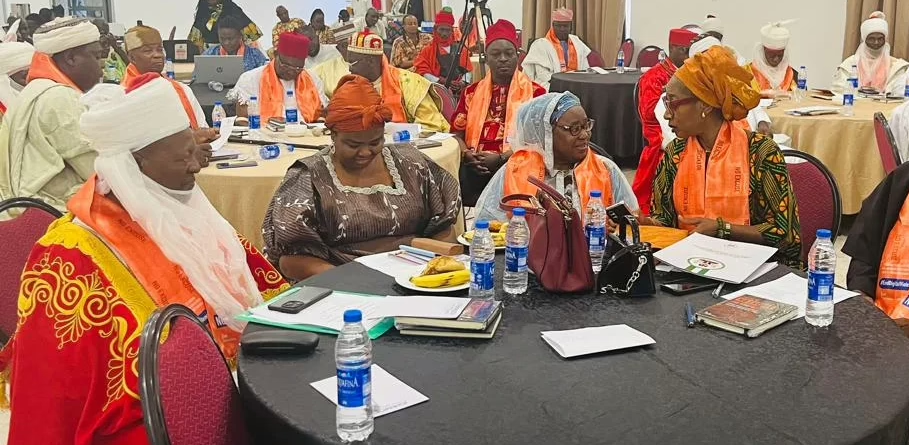
UN Women has urged traditional rulers across Nigeria to intensify their role in ending gender-based violence, particularly new technology-facilitated abuses that increasingly threaten women and girls across digital spaces and within various communities nationwide.
The call was made at the National Convening of Traditional Leaders on GBV Prevention on Tuesday in Abuja, part of activities marking the 2025 16 Days of Activism Against Gender-Based Violence globally.
Beatrice Eyong, UN country representative to Nigeria and ECOWAS, warned that violence against women was evolving rapidly, with digital platforms becoming new avenues for harassment, exploitation and intimidation, creating increasingly complex threats.
Ms Eyong said traditional rulers remained essential as custodians of culture and authority, capable of driving meaningful reforms, strengthening accountability and championing community-based efforts to combat GBV.
She cited national surveys indicating that although progress existed, harmful cultural practices and physical, emotional and sexual abuse still affected millions of Nigerian women, underscoring the need for sustained and coordinated national prevention efforts.
According to her, stronger enforcement mechanisms and coordinated community action are urgently required to protect survivors, deter perpetrators and reinforce collective responsibility in preventing violence against women and girls across Nigeria’s diverse communities.
She highlighted progress in Akwa Ibom, Oyo, Enugu and Cross River, where traditional leaders supported by government and development partners had abolished child marriage, widowhood rites and female genital mutilation, demonstrating meaningful cultural transformation.
She said those examples showed that cultural transformation became possible when tradition aligned with justice and dignity, enabling communities to replace harmful practices with positive norms that effectively protected women and girls.
Adedayo Benjamins-Laniyi, mandate secretary of the FCTA Women Affairs Secretariat, said the convening provided an important platform to redefine GBV at the cultural, traditional, and institutional levels, while strengthening prevention systems and improving accountability.
She described traditional leaders as transformers and cultural gatekeepers whose voices could reshape norms, strengthen family values, challenge harmful silence that protects perpetrators, and influence behavioural change, supporting women’s safety and community wellbeing.
Ms Benjamins-Laniyi emphasised that protecting women and girls required a united response grounded in community accountability, shared responsibility and cooperative engagement aimed at preventing violence and ensuring survivors received timely, compassionate and comprehensive support.
She reaffirmed the FCTA’s commitment to sustaining partnerships that prevent violence, support survivors, and advance the Humanity Project, a new legacy framework designed to strengthen social justice, community protection and collective wellbeing across the territory.
Haliru Yahaya-Ndanusa, convener-general of COTLA, reiterated traditional rulers’ commitment to ending practices inflicting physical, emotional or digital harm, stressing that palaces could also serve as protective safe havens for vulnerable girls.
He noted that traditional rulers possessed significant influence capable of swiftly shaping community behaviour when united, especially in discouraging child marriage, protecting survivors and promoting responsible digital conduct among young people across communities.
(Agency Report)