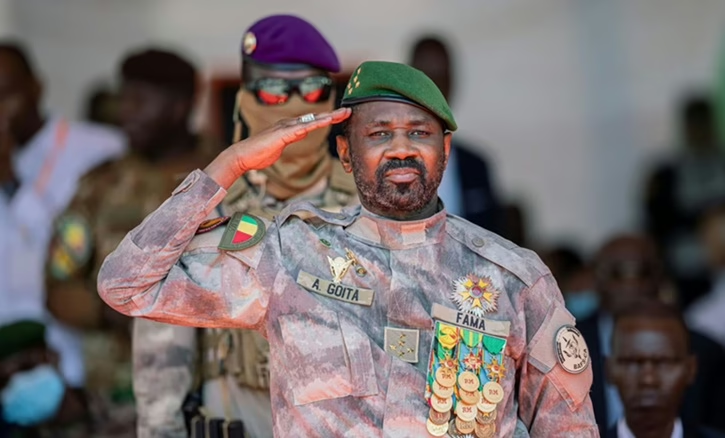
Mali’s transitional president, Assimi Goïta, has dismissed several high-ranking security officials from the armed forces, marking the latest stage in a sweeping purge of the country’s military apparatus.
According to a decree signed by Goïta on 30 December 2025, those removed from the ranks include Colonel-Major Kassoum Goïta, the former head of Malian intelligence, as well as Colonel Fodé Malick Sissoko of the National Guard and Moustapha Diakité, a commissioner in the National Police.
The official justification provided by the presidency was “disciplinary measures”, though the decree offered no specific details regarding the alleged misconduct or the evidence against the officers.
These dismissals are part of a broader trend of removals within the Malian security services that has intensified in recent months.
In October, 11 officers, including high-ranking generals, lieutenant-colonels, and captains, were ousted following their arrests in connection with what the authorities described as an “attempted destabilization” of the state.
Among those previously purged were Generals Nema Sangaré and Abass Dembélé.
More recently, on 12 December 2025, Colonel Alpha Yaya Sangaré was dismissed after publishing a book that detailed alleged human rights abuses committed by the military against civilians during anti-terrorist operations.
Legal proceedings were launched earlier this month in an attempt to overturn several of these dismissal decrees.
While supporters of the transition government argue that these measures are necessary to maintain military cohesion and prevent coups in a “fragile security context”, the lack of transparency has sparked international and domestic concern.
Human rights observers and legal representatives have pointed to a recurring lack of detailed communication and the bypassing of standard judicial procedures.
Mountaga Tall, a lawyer representing several of the dismissed officers, raised serious questions regarding the legal status of those currently in custody.
“A central point remains: following their dismissal, all these soldiers and gendarmes are now civilians,” Tall said in a statement.
“Therefore, their continued detention in military facilities, without outside contact, raises a grave question: on what legal basis are they being held?”
By sidelining influential and experienced officers, Goïta is further consolidating his grip on the security apparatus—a move seen as essential for maintaining his authority as he navigates a complex transition.
However, analysts warn that this concentration of power carries significant risks for the “General-President”.
As Mali faces a surge in jihadist attacks and growing friction with political actors, the persistent purges risk eroding internal military morale and creating a climate of fear and suspicion within the command structure.
The loss of seasoned commanders could also diminish the operational effectiveness of the Malian Armed Forces (FAMa) at a time when security remains precarious, with insurgent activity increasingly threatening the peripheries of the capital, Bamako.
(The Africa Report)