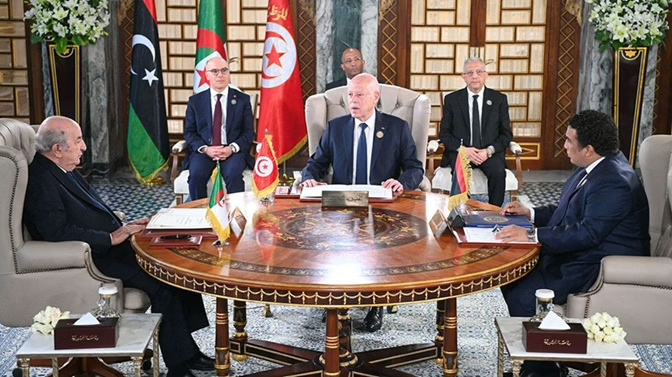
Libya and Tunisia have discussed ways to activate signed agreements and memoranda of understanding, emphasizing the importance of establishing the necessary legal framework to enhance bilateral cooperation across various sectors.
This came during a meeting between Tunisian Foreign Minister Mohamed Ali Nafti and the Acting Foreign Minister of Libya’s Government of National Unity, Taher Al-Baour, on the sidelines of the inauguration of the headquarters of the Executive Secretariat of the Community of Sahel-Saharan States (CEN-SAD) in Tripoli.
According to a statement from the Tunisian Foreign Ministry, both sides affirmed their shared commitment to fulfilling bilateral cooperation obligations and preparing effectively for their implementation in a way that strengthens relations and meets the aspirations of both peoples. They also stressed the need to remove obstacles hindering cooperation.
The Tunisian minister highlighted the importance of the CEN-SAD Executive Secretariat as a pillar of joint African action and a supporter of continental integration, alongside economic cooperation mechanisms such as COMESA and the African Continental Free Trade Area.
He also emphasized the deep historical ties between the two countries, reaffirming Tunisia’s support for maintaining Libya’s security and stability through a Libyan-led solution under UN auspices, preserving national sovereignty and preventing foreign interference.
Nafti further underscored the role of economic actors and business communities from both sides in enhancing trade exchange and bilateral cooperation programs, as well as participating in events held in both countries.
He expressed hope for strong Libyan participation in the 22nd Tunisia Investment Forum, scheduled for June 25–26, 2026.
Both ministers stressed the importance of caring for their respective communities in each country and addressing issues related to residency and employment, given their role in strengthening social ties and cooperation.
They also emphasized the importance of coordination and consultation on regional and international issues, and the need for the Mediterranean region to be a space of security and development, while upholding international legitimacy and rejecting any aggression that threatens the stability of Arab states.
(Libya Observer)