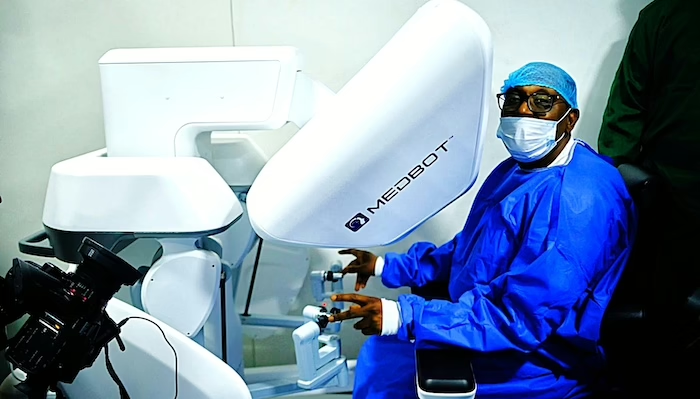
The Prostate Clinic (TPC), Lagos, has successfully carried out what experts have described as West Africa’s first robotic gynaecological surgery, marking a major milestone in advanced medical care in the sub-region.
The procedure, performed on Sunday, signalled the clinic’s expansion of robotic surgery services from male-focused treatments to women’s health interventions.
Speaking on the development, Consultant Robotic Surgeon and TPC Medical Director, Professor Kingsley Ekwueme, said the achievement underscored the clinic’s commitment to innovation in Nigeria and across West Africa.
“Following our tradition of leading innovation, we introduced the first surgical robot in West Africa last year. Today, we are proud to extend that innovation to women’s surgeries,” he said.
Professor Ekwueme explained that the patient, a young woman diagnosed with an ovarian tumour, underwent a successful robotic procedure and is recovering rapidly.
“With robotic surgery, we removed two large tumours. She will go home today and return to work tomorrow,” he said.
He said robotic procedures reduced pain, blood loss, and prolonged hospital stays associated with open surgery, enabling patients to resume normal activities within 24 hours.
“Within six hours, once vital signs are stable, the patient can eat and go home.
“Recovery is fast, blood loss is minimal, and vital functions are preserved,” he said.
Ekwueme described the procedure as transformative for treating fibroids, endometriosis, ovarian tumours, and selected ectopic pregnancies.
He disclosed that the surgery was provided free under TPC’s corporate social responsibility, noting that prolonged illness caused greater economic losses than advanced care costs.
Ekwueme also disclosed a partnership with the Imo government to establish Nigeria’s first robotic surgery centre.
“This revolution has just started. Nigeria can become a hub for advanced medical care, training, and research,” he said.
A Consultant Gynaecologist at LASUTH, Prof. Yusuf Oshodi, said the 30-year-old patient was carefully assessed and found suitable for robotic-assisted surgery.
“The tumour is benign, and robotic precision allows removal of affected tissue without compromising fertility.
“She will be free from six months of pain, without damage to surrounding structures,” he said.
Oshodi said many Nigerian women suffered silently from fibroids, endometriosis, ovarian tumours, and abnormal menstrual bleeding.
He noted that fibroids affected up to 70 per cent of women in some communities, though only 10 to 20 per cent experienced severe symptoms.
Oshodi warned that delayed treatment often resulted in complications such as anaemia and impaired heart function.
UK-based Consultant Gynaecologist, Mr Olaolu Aladade, said robotic surgery offered superior outcomes compared with open procedures.
“With open surgery, complications and recovery time are higher.
“With robotic surgery, patients recover faster, return to work sooner, and enjoy better psychological and economic outcomes,” Aladade said.
(NAN)