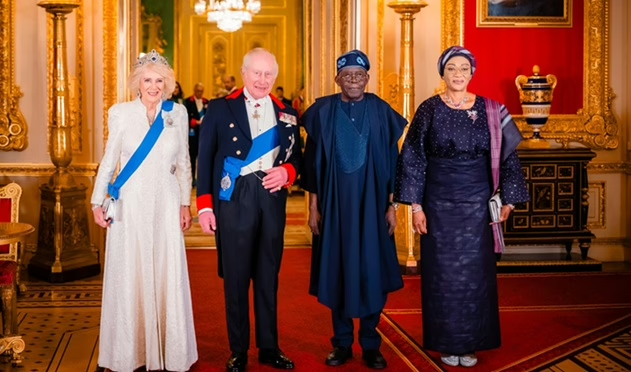
Britain’s monarch, King Charles III, on Wednesday hosted a state banquet at Windsor Castle in honour of Nigeria’s President, Bola Ahmed Tinubu, and First Lady, Oluremi Tinubu, during which he highlighted the deepening relationship between the two nations and praised Nigeria’s growing global influence.
Speaking at the event, King Charles III warmly welcomed the Nigerian leader and his wife, expressing appreciation for their visit during the holy month of Ramadan.
He extended his goodwill to the President and Muslims worldwide, wishing them peace, blessings, and joy, while also conveying Ramadan greetings.
Reflecting on his 2018 visit to Nigeria, King Charles noted the country’s remarkable transformation, describing it as a dynamic, rapidly evolving nation of over 230 million people, with a youthful population driving innovation and ambition.
He also commended Nigerians in the United Kingdom for their outstanding contributions across various sectors, including business, technology, healthcare, education, sports, and the arts.
According to him, the Nigerian diaspora has become an integral part of British society, strengthening ties between the two countries.
The monarch highlighted Nigeria’s cultural influence on the UK, citing the global rise of Afrobeats, the impact of Nollywood films, and the presence of Nigerian talent in the English Premier League and other sectors.
He described these connections as a “living bridge” linking more than half a million people across both nations.
On economic relations, King Charles emphasised the growing trade and investment partnership between the UK and Nigeria.
King Charles III noted that Nigerian businesses are increasingly establishing a presence in London, while British institutions continue to invest in Nigeria’s infrastructure, education, and technology sectors.
He further acknowledged the historical complexities of the relationship between the two countries, noting that aspects of their shared past carry painful memories.
However, he stressed the importance of learning from history to build a future anchored on mutual respect, growth, and cooperation.
He also praised Nigeria’s example of religious coexistence, noting the country’s long-standing record of people of different faiths living together in peace and harmony.
The King reaffirmed the UK’s support in addressing security and humanitarian challenges in parts of Nigeria.
Describing Nigeria as an economic powerhouse and an influential voice in global affairs, King Charles underscored the importance of strengthening partnerships within the Commonwealth.
He called for increased trade, regulatory alignment, and cooperation to create jobs and foster sustainable economic growth.
Looking ahead, the monarch expressed optimism about the future of UK–Nigeria relations, urging both nations to deepen their collaboration and adapt to global changes together.
In closing, King Charles III extended advance Eid-el-Fitr greetings to Muslims in Nigeria and around the world.
He then proposed a toast to Nigeria’s President and its people, ending with a popular Nigerian phrase, “Naija No Dey Carry Last.”