Table of Contents
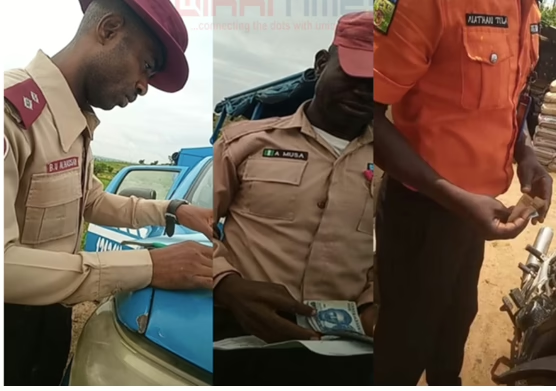
Federal Road Safety Corps (FRSC) officers and Police Traffic Wardens in Bauchi and Gombe states have been accused of turning roads into extortion centres, where unsuspecting commuters are forced to pay arbitrary fines to retrieve their seized vehicles and motorcycles. WikkiTimes’ Yawale Adamu reports.
Musa Adamu, a farmer from Bauchi community, met officers of the Federal Road Safety Corps (FRSC) on his way back home in Alkaleri, Bauchi State.
He thought it was a routine check of the vehicle license and other papers. But he was wrong.
The FRSC men seized his motorcycle key and demanded a fine, without being told his particular offence.
“They threatened to impound my motorcycle if I refused to pay. After a brief haggle, I agreed to pay them N5,000 because I did not want to go through what my neighbour went through, spending weeks trying to retrieve his motorcycle because he failed to pay on time. He later paid N8,000, despite the delay,” he said.
They never issued a ticket or any receipt for the payment made.
In Bauchi State, roadside checkpoints have become extortion zones for the FRSC and police officers, where they prey on unsuspecting commuters, especially vulnerable rural dwellers.
The Bauchi-Dass route and the Bauchi-Alkaleri highway are some of the areas where they operate.
Motorists who pass this route often face intimidation and extortion under the guise of enforcing safety on the road.
Sulaiman Ali, a herder from Mararaban Liman Katagum, an outskirt community of Bauchi, tells a similar story.
“The moment they [FRSC officers] realise you can be intimidated, they appear bolder and forceful.”
Sulaiman said he and two other cyclists were fined N7,000 for carrying two passengers on a motorcycle. The official fine for overloading is N10,000, according to the Corps’ own Notice of Offences and Penalties template, cited under Section 10(4) of the FRSC Act, 2007, and Regulation 220 of the NRTR, 2012. And this fine must be paid officially through designated banks, not to individuals at checkpoints.
“We were told it would be worse if we let the bike go to their office. Obviously, they were avoiding taking official records of the payment,” Sulaiman added.
The Undercover Test
After receiving multiple complaints from motorists, WikkiTimes decided to investigate the misconduct of the FRSC men on Bauchi roads, using an undercover reporting method.
This method is deployed to collect real evidence without exposing our reporter to harm.
The reporter removed his motorcycle’s number plate and rode along the Bauchi-Alkaleri route, where FRSC set up a checkpoint.
About two kilometres before Alkaleri town, near a pothole-ridden part of the road, stood a group of FRSC officers in their khaki uniforms.
As usual, they stopped the reporter.

“You do not have a number plate,” one officer said, and before the reporter could answer, he swiftly seized the motorcycle key.
He waved the reporter toward another officer leaning on their patrol van.
“Go and see our Oga there,” he said.
The “Oga,” later identified as B.U. Alhassan was already writing down the offence he intended to fine the reporter about.
But on a second thought, he offered “leniency”, describing the reporter as a gentle person.
“Let me charge you for a small offence, not a number plate violation,” he told the reporter.
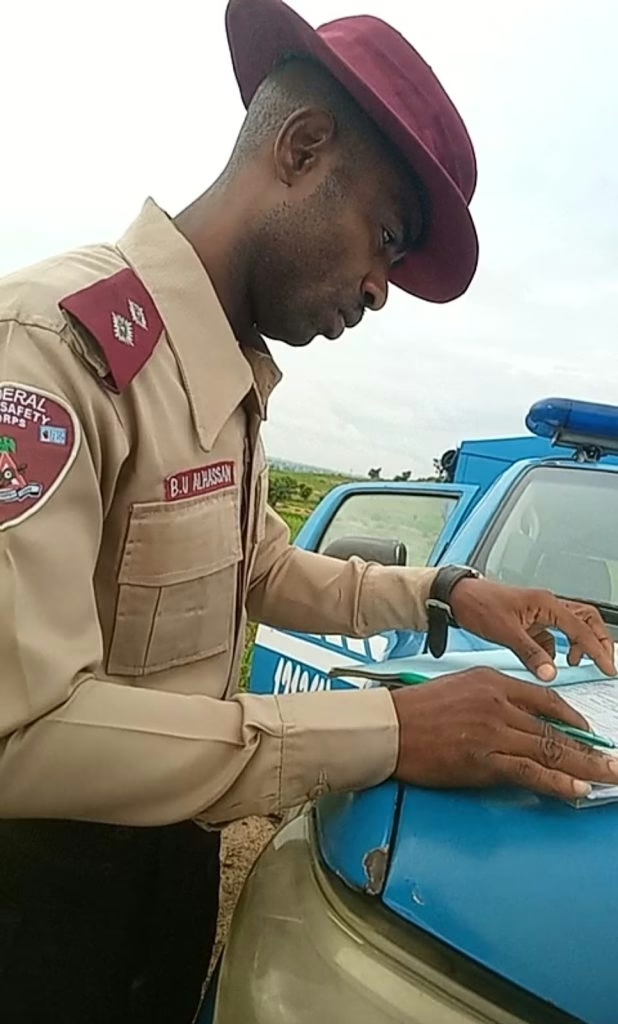
Moments later, a third officer, A. Musa, moved forward to the reporter with a fines sheet.
“You are supposed to go to the bank and pay. But we will help you here, because Oga said your character is good,” he said, leading the reporter to a discreet area behind the van.
“You will pay N4,000, and that is all. Normally, our charges go up to N50,000, but this is small,” he whispered.
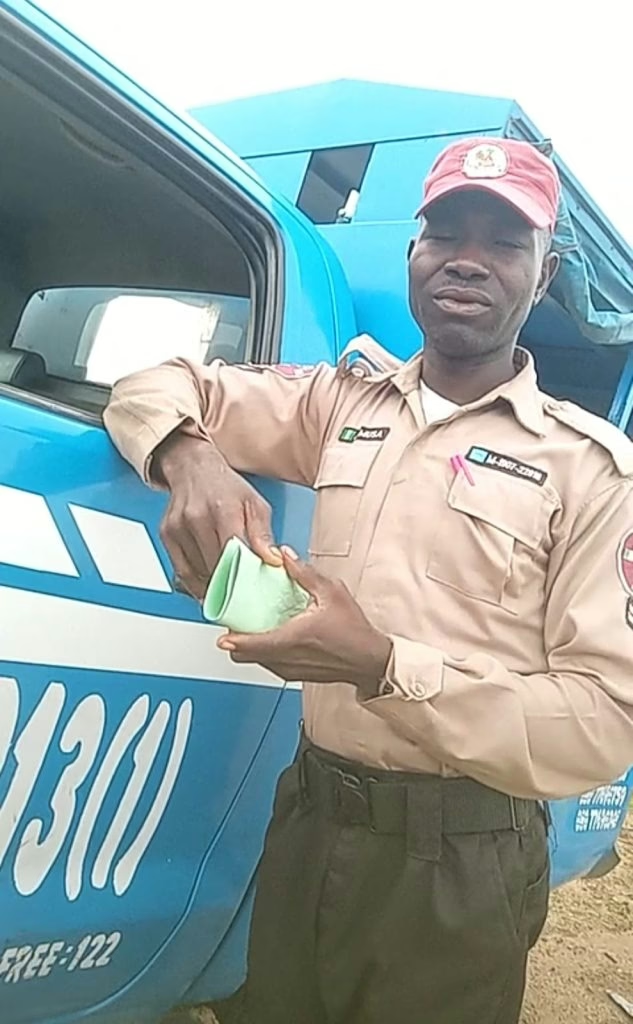
“You see, Oga is lenient to you.” After a brief negotiation, the reporter paid N3,000 in cash through A. Musa. They don’t accept bank transfer payments to avoid a paper trail.
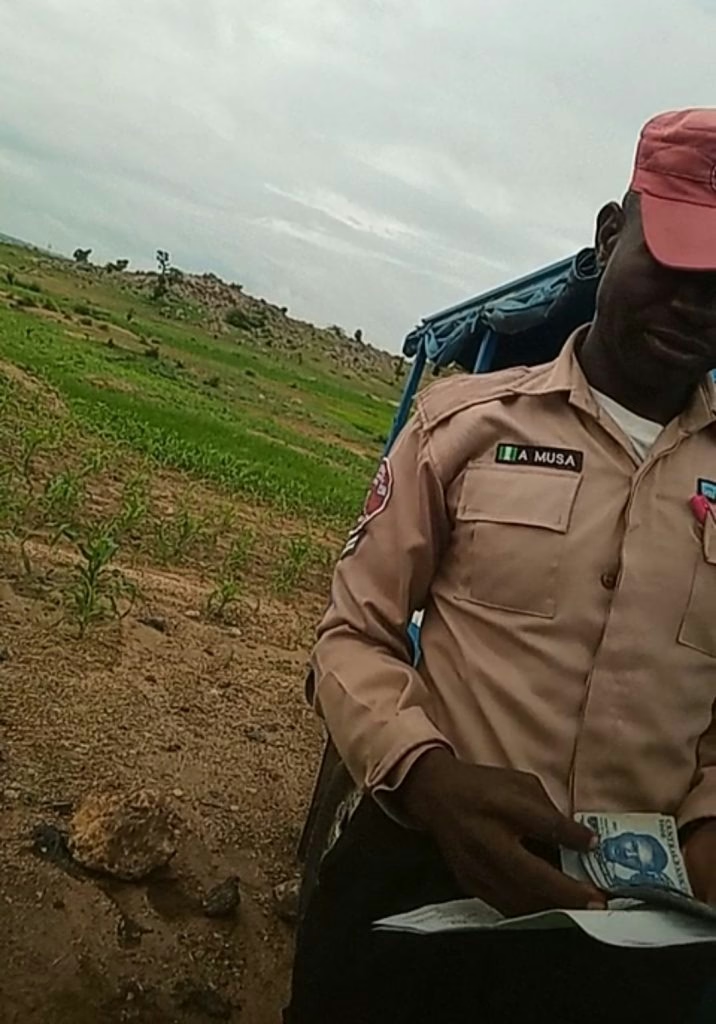
The officers did not mention the number plate as the reporter’s offence. No official process followed. No receipt was issued.
The offence tagged on the reporter on a receipt read “OMD,” short for Obstruction of Marshall Duty, an offence that carries an official fine of N2,000, not N3,000, according to the Corps’ Offences and Penalties template, and must be paid officially through designated banks, not to individuals at checkpoints.
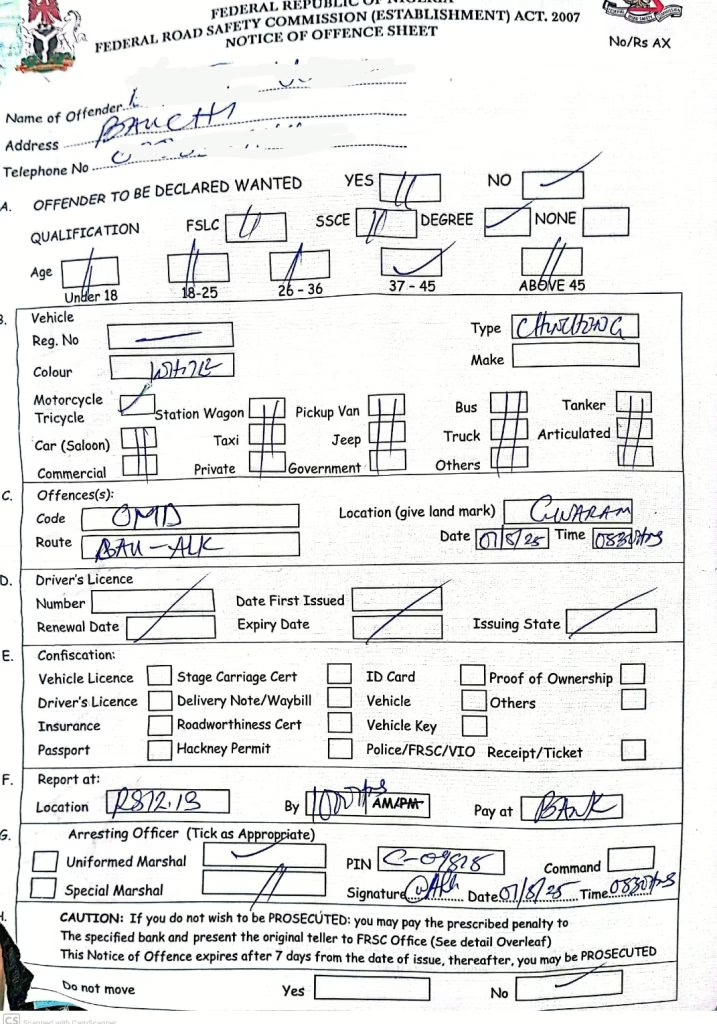
After the payment, the officer returned the reporter’s motorcycle key and allowed him to go.
Gombe Police Traffic Wardens in the Extortion Racket
In neighbouring Gombe State, a journalist Sabiu Iliyasu experienced a similar ordeal, this time at the hands of a Police Traffic Warden.
Sabiu, in July, removed his motorcycle plate number for the test, following several complaints by motorists. On his way along the Gombe Correctional Service, a traffic warden identified as Nathan Tula – who was also on a motorbike from somewhere far from his duty place – suddenly blocked his path.
Apparently, the officer abandons his duty post in the town to hunt down his victims for extortion.
“Hee! Where is your plate number?” Nathan shouted as he jumped down from his motorcycle.
Sabiu recalled being frightened by the officer’s approach. Despite pleas from bystanders, Nathan insisted on dragging him to an “extortion point” located about three kilometres away.
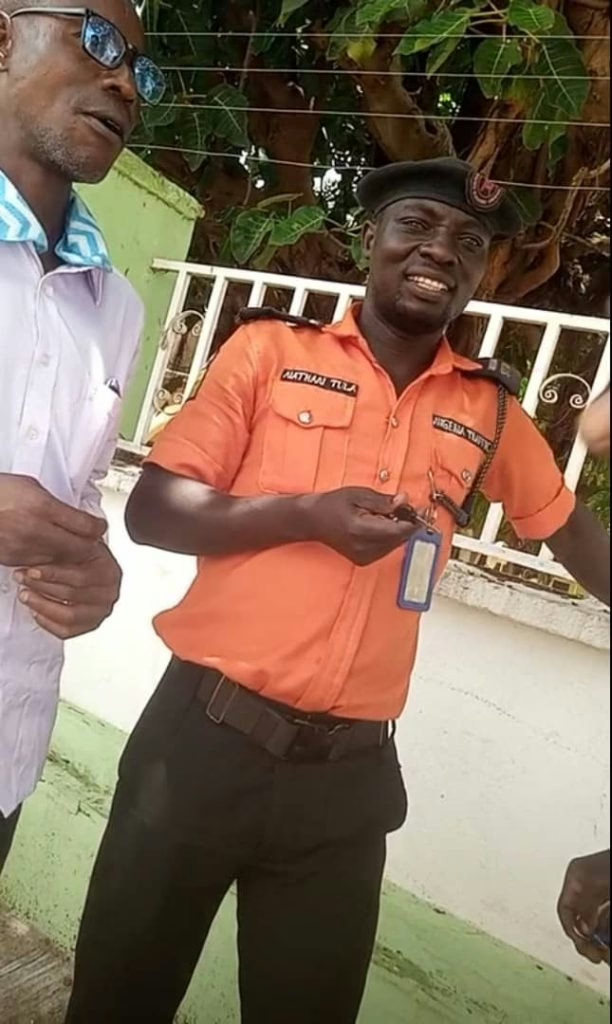
On their way, Nathan threatened to seize the motorcycle and keep it for over two weeks if Sabiu refused to pay N10,000.
“And this amount is small because of those people who intervened,” Nathan told him.
Sabiu, at that moment, feared Nathan was a kidnapper or at least a motorcycle snatcher disguised as an officer.
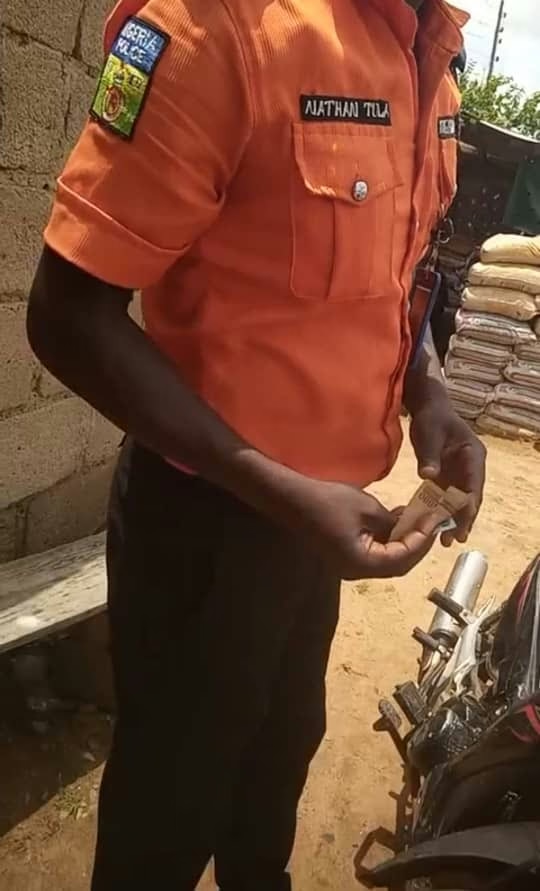
“Because there was no checkpoint there, he harassed me, forcefully took my key and started riding to a place I did not know. Until when he stopped at Adamu Fura Plaza along Biu Road (within Gombe metropolis), his point, then I believed he was indeed a traffic warden,” he said.
Nathan finally accepted N2,000, claiming he would hand it to his “Oga.” He then returned the motorcycle key and let Sabiu go.
Gombe Police React
Responding, DSP Buhari Abdullahi, the Gombe State Police Command spokesman, insisted that no formal complaint had been lodged by any victim or any member of the public regarding the incident. He explained that the Gombe State government had, in June 2025, activated a joint task force in response to a rise in criminal activity, with clear directives to enforce traffic and security regulations.
According to him, any motorcyclist found violating existing restrictions, including riding without a plate number, registration, would be arrested and charged in court, not extorted. “Not even a single kobo goes to the police or any enforcement officer,” he said, adding that fines and penalties are determined and collected strictly by the courts.
However, contrary to his claim, officers like Nathan do not honour such provisions.
DSP Buhari assured that any officer found culpable would face disciplinary action, including dismissal if necessary.
Citing enforcement figures, the police said between June 12 and the time of the response, more than 5,000 motorcycles had been impounded for violating the law, with over 4,000 cases prosecuted in court.
The Legal View
The Nigerian Constitution prohibits public officers from receiving benefits for their duties, and the Criminal Code criminalizes extortion by public officers.
The Corrupt Practices and other Related Offences Act 2000 provides that “Without prejudice to any other laws prohibiting bribery, Corruption, fraud or any other related offences by Public Officers or other persons, a public officer or any other person may be prosecuted by the appropriate authority for an offence of bribery, corruption, fraud or any other related offences committed by such public officer or other person contrary to any laws in force before or after the coming into effect of this Act and nothing in this Act shall be construed to derogate from or undermine the right or authority of any person or authority to prosecute offenders under any other laws.”
Barrister Alkaseem Muhammad, a Bauchi-based legal practitioner, described the extortion by the officers as a clear criminal offence and a gross violation of their statutory powers.
“Extortion is a crime under Nigerian law, whether by a private individual or a public official. Any officer who engages in such conduct is liable to prosecution. The duties and powers of the FRSC or police are clearly defined by their laws. And any action outside those legal boundaries constitutes an abuse of office.”
He further pointed to the breach of the Federal Government’s Treasury Single Account (TSA) policy, which was designed to prevent revenue leakages and ensure transparency in public finance.
“The government introduced the TSA to harmonise payments and eliminate informal collection channels. When these officers collect cash by the roadside, they are undermining this national policy. It defeats the purpose of the TSA and encourages systemic corruption.”
Barrister Muhammad also emphasised the lost revenue potential caused by unchecked roadside collections.
“Nigeria’s vehicle population continues to grow. Naturally, there will be traffic violations. But if payments are made directly to individuals, not through official accounts, the government loses valuable income that could be a good source of revenue generation. These illegal collections must be blocked.”
He concluded that “In essence, the officers must be prosecuted by anti-graft agencies and anyone found guilty must face the wrath of the law.”
According to the law, no officer has the right to collect cash payments directly from offenders. Fines must be paid through designated banks.
However, all these safeguards mean little to FRSC or the police officers who extort motorists daily for money in clear violation of the law.
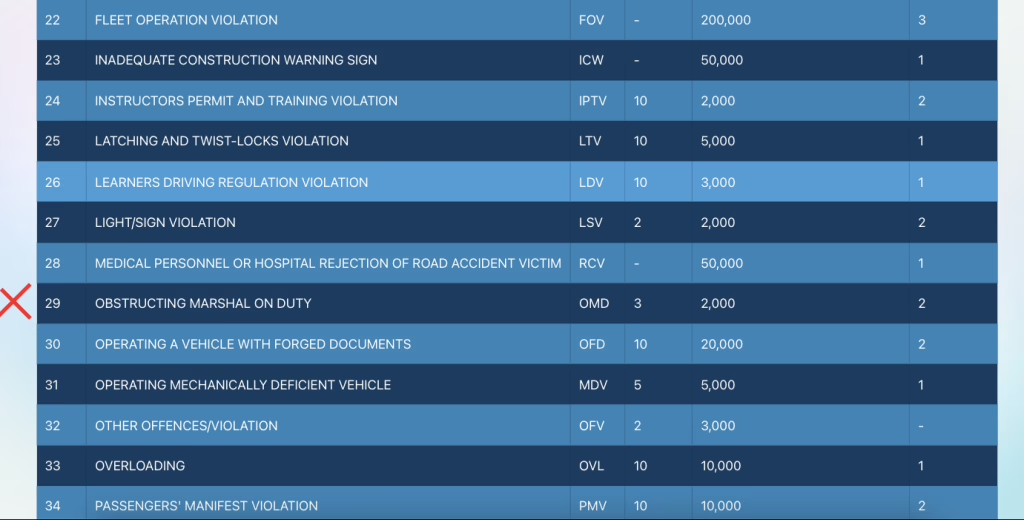
FRSC law mandates that all fines be paid through official channels, not by roadside cash handovers.
A Court of Appeal in 2024 upheld that the FRSC lacks the power to seize drivers’ licences or vehicles without due process.
The judgment stemmed from a 2020 case where officers in Umuahia, Imo State, tried to extort a motorist and seized his documents unlawfully. The court deemed such actions a breach of fundamental human rights.
There Are Bad Eggs
When confronted with these findings, CRC Ishaku Tsambi, the Sector Intelligence Officer for FRSC in Bauchi, described the acts of roadside extortion by officers as a violation of the Corps’ operational code, stating that such behaviour contradicts the agency’s core mission.
“Collecting money from motorists on the road under any guise is a clear breach of FRSC rules and regulations. We have zero tolerance for such practices,” Tsambi said.
He acknowledged that while the institution strives to uphold integrity and professionalism, it is not immune to misconduct by a few rogue officers.
“Like every system, we have some bad eggs. But I want to assure you that we do not take such reports lightly. Just give us time. You will see changes,” he added.
Tsambi emphasised that the Corps has internal monitoring mechanisms in place, but admitted that there are operational limitations that sometimes make it difficult to monitor every checkpoint or patrol team continuously.
“We do have an internal surveillance mechanism, but we cannot be everywhere at the same time.
He urged the public to continue reporting such cases, promising that decisive disciplinary action would be taken against any officer found guilty.
Meanwhile, Bauchi is not the only Nigerian state where FRSC officers extort drivers for money.
WikkiTimes has captured several incidents in Abuja, the capital of Nigeria, where law enforcement officers extort money from motorists.
In several parts of Abuja metropolis, WikkiTimes has observed FRSC men often stopping vehicles and fining drivers who pay directly to them, and not to the government treasury.
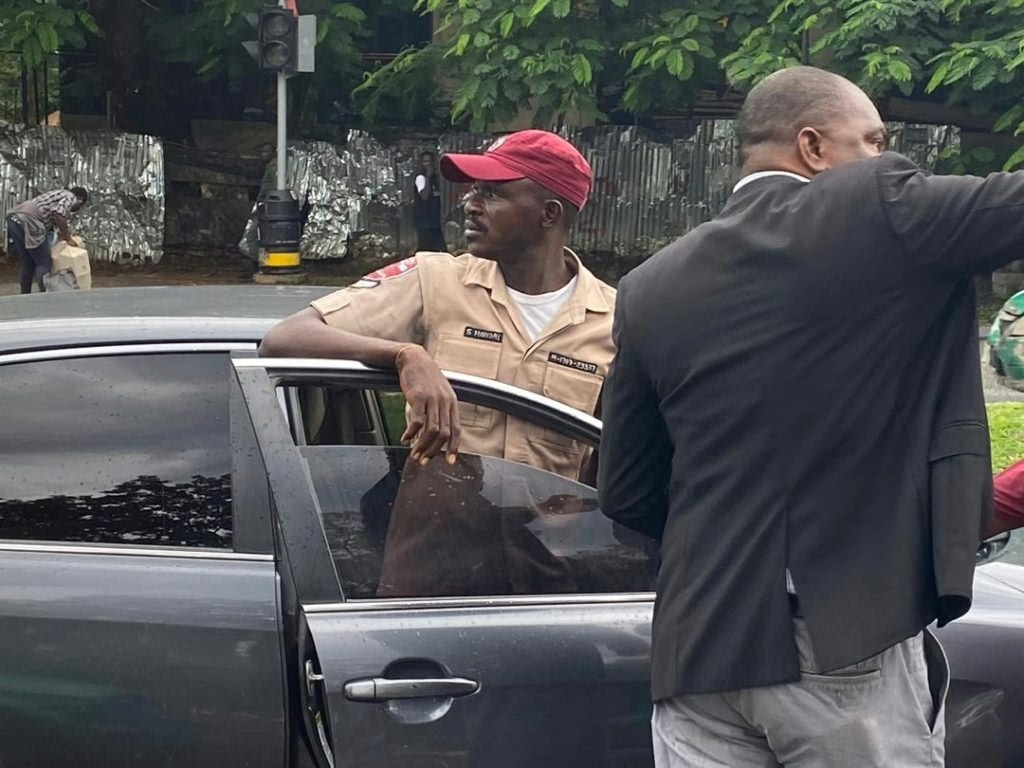
In June, 2025, an FRSC officer identified as Monday and a motorist engaged in a shouting match along Wuse Market road, Abuja
The man allegedly beat the traffic light, and Officer Monday chased after him and forcefully opened the car door and positioned himself firmly in the car.
In Abuja, there are safe city technologies installed on major roads with Chinese loans.
The technology is meant to record traffic violations, the plate number of the offender’s vehicle, and send the data to the Road Safety office.
That way, the Commission can issue tickets and send them to the driver since it keeps a database of all licensed drivers in the country.
But the FRSC men have abandoned the use of this technology.
Abuja residents believe that the FRSC deliberately avoids the use of the Safe City Technology to extort motorists.
Have you been extorted by FRSC officers in the past? Please, share your experience with us.
This report was produced with support from Civil Media Lab