Table of Contents
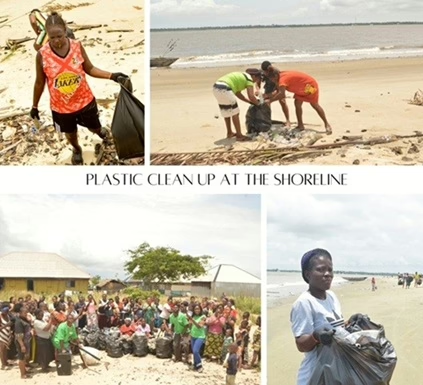
Along the coastal waters of Oyorokoto Beach, where plastic bottles once littered shorelines and threatened marine life, a remarkable transformation is taking place.
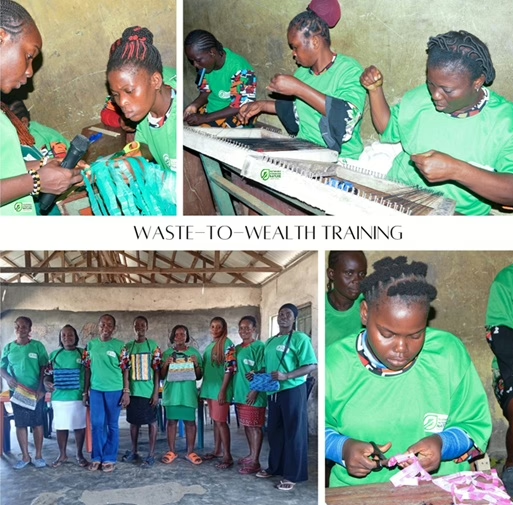
Women gather to demonstrate how waste nylon can be transformed into marketable reusable bags, turning an environmental crisis into an economic opportunity.
This is the impact of a groundbreaking six-month project implemented by Sustainable Actions for Nature (SAN). This Nigerian environmental organization has proven that when communities are empowered to lead their own environmental solutions, both nature and people can prosper.
Turning the Tide on Plastic Pollution
For fishing communities in Andoni Local Government Area, plastic pollution threatened their livelihoods. Discarded plastics accumulated in mangrove forests that serve as critical nurseries for fish, entangled marine life, and degraded ecosystems that sustain local communities.
Between July and December 2025, the project mobilized community members in coordinated clean-up events as an effort to reclaim their environment.
The initiative removed approximately 500 kilograms of plastic waste, conducted environmental education programs in schools, and trained over 100 women to upcycle waste nylon into reusable bags using wooden looms.
Over 800 community members (281 women, 66 men, 497 children, 79 elderly above 65, and 20 persons with disabilities) across multiple coastal communities participated in project activities.
Partnerships were strengthened with traditional institutions, schools, women’s groups, youth associations, and local stakeholders, ensuring broad reach and sustained community support.
“This project showed our communities that plastic waste is not just an environmental problem, but also an opportunity to protect our mangroves and support livelihoods,” explains Dr. Grace Alawa, Project Lead at SAN. “With the right support, local people can lead solutions that benefit both nature and the economy.”
Restoring Mangroves, Protecting the Future
Beyond waste removal, the project invested in ecosystem restoration. Community members participated in mangrove planting activities in degraded coastal areas, restoring critical habitats that serve as nurseries and breeding grounds for fish and other aquatic species.
“The mangrove planting and clean-up activities reminded us that protecting our environment is protecting our future as fishers,” shares a local fisherman.
The restoration efforts enhance ecosystem resilience while supporting fisheries productivity, a vital economic lifeline for coastal communities.
From Waste to Wealth
The most transformative aspect has been the emphasis on circular economy. By training women to convert waste nylon into marketable products, the initiative created new income streams while reducing environmental pollution.
The waste-to-value training provided more than 100 women with skills and wooden looms to produce reusable bags from discarded plastic.
“Before now, plastics were everywhere along our shore,” recalls a community participant. “Through this project, we have learned how to clean our environment and even reuse waste in ways that help our families.”
SAN now plans to support women-led upcycling groups to continue production independently, strengthening market linkages to ensure sustainability beyond the project period.
A Model for Scaling Impact
The project’s success in Andoni LGA has demonstrated that community-led, culturally relevant approaches can effectively address interconnected environmental and economic challenges.
SAN now plans to expand mangrove restoration efforts and replicate the project model across additional coastal communities in the Niger Delta.
As Nigeria grapples with mounting environmental challenges, the Andoni project offers valuable lessons. It demonstrates that solutions need not always come from expensive infrastructure projects; sometimes, the most effective approaches emerge when communities are trusted to lead their own transformation.
SAN is a non-governmental environmental NGO working on science-based policy, community action, and sustainable livelihoods for biodiversity conservation in the Niger Delta.