Ethiopia is taking concrete measures to mitigate the impacts of climate change through initiatives such as the Green Legacy Initiative and watershed management programs, Water and Energy Minister Habtamu Iteffa said.
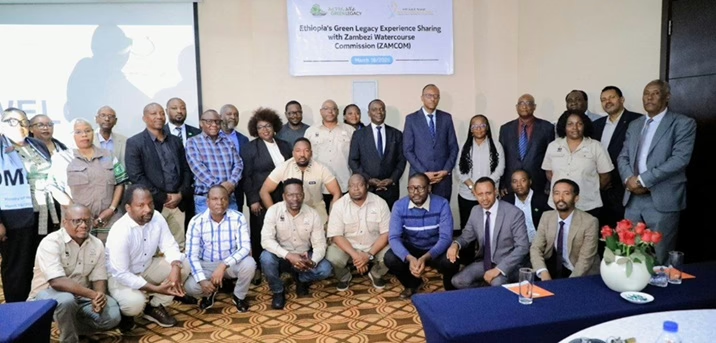
The minister made the remarks during an experience-sharing meeting with the Zambezi Watercourse Commission (ZAMCOM) held today in Addis Ababa.
Habtamu emphasized Ethiopia’s critical role in the management of the Nile River, noting that the country contributes approximately 86 percent of the Nile’s water flow.
He explained that Ethiopia’s substantial contribution makes the country’s decisions regarding water resource management vital for the future of the river and the well-being of its basin countries.
The minister also highlighted the increasing challenges posed by climate extremes, including devastating droughts and floods that have caused significant loss of life and livelihoods.
To address these challenges, the Ethiopian government is implementing resilience-building measures aimed at improving water management and strengthening the country’s capacity to respond to climate shocks.
Habtamu further underscored ongoing efforts to achieve food sovereignty through sustainable agricultural practices, particularly during dry seasons when the efficient utilization of river resources becomes critical.
He pointed out innovative water management approaches being adopted in the country, including expanding the use of groundwater resources and improving irrigation systems to increase agricultural productivity while enhancing resilience against climate change.
The minister noted that the Green Legacy Initiative and watershed management programs are central pillars of Ethiopia’s environmental strategy, aimed at restoring ecosystems and improving water resources through large-scale afforestation efforts.
According to him, strong political commitment has played a decisive role in the success of these programs, revealing that Ethiopia has planted over 48 billion tree seedlings in the past four years.
Habtamu added that the government is also establishing legal frameworks designed to protect river ecosystems and ensure effective governance of water resources.
He further encouraged knowledge exchange and cooperation with other countries, reaffirming Ethiopia’s readiness to share its experiences in sustainable water resource management.
Executive Secretary of the Zambezi Watercourse Commission, Felix Ngambgasi, for his part, commended Ethiopia’s successful Green Legacy Initiative, which focuses on environmental restoration and sustainable water resource management.
He noted that the experience-sharing engagement provides an important platform to exchange knowledge on sustainable water management practices within the Zambezi River Basin.
According to Ngambgasi, the delegation examined Ethiopia’s best practices in transboundary water management as part of efforts to strengthen cooperation among the Zambezi River’s riparian states.
He also cited Ethiopia’s major infrastructure developments, including the Grand Ethiopian Renaissance Dam and the Gibe III Hydropower Project, as exemplary large-scale initiatives that support regional integration and energy security.
Ngambgasi drew parallels with landmark hydropower projects in the Zambezi region, including the Kariba Dam and the Cahora Bassa Dam, which have significantly contributed to electricity supply and economic development in southern Africa.
Despite these achievements, he pointed out that the Zambezi region continues to face significant challenges, including heavy reliance on rain-fed agriculture, recurring droughts and floods, and environmental degradation.
Ngambgasi stressed the need for comprehensive strategies to address poverty and environmental challenges, calling for increased investment in infrastructure, poverty alleviation, environmental protection, and sustainable water resource management.
He also praised Ethiopia’s Green Legacy Initiative for its ability to mobilize millions of citizens in environmental restoration activities.
“We look forward to learning from Ethiopia’s experience on how such transformative programs can create lasting environmental and socioeconomic benefits,” Ngambgasi said.
The ZAMCOM delegation comprises representatives from the Zambezi basin countries, including Angola, Botswana, Malawi, Mozambique, Namibia, Tanzania, Zambia, and Zimbabwe.
(ENA)