Stephen Enoch
The Resource Centre for Human Rights and Civic Education (CHRICED) has raised serious concerns over the state of healthcare delivery in Kano, particularly for mothers and children.
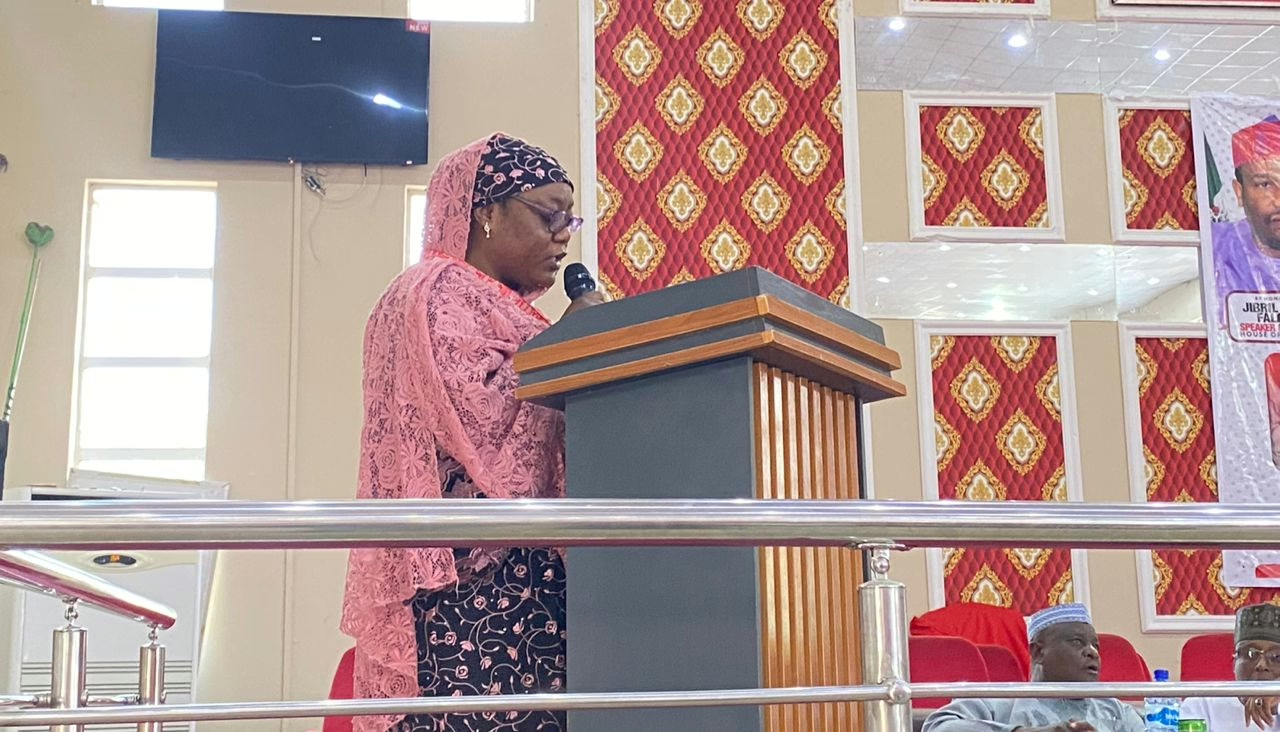
The concern was raised on Saturday during the Kano State House of Assembly (KSHoA) public hearing on the 2026 Budget appropriation.
The public hearing, held at the Coronation Hall of the Government House in Kano, brought together lawmakers, civil society organisations, traditional and religious leaders, and members of the media.
Presenting CHRICED’s submission, Zuwaira Omar, the organization’s contact and mobilization officer said that despite repeated budgetary allocations to health, education, and social services, the lived realities of many citizens in rural communities, remain troubling.
According to CHRICED’s research, many facilities lack basic infrastructure such as reliable electricity, clean water, and functional delivery rooms.
“More than two years after the passage and assent of the Kano State Free Maternal and Child Healthcare Law of 2023, the law remains largely unimplemented.
“While acknowledg initiatives such as the Maternal and Neonatal Mortality Reduction Innovation and Initiatives and the Sector-Wide Approach.
“High mortality rates persist and we therefore call for the full implementation of the law through proper funding and institutional structures in the 2026 budget,” She said.
The Speaker of the Kano State House of Assembly, Hon. Jibril Ismail Falgore, said the legislature’s responsibility to scrutinise and approve the budget cannot be overstated.
“It is through the budget that government policies and programmes become reality.
“We assure the public that the budget would undergo rigorous scrutiny to ensure transparency, accountability, and development across the state.
“Inputs from civil society organisations, development partners, and citizen groups would be taken seriously in shaping a people-focused budget,” He said.
The Chairman of the House Committee on Appropriation, Hon. Aminu Sa’adu, assured that the committee would ensure that contributions made at the hearing influence government allocations in ways that address grassroots needs.
According to him, the issues raised would help guide legislative decisions and support sustainable development for a better Kano State.