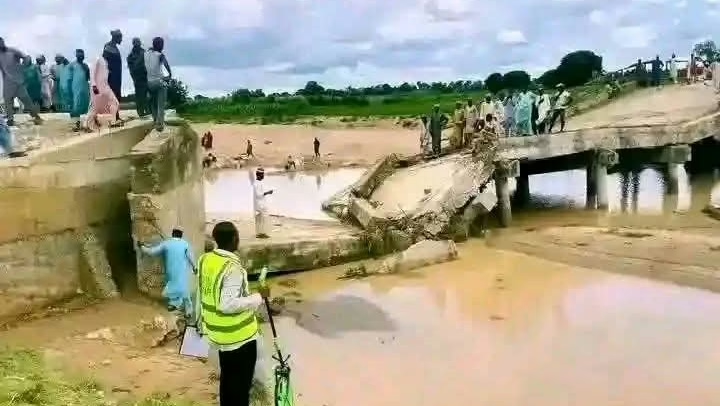
Residents of Western Rogo Local Government Area of Kano State have raised alarm over worsening infrastructure decay in their communities, calling for immediate government intervention to address the collapse of the Gwangwan Bridge and the deteriorating road network linking key settlements.
The concern was the focus of a stakeholder meeting held on Thursday, 23 April 2026, where prominent indigenes of Gwangwan Dakewaye, including community elders, religious leaders, business owners, traders, and youth representatives, gathered to deliberate on practical solutions to the area’s long-standing development challenges.
At the meeting, participants described the condition of the Gwangwan road network as deplorable, noting that years of neglect have severely hindered transportation, disrupted economic activities, and made daily life increasingly difficult for residents.
Farmers and traders, in particular, were said to be bearing the brunt, as access to nearby markets and neighboring communities has been significantly constrained.
Central to the discussions was the collapse of the Gwangwan Bridge, a critical link connecting Rogo town to Gwangwan and Sundu communities.
Stakeholders said the damaged bridge has effectively cut off movement, forcing residents to take longer, unsafe alternative routes or suspend economic activities altogether.
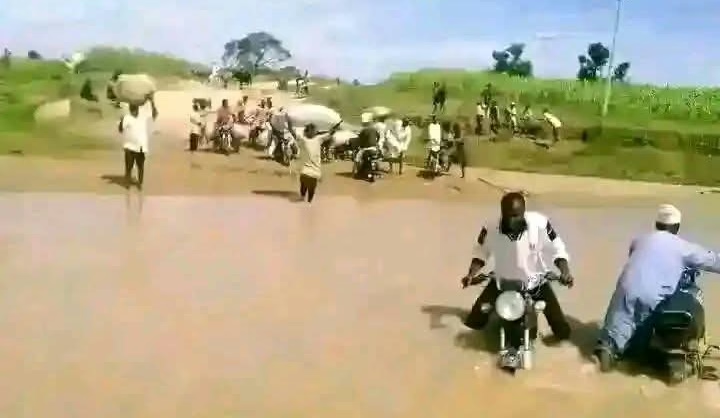
The community members expressed frustration over what they described as continued government inaction despite their consistent participation in electoral processes and contributions to civic development.
Stakeholders at the meeting repeated their appeal to relevant authorities for urgent repairs, but have yet to yield any concrete response.
In a communiqué issued at the end of the meeting and endorsed by concerned citizen Sani Shuaibu, the stakeholders called on the Kano State Government and elected representatives from Rogo Local Government to urgently assess the situation and commence immediate rehabilitation of the bridge and adjoining roads.
They stressed that restoring the infrastructure is essential not only for easing mobility but also for reviving local commerce, improving access to healthcare and education, and fostering sustainable development in the region.
The communiqué also urged authorities to prioritize transparency, accountability, and inclusive governance in addressing rural infrastructure deficits.
Participants concluded with a collective appeal for swift action, expressing hope that timely intervention would alleviate hardship and unlock the economic potential of communities across Western Rogo.