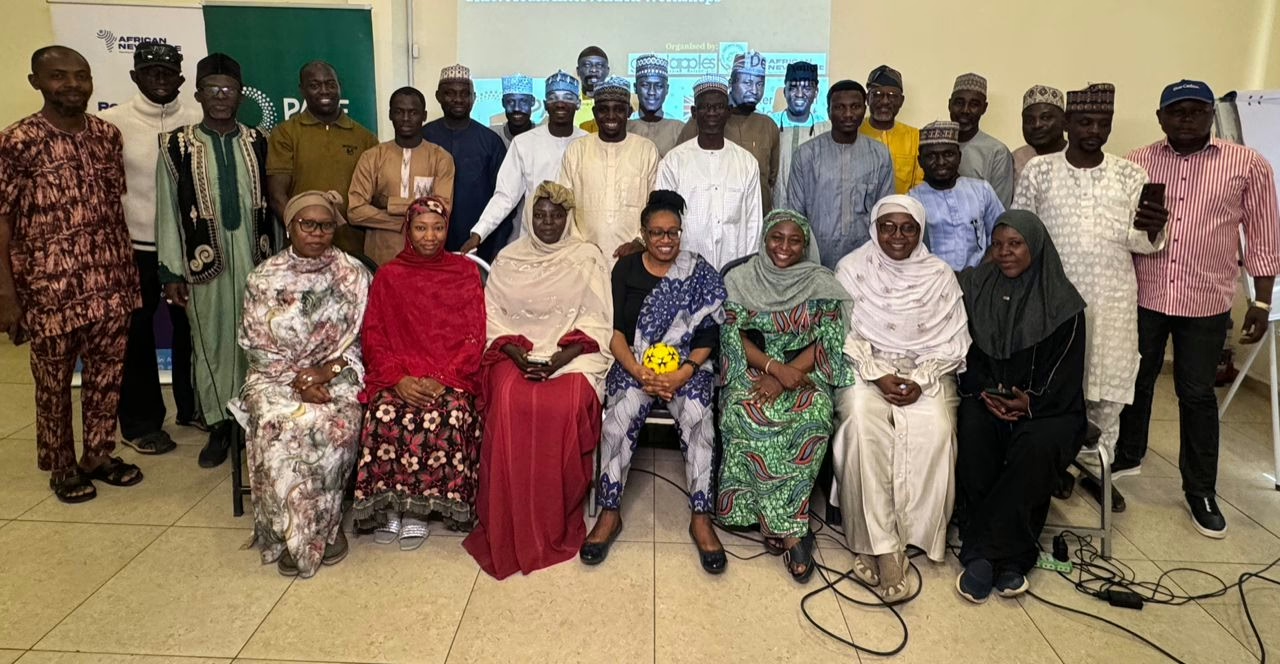
Journalists and content creators from Kano, Kaduna and Jigawa states have been equipped with new skills to strengthen ethical, accountability-focused, and solutions-oriented climate reporting at a two-day PACE Media Workshop on Climate and Governance Reporting.
The workshop was organized by Goldapples Media Associates, CAMIC (Climate Africa Media Initiative and Centre) and African Newspage, in partnership with the UK-FCDO-funded Partnership for Agile Governance and Climate Engagement (PACE) Programme.
The activity, which took place at Tahir Guest Palace, Nassarawa GRA, aimed to improve the capacity of media professionals in the KKJ states to report climate issues in ways that promote improved governance, citizen engagement, and inclusive development at the subnational level.
Speaking at the workshop, Aliu Akoshile, technical lead of the programme and Executive Director of Climate Africa Media Initiative and Centre (CAMIC), described the training as impactful and highly interactive.
He noted that participants demonstrated strong preparedness and contributed meaningfully to discussions throughout the sessions.
“Participation in the last three days has been really fascinating. The journalists came prepared and were able to make informed contributions.
“The sessions focused on different aspects of climate, environment, and development, which are essential for producing compelling storytelling and solution journalism,” Akoshile said.
He added that the organizers had identified a critical gap in climate reporting and expressed commitment to continuous monitoring of media narratives around climate responses.
“After this event, we will continue to monitor how journalists report climate challenges factually, without bias, and in line with professional standards,” he added.
Participants in the training said their skills had reshaped their understanding of climate reporting.
Murjanat Abdullahi, a correspondent with the Voice of Nigeria in Kaduna, said she learned the importance of including vulnerable groups in climate stories.
“In reporting flooding, for instance, children and persons with disabilities are often the most affected and need emergency assistance. Including them makes climate reporting more impactful,” she said.
Abdullahi added that she also gained skills in following up on climate stories to achieve positive outcomes.
Sahura Maidala of the Kaduna State Media Corporation said the workshop broadened her perspective beyond environmental sanitation.
“I now understand that climate change affects all aspects of life, health, education, and even political activities,” she said.
She noted that despite limitations faced by government-owned media, journalists could still collaborate with colleagues to ensure climate realities at the grassroots are adequately reported.