Table of Contents
Aminu Adamu
Malam Mukhtar Abubakar Kanan Haki, a farmer in his early 40s from Daudawa community in Faskari LGA of Katsina State, said he leased three hectares of land for N1.2 million in his quest to remain in the farming business.
He said, after incurring other heavy investment on seeds, fertiliser, and labour, soldiers destroyed almost the entire farm on 16 August 2025.
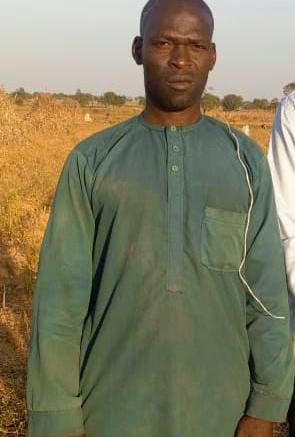
“I followed all instructions,” he said, referring to the directives from a local traditional leader to avoid farming a few meters from the main road linking Faskari and Funtua LGAs in Katsina.
“Last year, I harvested 90 bags on the farm. This year, after the destruction, I barely got 10 bags.”
As a smallholder farmer, he purchased fertiliser and seeds on credit. “Now I owe over a million naira.”
Like other victims, fear prevented him from questioning the soldiers as he watched helplessly.
“I heard of a farmer who almost got flogged in another community for asking why his farm was being destroyed.”
Many farmers suffered similar fate on their farmlands. Maize stalks once lush and green was flattened, and destroyed down weeks before harvest.
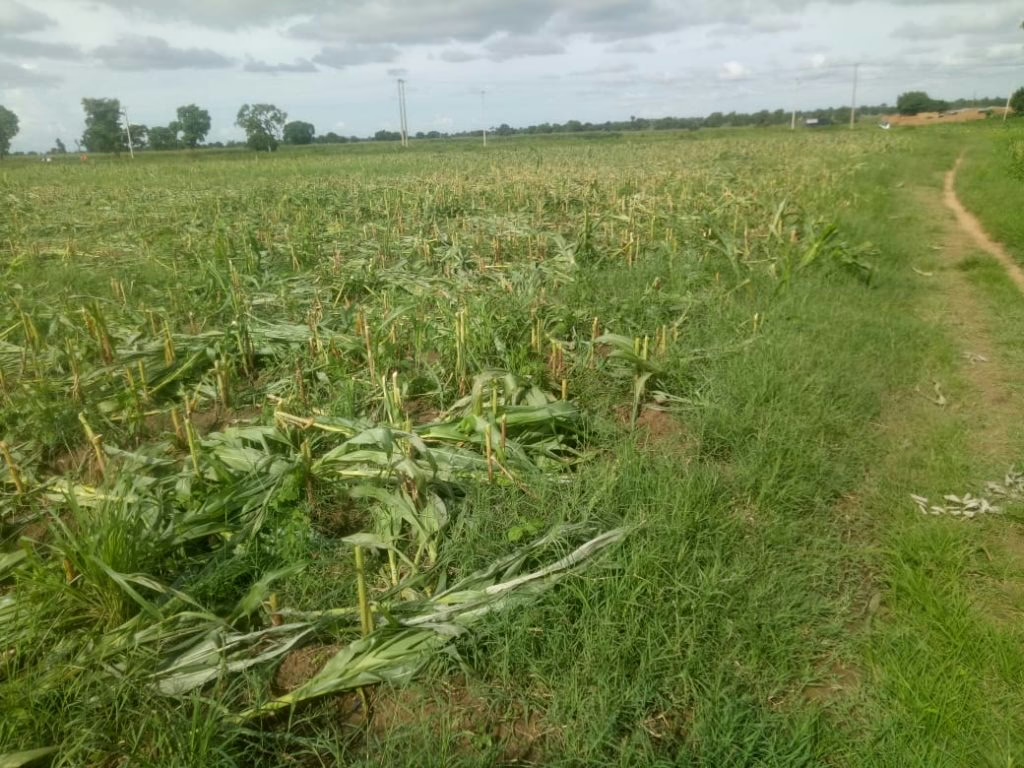
For farmers who survived years of bandit violence, displacement, and extortion, the destruction of their crops by soldiers marked a second, devastating blow, which rendered them hopeless.
Between early and mid-August 2025, soldiers deployed for security operations in parts of Funtua and Faskari areas destroyed large expanses of maize farms located near roads and community outskirts.
The military action, reportedly aimed at preventing bandits from using tall crops and vegetation as cover, has left hundreds of farmers impoverished, indebted, and fearful, according to residents.
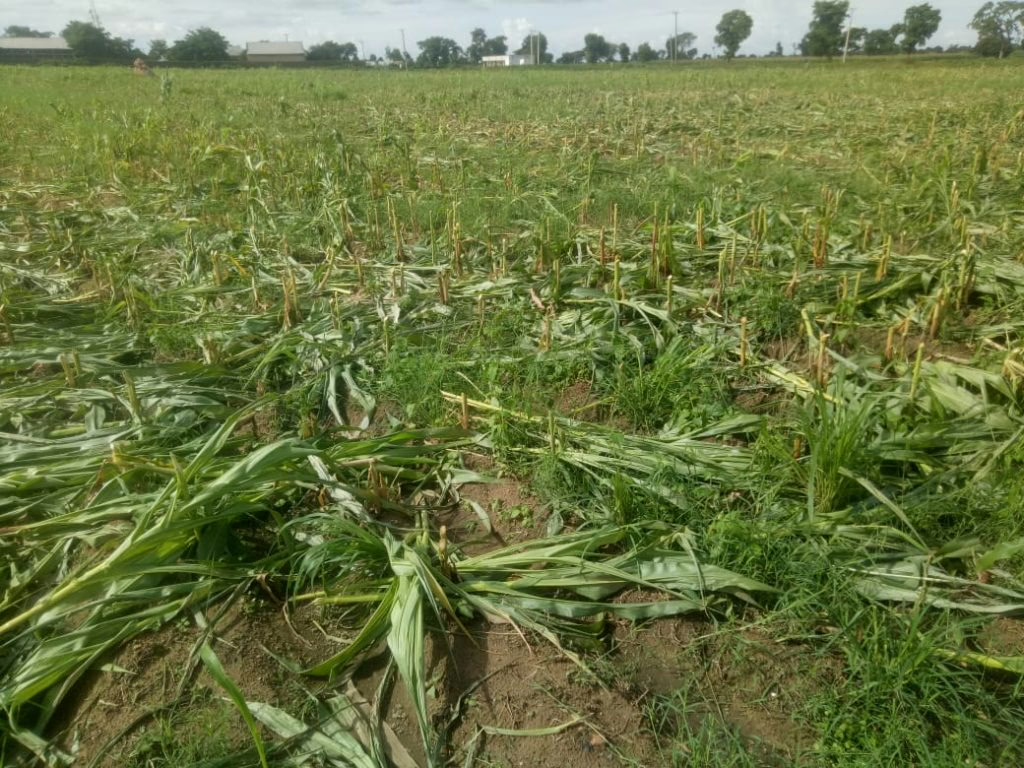
All of them were left without compensation.
“We Asked Before We Planted”
The farmers across many farming communities said they were never warned, despite asking for clarification before their investment in their farms.
In Tudun Malamai village, Muhammad Aliyu, a farmer and community leader, said farmers acted only after obtaining approval.
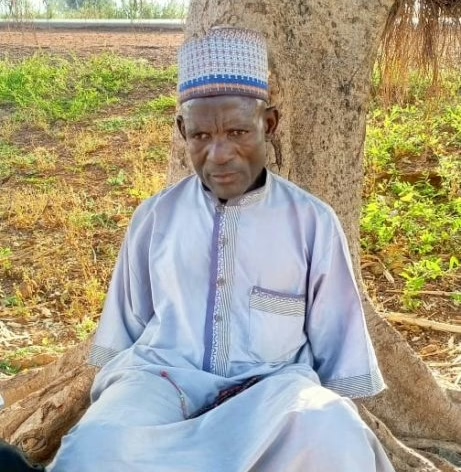
Malam Sani Ado, a farmer in Funtua. Credit: Aminu Adamu
“Before the rainy season, farmers asked if they could plant or leave the land,” he said. “There was no instruction from authorities not to farm. They planted.
“When the crops were almost ready for harvest, soldiers came and ordered that farms near the road be destroyed.”
Aliyu said farmers refused to destroy their crops themselves, knowing the resources invested.
“They threatened us. Later, after bandits allegedly attacked soldiers from a nearby farm, they destroyed parts of the maize farms.”
According to him, his neighbour’s four hectares that typically yields about 70 bags of maize was destroyed. “The farmer used his savings and even borrowed money. That maize was all he had.”
Another farmer, Sani Muhammad Ado, standing on the flat land that used to be his maize farm, recalled that the stalks, once green and tall, had been slashed to the ground.
“Before the rainy season, I was one of many farmers who asked ward head, Mai Anguwa, if there was any instruction not to plant,” he said.
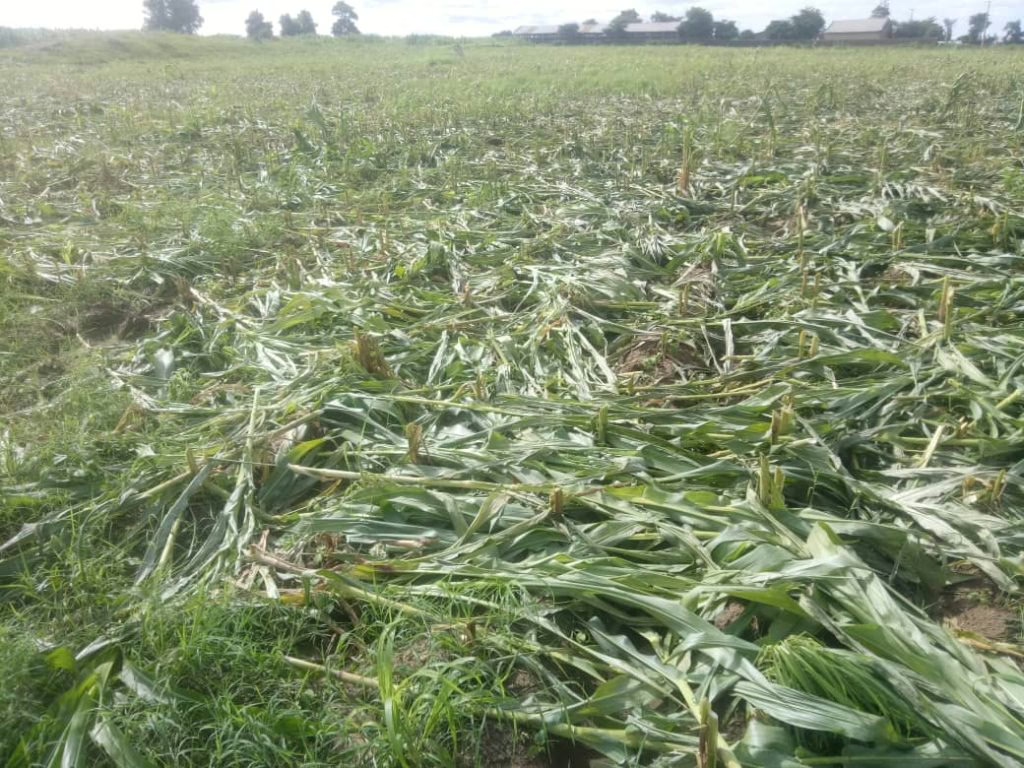
“We heard nothing from authorities after the usual advisory to leave a few meters. So, I planted and the crops were almost ready for harvest when soldiers came and ordered the farms to be destroyed.”
Ado said his maize farm was his only means of livelihood. “We were helpless. We didn’t report to anyone. We left everything to God.”
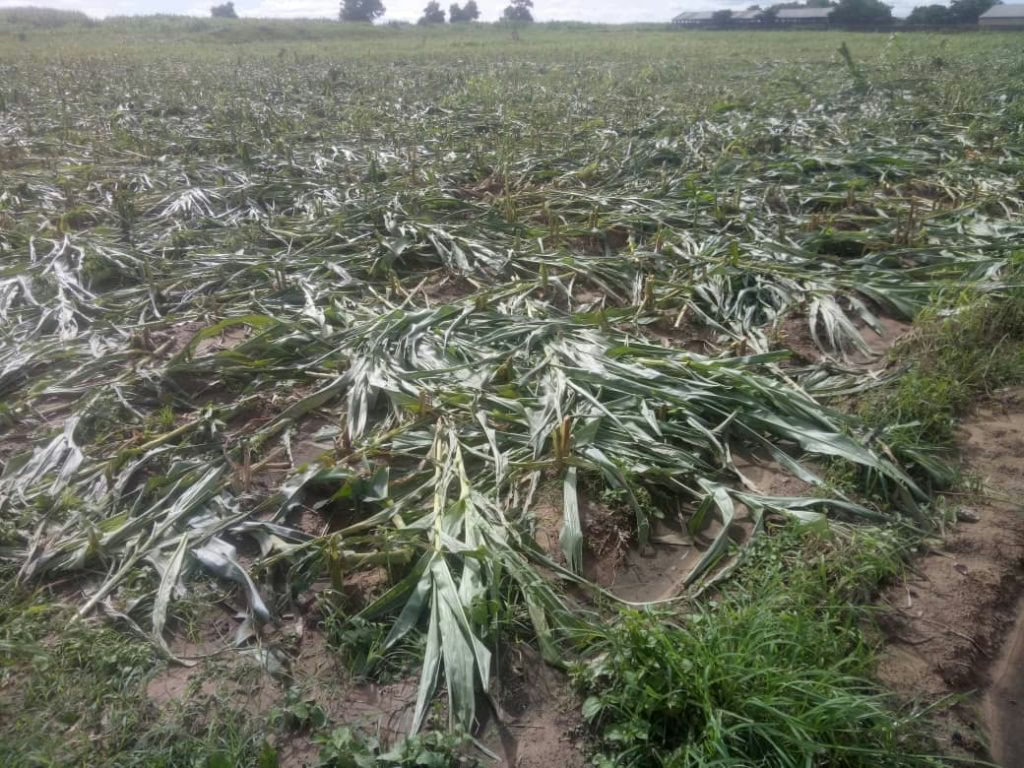
Zero Harvest, No Security
According to members of the communities, the actions of the soldiers neither lessened the work for security forces nor improved the safety of the people.
Auwal Shuaibu, village head of Tudun Malamai, said many farmers lost their crops in their community due to the incident.
“Some lost one hectare, others two or three. Many were two weeks or so away from harvest,” he said.
He said farmers complied with earlier instructions given to them to leave 20–25 feet from the road unplanted. “Some left up to 30 ridges. Yet the farms were still destroyed.”
According to him, more than 10 farmers in the community lost their crops, many after leasing land at sharply inflated rates due to rising food prices the previous year.
“A farm that cost N200,000 to lease was N500,000 as at the time of the planting year,” he said. “Imagine leasing land, buying fertiliser, labour, seeds, and losing everything.”
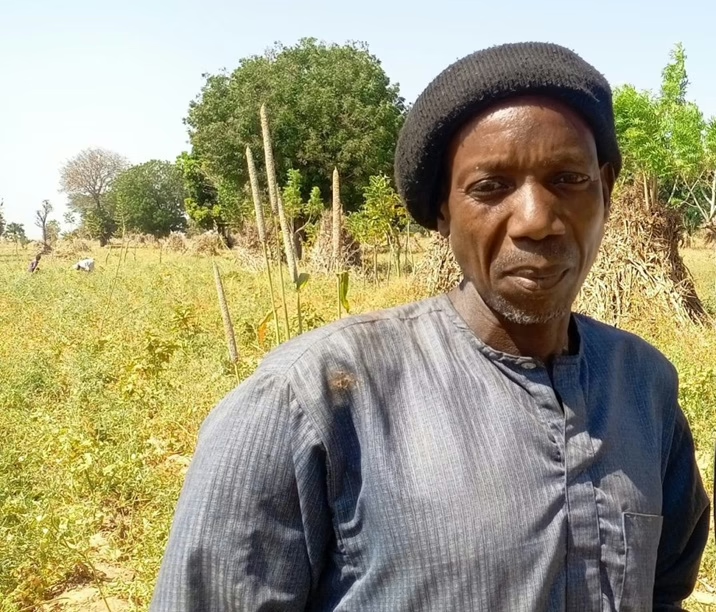
Shuaibu said instead of security, bandit activity worsened subsequently. He said “They sacked the village for two weeks and blocked the Funtua–Faskari road.”
Aliyu said despite the destruction, security did not improve in the area. “Bandit attacks only reduced after a local peace deal, not through the destruction. But we don’t even know the terms of the deals. It was with the authorities.”
Bashir Musa Funtua added that while authorities have touted peace deals with bandits, the agreements have only reduced kidnappings, not criminal activity.
“They no longer abduct people, but they seize motorcycles, phones and valuables,” he said. “The insecurity is still there.”
Mukhtar Kanan Haki said: “The peace deal only stopped kidnappings. Bandits still steal machines and phones.”
Debt, Depression and Fear
For Alhaji Abdul Fatah, a farmer in Funtua who also teaches in a school, the loss was both economic and emotional.
“I took loans from a cooperative group called Better Life. “Nobody told us not to plant. Nobody warned us,” he said.
He added “Last year, I harvested over 90 bags. This year, I planted a higher-yield variety and I was expecting between 110–120 bags. They just came in less than three weeks to harvest and destroy everything.”
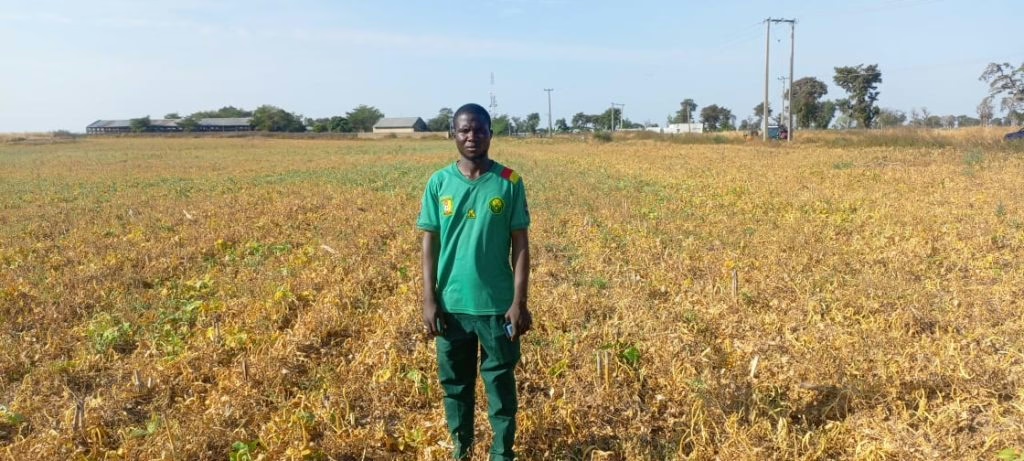
With a dampened spirit, he lamented that the loss affected workers and dependents who benefit from the farm produce annually. “More than 30 people worked on that farm. I used to pay zakat. How will I do that now?”
He fears the incident will discourage farming in the axis that contributes more food stuff in Katsina. “Many people don’t want to farm next year. This will affect food security.”
“The bandits did not stop,” said Shuaibu, a community leader in Tudun Malamai. “They sacked this community for about two weeks and blocked the Funtua–Faskari road, ambushing travellers.”
Residents told WikkiTimes that relative calm only had returned after local authorities engaged bandit groups in negotiations, rather than as a direct result of military action.
In Unguwar Makera, repeated attacks forced residents to abandon their homes. Malam Mamman Lawan, a community member, said displacement has become the norm.
“We lack peace, food and our ancestral land. Leadership owes us protection,” he said.
He added “People moved to Tahoki, Makera, some left the state. We lack peace, food and our ancestral homes,” he said. “Leadership is meaningless without the people.”
Lawan said the situation has remained dire for more than a year.
“We have not slept in our houses for over a year,” he added, noting that families who briefly returned after a peace deal were forced to flee again.
“We have abandoned our homes and ancestral land. We lack peace, food and security,” he said. “For over a year, we have not slept in our houses.
“Even after a peace deal, people who returned were forced to flee again when bandits came back and took their motorcycles.”
He appealed to political leaders to act with empathy, warning that governance without the people is meaningless.
According to Abdulhamid Suleman, insecurity has collapsed local produce markets, forcing him to relocate and visit his farm only during the day.
He explained that tomato prices have fallen sharply because buyers no longer enter the area.
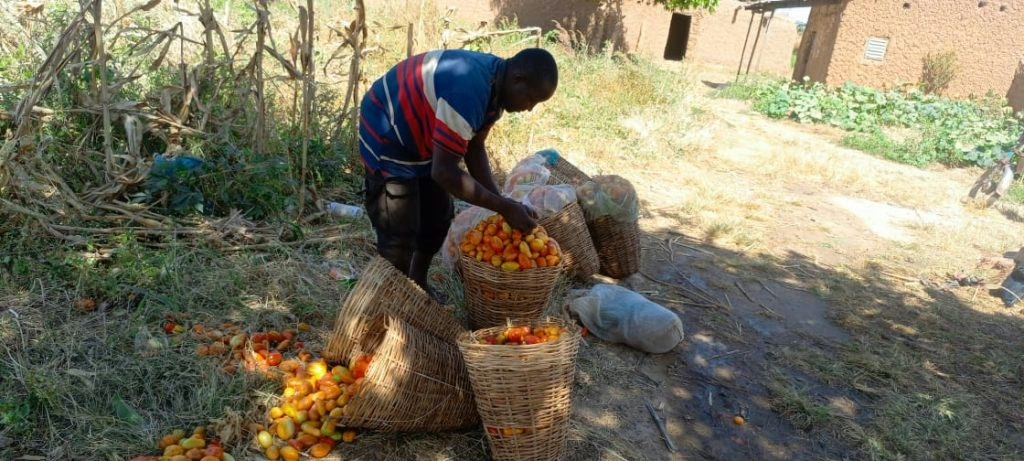
“A basket now sells for N6,000 to N7,000. Before insecurity, it was N12,000 to N13,000,” he said. “Banditry has made our harvest less valuable.”
Bashir Funtua, said he lost nearly one hectare of maize after authorities reportedly ordered farms to be cleared near roads in August.
He estimated his losses at about 10 bags of maize and said no prior notice or compensation was given.
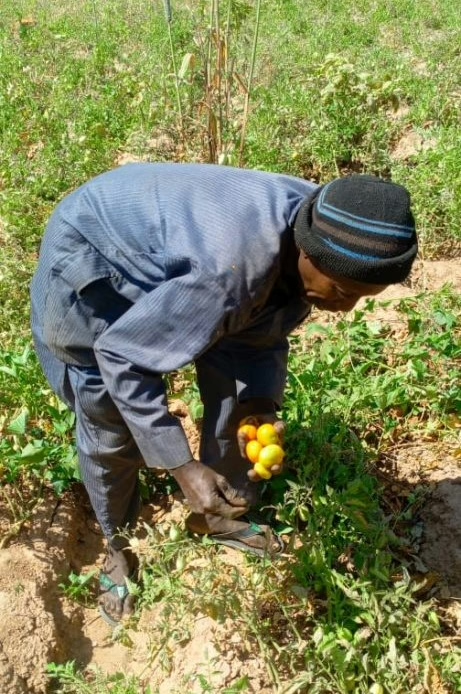
“They didn’t announce it. One day, I was told my farm had been destroyed,” he said, adding that he was unsure which security outfit carried out the action.
“I didn’t report to anyone. I have lost confidence in the system.”
Bashir warned that the situation is already undermining food production. He said high fertiliser costs, now about N50,000 per bag, combined with insecurity, have made farming unviable.
“Last year, I harvested almost 40 bags of maize. This year, I got 11,” he said. “We are already running at a loss.”
Alhaji Hussein added that the security presence was temporary and ineffective. “The soldiers didn’t stay,” he said. “The bandits came back.”
Bala Sani told WikkiTimes that although he is still connected to his village, he only visits the farm whenever a report of improved security occurred.
“Otherwise, I don’t come here just like that. And I don’t come early in the morning or in the evening. It’s only during the day and around 2-3 pm, I moved back to Funtua town.”
“Even after the peace deal, they still seize phones and motorcycles if they meet you accidentally,” he said.
Women Bear the Hidden Cost
Another dimension to the situation is the negative consequences on women in the area.
Although no women’s farm was confirmed by WikkiTimes to have been destroyed, many others surrendered the times in certain locations that became hideouts for bandits.
For Malama Dije and Malama Rukaiya, farming has not become a survival labour on other people’s farm to earn a living.
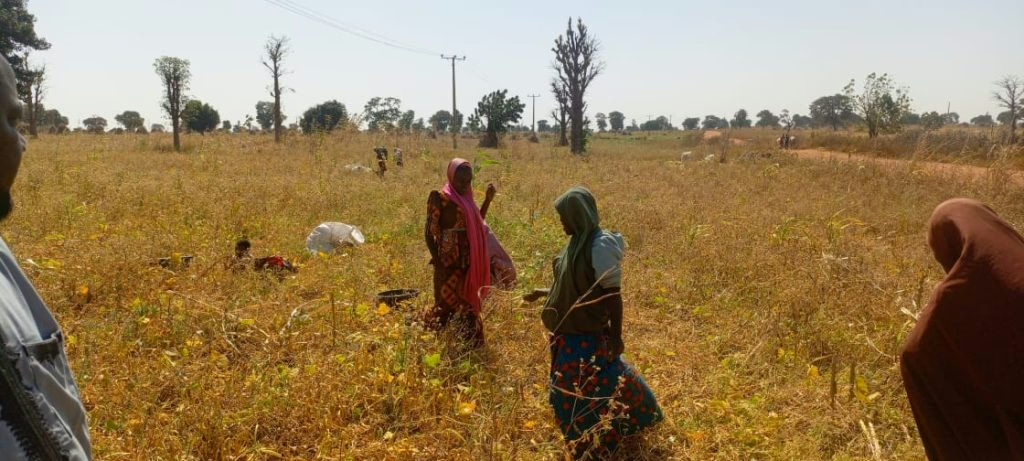
“We abandoned our farms because bandits are there,” Dije said. “We now work on other people’s farms for small fees. In other cases, we get farm produce, not cash, which we use to feed on.”
According to Rukaiya, she earns between N2,000–N2,500 per day, working close to town from morning to late afternoon in farms close to Tahoki. “We don’t go northward because bandits still operate there, even after the peace deal.”
She added that her husband abandoned his distant farm due too due to bandits which has caused so much pain to their family. “Now we survive by working on other people’s farms for a token since we must .”
Bandits Deny Farmers Access to Farmlands
Escalating rural banditry has continued to disrupt agricultural production across the State, and forced many farmers to abandon their farmlands or submit to illegal levies imposed by armed groups, according to reports.
Farmers in the states said that access to farmlands is often conditioned on the payment “taxes,” the supply of fertiliser or food items, or compulsory labour on farms controlled by bandits.
Katsina State Government reports that insecurity forced the abandonment of at least 5,884 farmlands covering about 58,330 hectares, with over 23,000 hectares deserted, disrupting food production.
Agricultural experts and civil society groups warned that the systematic extortion of farmers and the climate of fear in rural communities pose a growing threat to food security, livelihoods and broader economic stability in the state and beyond.
They said continued disruptions to farming activities risk deepening hunger and poverty, particularly in agrarian communities already affected by conflict and climate stress.
Food Crisis Looms
The destruction comes amid a deepening food crisis.
According to the World Food Program, nearly 35 million Nigerians could face acute hunger in 2026 due to conflict, climate shocks, and collapsing local food systems. Northern Nigeria is among the hardest hit.
Farmers interviewed said the destruction of crops combined with bandit extortion, abandoned farmlands and fear could worsen the crisis in Katsina and beyond
“Many people don’t want to farm again,” said Alhaji Abdul Fatah, echoing that “This will affect food security.”
For the affected farmers, the crisis is already here.
“We don’t know who to fear anymore,” said Alhaji Sagir Alhassan, who lost five hectares.
“Bandits chase us away from farms in far distant places, while soldiers destroy our crops in nearby farms.”
Official Silence and Contradictions
Efforts to obtain official explanations from relevant authorities Katsina proved extremely difficult.
When contacted, the Chairman of Funtua LGA, Hon. Abdulmuttalab Jibril Goya, declined to comment on the matter.
He questioned the reporter’s interest in the report and insisted that he was not permitted to speak with independent journalists on such issues.
Hon. Goya described the matter as a “government secret” and said he could only respond with a written authorisation from the Katsina State Government.
He, however, added that he was not aware of any farm destruction in Funtua LGA and said affected persons should formally report to the local council. He directed the reporter to seek clarification from the Katsina State Government House.
Similarly, Chairman of Faskari LGA, Hon. Sirajo Aliyu Daudawa, terminated the call shortly after the situation was explained and did not respond to subsequent calls or messages as of the time of filing this report.
Repeated efforts to obtain comments from the State Commissioner for Internal Security and Home Affairs, Dr Nasir Mu’azu Danmusa, were unsuccessful.
Although he had earlier indicated willingness to respond, he neither returned several phone calls nor replied to messages sent to him as of the time of filing this report.
Similarly, enquiries sent to the Commissioner for Agriculture, Abubakar Yusuf, seeking clarification on the allegations raised by affected farmers, received no response.
Similarly, the Commissioner for Agriculture, Abubakar Yusuf, did not respond to enquiries seeking clarification on the matter.
When contacted, the Director-General, Media and Publicity to the Katsina State Governor, Alhaji Maiwada Danmalam, said that the incident was not recent as he would seek further details from the Commissioners of Agriculture and Internal Security.
Later, he told WikkiTimes that community leaders had earlier met with residents at the start of the rainy season and agreed that certain areas close to major roads should not be cultivated for security reasons.
According to him, the decision involved traditional, religious and political leaders, but some farmers allegedly disregarded the directive and went ahead to plant in restricted areas.
He said that if any farms were destroyed, it would have been done in the interest of community safety, particularly to improve visibility and prevent bandits from using farmlands as hideouts.
He also said the state government had no plans to compensate affected farmers. He arguied that those who planted in restricted areas acted against agreed directives.
However, the affected farmers and community leaders interviewed for this report maintained that they complied with the distance they were told to avoid farming and insisted their crops were unjustly destroyed.
The farmers insist they complied with instructions to leave 20–25 feet from roads, and many farms were destroyed completely.
Response from the Nigerian Army
When contacted for comments, the Public Relations Officer of the Nigerian Army 17 Brigade, Katsina, Lieutenant Lawal Abubakar, said he was not authorised to respond to the enquiry without clearance from his commanding officer.
He explained that, in line with military protocol, any clarification on the matter could only be provided by the Brigade Commander and advised affected communities to channel their complaints through traditional rulers, who would then liaise with the brigade leadership.
Even when he was asked if he could seek clearance from his superior to speak to WikkiTimes, Lieutenant Abubakar insisted that he would not and reiterated that the farmers should engage the Army through their traditional rulers.
Civil Society Reacts
The Coalition of Northern Groups (CNG), Katsina State Chapter, has confirmed reports that farmlands were destroyed during security operations in parts of Funtua and Faskari LGA of the State.
The CNG Katsina State Coordinator, Comrade Abdullahi Kabir, said crops belonging to smallholder farmers were allegedly destroyed by security operatives, particularly soldiers, around August 2025, citing reports from community members and civil society contacts.
He said the incident affected poor farmers who depend largely on agriculture for survival, noting that the losses were severe amid rising economic hardship and food insecurity in the state.
Kabir said similar complaints had been recorded in other frontline LGAs, suggesting a recurring pattern during security operations near farmlands and major roads.
While acknowledging the importance of security operations, he said the destruction of crops without prior warning or compensation could amount to abuse of authority and forced economic displacement.
He added that CNG and allied groups had begun documenting the incidents and would engage relevant authorities to demand investigation, relief and compensation for affected farmers.
Security Expert’s View
A security analyst, Dr Yahuza Getso, said the destruction of farmlands had inevitably imposed economic losses on farmers but argued that the issue should be assessed within the broader context of counter-insurgency operations in conflict-affected areas.
Dr Getso said some farmlands were cultivated beyond approved safety distances from major roads, which he described as a security risk. He alleged that in certain cases, community members had previously collaborated with criminal groups by providing information or concealment, complicating military operations.
While maintaining that security personnel should not be blamed wholesale, he acknowledged that the actions had strained relations between security forces and local communities.
He said addressing insecurity required shared responsibility involving communities, traditional rulers, political leaders and youth groups, rather than reliance on military force alone.
He called for improved community–security engagement, clearer communication of farming restrictions and stronger sensitisation by traditional and religious leaders.
He also suggested wider buffer zones around major roads to improve visibility and reduce the risk of ambushes.
However, Dr Getso added that farmers with genuine cases, particularly those who complied with existing guidelines or were not adequately informed, should be carefully considered and supported, noting that rebuilding trust would require fairness and dialogue.
A Broken Balance
Now, the condition is increasingly difficult for farmers with bandits restricting access to some farmlands, while security agents keep destroying crops left on the farm.
“I don’t know if I can farm maize again,” said Alhaji Alhassan, who lost about five hectares of maize and an estimated N6 million in investment. “
As insecurity, hunger and distrust deepen, farmers say they are caught in a vicious cycle, squeezed between armed groups that terrorise rural communities and state security measures that undermine their livelihoods.
“We are hardworking citizens,” Alhassan added. “But now, we are badly affected.”
This report was produced with support from Civil Media Lab.