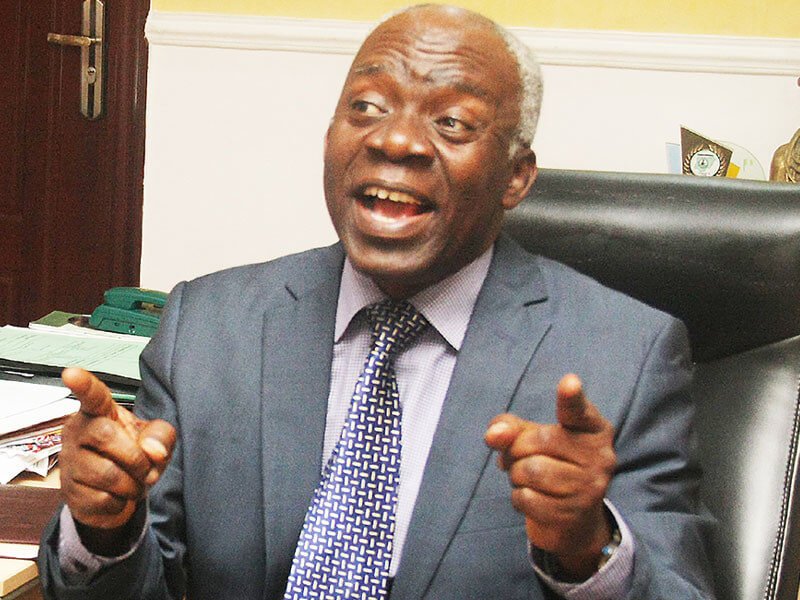
WikkiTimes has announced the launch of the Femi Falana Legal Defenders Fellowship, a year-long pilot programme aimed at strengthening legal defence for journalists and civic actors facing increasing legal intimidation across Nigeria.
The announcement was made in a statement on Monday and signed by Nana Mohammed, the Operational Manager of WikkiTimes, outlining the organization’s response to what it described as a worsening environment for media professionals in the country.
Nigeria remains one of the most dangerous and challenging places for journalists in West Africa, marked by routine surveillance, arbitrary arrests, physical attacks, and a culture of impunity, the statement said.
Citing data from the Committee for the Protection of Journalists, WikkiTimes noted that at least 25 journalists were killed in Nigeria in 2025 for confirmed work-related reasons, while 34 others were imprisoned and about 20 held hostage, alongside numerous cases of detention globally.
The Centre for Journalism Innovation and Development also reported that 72 journalists were attacked in Nigeria during the same year through its Press Attack Tracker.
According to reports by Reporters Without Borders and CPJ, 2025 was particularly deadly for journalists worldwide, with Nigeria continuing to face persistent threats, including violence, harassment, and lack of accountability for attacks, even as discussions around new legal protections emerged.
WikkiTimes said these trends highlight the sustained danger confronting Nigerian journalists, especially those working in independent and regional newsrooms.
At the same time, the organisation observed that Nigeria produces thousands of young lawyers annually, many of whom are interested in public-interest practice but lack practical training and mentorship in media law, digital rights, and Strategic Lawsuits Against Public Participation.
This gap, it said, leaves journalists exposed to legal harassment while denying young lawyers meaningful pathways into rights-based legal work.
The newly launched fellowship is designed to bridge this divide by training, mentoring and placing 25 early-career Nigerian lawyers in law firms, chambers, and legal aid organizations to support journalists and civic actors facing legal threats.
Through intensive training, supervised practice, and the development of shared legal defence tools, the program aims to strengthen Nigeria’s media defence ecosystem from within the legal profession.
The fellowship is named after human rights lawyer and Senior Advocate of Nigeria, Femi Falana, in recognition of his decades-long commitment to public-interest litigation and press freedom.
Haruna Mohammed Salisu, founder of the fellowship initiative, said the decision reflects Falana’s “consistent courage in challenging the misuse of the law to silence dissent” and his role in mentoring generations of rights-focused lawyers.
He explained that while the program draws inspiration from Falana’s legacy, it will operate independently and in line with professional and ethical standards.
The initiative is also a response to the growing use of defamation suits, cybercrime charges, and other legal actions against journalists, which he said are often intended not to secure justice but to exhaust resources, delay investigations, and discourage accountability reporting.
Such practices, frequently described as “the process as punishment,” pose serious threats to press freedom, particularly for newsrooms with limited access to specialised legal support.
During the 12-month pilot phase, fellows will receive specialised training in media law, constitutional and digital rights, as well as the application of the Cybercrimes Act to journalism.
They will also contribute to developing a shared legal defence repository and a practical SLAPP Defence Cheat Sheet for Nigerian lawyers, resources that will remain publicly accessible beyond the fellowship year.
WikkiTimes said a call for applications will be issued in the coming days, inviting qualified early-career lawyers committed to defending media freedom and civic accountability to apply.
The organization described the fellowship as a strategic investment in people, institutions, and shared knowledge, aimed at ensuring journalists are not silenced through legal intimidation and that the law continues to serve justice rather than suppression.